

Warfarin Alcohol Risk Calculator
Warfarin requires careful management. Alcohol consumption, especially binge drinking, can significantly alter your INR levels and bleeding risk. This calculator helps you understand your personal risk based on your alcohol consumption.
Your Risk Assessment
Key Information
Binge drinking (5+ drinks for men, 4+ for women) increases bleeding risk by 2.3x. Acute alcohol consumption temporarily inhibits warfarin metabolism, causing INR spikes and bleeding risk.
Recommendations
If you've consumed more than your safe limit, consult your healthcare provider within 72 hours. Consider having your INR checked after binge drinking episodes.
Imagine you are taking a medication that keeps your blood from clotting too easily. Now imagine adding a substance that messes with your liver’s ability to process that medication. This is the reality for patients taking Warfarin is a vitamin K antagonist anticoagulant used to prevent blood clots. Also known as Coumadin, it has been a standard treatment since 1954. While it saves lives, it requires careful management. One of the most dangerous variables in this equation is alcohol, specifically binge drinking. The interaction isn’t just about feeling a buzz; it can lead to life-threatening bleeding or dangerous clots.
Understanding Warfarin and INR
To understand the risk, you first need to understand how the drug works. Warfarin works by blocking vitamin K, which your body needs to make clotting factors. Without enough vitamin K activity, your blood takes longer to clot. Doctors measure this effect using the International Normalized Ratio, or INR is a standardized measure of how long it takes for blood to clot. For most conditions like atrial fibrillation or deep vein thrombosis, the target INR range is usually between 2.0 and 3.0.
This range is narrow. If your INR is too low, you risk forming a dangerous clot. If it is too high, you risk severe bleeding. This is why regular monitoring is non-negotiable. The American Heart Association’s 2020 Guidelines emphasize that patients must maintain this balance carefully. However, external factors like diet and alcohol can shift this balance rapidly, sometimes without the patient realizing it until it is too late.
How Alcohol Affects Warfarin Metabolism
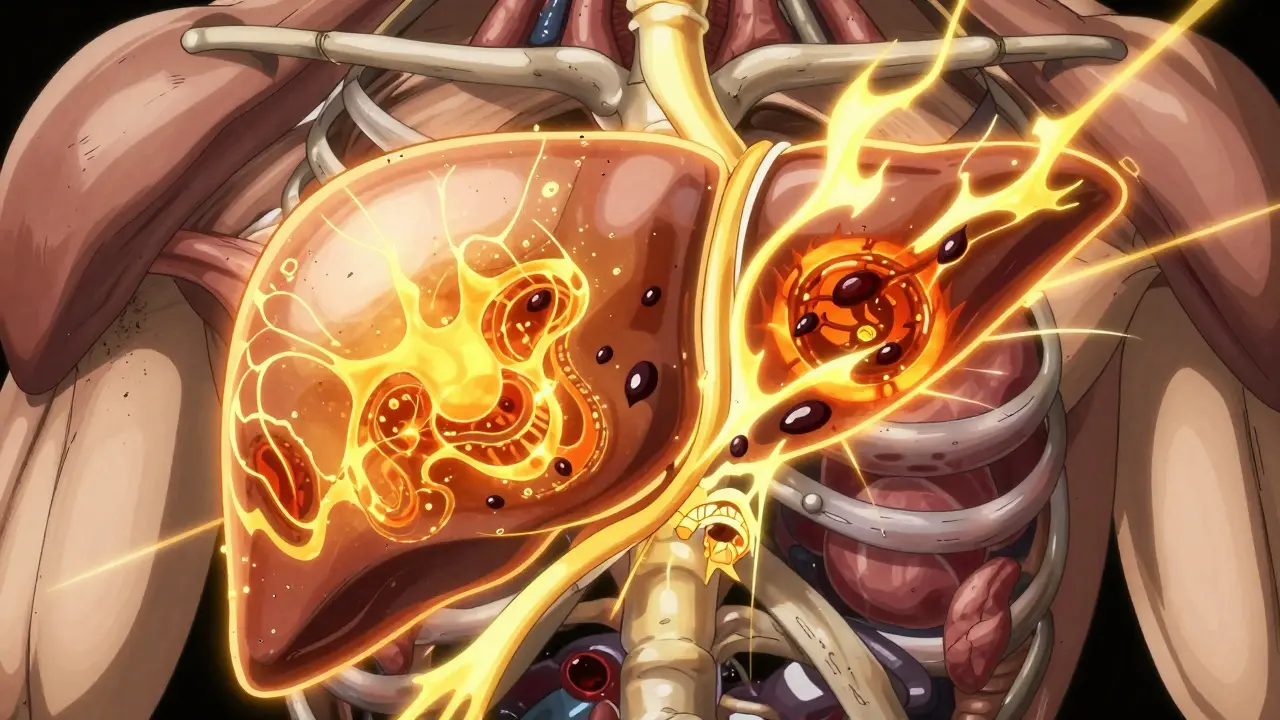
The interaction between alcohol and Warfarin is complex because it depends on how much and how often you drink. Acute alcohol consumption, meaning drinking a lot in a short time, can temporarily inhibit the enzymes in your liver that break down warfarin. When these enzymes are blocked, the drug stays in your system longer, causing your INR to spike. This increases the risk of bleeding.
Conversely, chronic heavy drinking can have the opposite effect. Over time, alcohol induces these same liver enzymes, making them work faster. This speeds up the metabolism of warfarin, lowering your INR and putting you at risk for clotting. Additionally, long-term alcohol use can damage the liver itself. Since the liver produces clotting factors, a damaged liver cannot make them even if vitamin K is available. This creates a chaotic environment where INR values swing unpredictably, making dosing incredibly difficult for healthcare providers.
Defining Binge Drinking in This Context
Not all alcohol consumption carries the same risk. You need a clear definition of what constitutes dangerous drinking while on anticoagulants. The National Institute on Alcohol Abuse and Alcoholism (NIAAA) defines binge drinking as consuming 5 or more standard drinks for men, or 4 or more for women, within about 2 hours. A standard drink is roughly one can of beer, one glass of wine, or one shot of spirits.
Why does this specific threshold matter? Research indicates that crossing this line significantly alters pharmacokinetics. A 2015 case-control study published in the journal Pharmacotherapy by Sung et al. from the University of Michigan looked at this specifically. They found that patients who screened positive for moderate to severe alcohol misuse had a 2.3-fold increased risk of major bleeding events compared to those without alcohol misuse. This isn’t a minor statistic; it means more than double the risk of a serious medical emergency.
| Gender | Binge Threshold (2 hours) | Relative Bleeding Risk |
|---|---|---|
| Men | 5+ Standard Drinks | 2.3x Increased Risk |
| Women | 4+ Standard Drinks | 2.3x Increased Risk |
The Genetic Factor in Bleeding Risk
Not everyone reacts to alcohol and warfarin the same way. Genetics play a surprisingly large role. Some patients carry variants in the CYP2C9 gene, specifically CYP2C9*2 or CYP2C9*3. These variants reduce the body’s ability to metabolize warfarin by 30-50% and 80-90% respectively. When these patients drink alcohol, the risk compounds dramatically.
According to the Sung et al. study, patients with these genetic variants experienced a 4.2-fold increased risk of alcohol-related major bleeding. This aligns with findings from the EU-PACT trial published in the New England Journal of Medicine in 2013. If you know your genetic profile, this is critical information to share with your doctor. It explains why one person might have a glass of wine with no issues, while another with the same prescription ends up in the hospital with internal bleeding.
Clinical Guidelines and Safe Limits
Given these risks, health organizations have issued clear guidelines. The NHS (UK National Health Service) explicitly warns that drinking heavily, especially binge drinking lots of alcohol in one go, is dangerous while taking warfarin. The British Heart Foundation provides a bit more nuance in their 'Heart Matters' magazine. They state it is okay to consume alcohol if you stick to recommended guidelines for a low-risk maximum weekly alcohol intake of no more than 14 units per week for both men and women.
However, there is a crucial caveat: do not drink all 14 units in one session. Spreading consumption is vital. The University of Iowa Health Care offers even stricter daily limits for patients on warfarin. They recommend no more than 2 drinks a day for men and no more than 1 drink a day for women. They emphasize that it is not safe to binge drink by having many drinks in 1 day. These limits are not arbitrary; they are designed to keep your INR within the therapeutic window.
Recognizing Warning Signs of Complications
Even with precautions, complications can occur. You must know the signs of major bleeding. Recovery Indianapolis’s clinical documentation lists specific warning signs that require immediate medical attention. These include unusual or severe bruising, persistent gum bleeding or nosebleeds, and cuts that won’t clot. More serious signs involve blood in the urine or brownish urine, black tar-like stools, or visible blood in stools.
Other symptoms include bright red or coffee ground-like vomit, coughing up blood or bloody mucus, intense headaches, abdominal pain, excessive menstrual bleeding, and dizziness or weakness. If you experience any of these after drinking alcohol, do not wait for your next scheduled appointment. Go to the emergency room. The baseline risk of major bleeding with warfarin therapy is 3-6% per year according to the American College of Chest Physicians, but this risk escalates substantially with alcohol misuse.

Monitoring and Alternative Options
If you do consume alcohol while on warfarin, increased monitoring is essential. The Anticoagulation Forum’s 2021 Consensus Statement recommends INR testing within 72 hours of a binge drinking episode. Doctors may also consider a temporary warfarin dose reduction during this period to prevent INR spikes. Data from the INRnet registry shows that patients reporting any binge drinking had 42% more time outside the therapeutic range than abstainers.
For patients who regularly consume alcohol above recommended limits, the National Institute for Health and Care Excellence (NICE) advises considering alternative anticoagulants. These are often Direct Oral Anticoagulants (DOACs) like rivaroxaban or apixaban. DOACs generally have fewer food and drug interactions than warfarin. However, they are not risk-free. The FDA’s Adverse Event Reporting System showed a 1.8-fold increased risk of gastrointestinal bleeding with rivaroxaban in patients reporting heavy alcohol use. So, while DOACs might be a better option, they do not grant immunity from alcohol-related risks.
Screening and Patient Education
A significant challenge remains in identifying at-risk patients. The U.S. Preventive Services Task Force reported in 2022 that only 15.3% of primary care providers routinely screen for alcohol misuse in patients on anticoagulation therapy. This gap leaves many patients vulnerable. Electronic health record systems are trying to catch up. Epic Systems Corporation released an alcohol-warfarin interaction module in January 2023 that flags patients with positive AUDIT-C scores and recommends increased monitoring frequency.
Patient education remains critical. The Agency for Healthcare Research and Quality reported in their 2022 Medication Safety Update that structured educational interventions about alcohol use reduced warfarin-related bleeding events by 37%. Repeated discussions are likely necessary to remind warfarin patients about alcohol use as a risk factor. Pharmacists play a key role here. The American Society of Health-System Pharmacists advises pharmacists to counsel patients that even moderate alcohol consumption (more than 3 drinks per occasion) can cause significant INR fluctuations that may not be detected between routine monitoring visits.
Managing Alcohol Use Disorder with Anticoagulation
For patients with alcohol use disorder requiring anticoagulation, the situation is more complex. The Substance Abuse and Mental Health Services Administration (SAMHSA) and American Heart Association jointly published treatment guidelines in September 2022 recommending integrated care models. The successful HEART-AD trial demonstrated that collaborative care involving addiction specialists and anticoagulation clinics reduced major bleeding events by 52% over 12 months compared to standard care. This suggests that addressing the addiction is just as important as managing the blood thinner.
Despite these advances, the FDA removed warfarin’s black box warning about concomitant alcohol use in 2010 due to a lack of evidence at the time. However, accumulating evidence has prompted renewed calls for updated labeling. The American College of Physicians submitted a formal petition to the FDA in June 2022 requesting reinstatement of alcohol warnings. Until regulations change, the burden of safety falls on the patient and their healthcare team to communicate openly about drinking habits.
Is it safe to drink any alcohol while on Warfarin?
Small amounts may be acceptable for some patients, but guidelines suggest limiting intake to no more than 1-2 drinks per day depending on gender. Binge drinking is strictly unsafe and significantly increases bleeding risk.
How does alcohol affect INR levels?
Acute binge drinking can temporarily raise INR levels by inhibiting warfarin metabolism, increasing bleeding risk. Chronic heavy drinking can lower INR by inducing liver enzymes, increasing clot risk.
What are the signs of warfarin bleeding?
Signs include unusual bruising, persistent nosebleeds, blood in urine or stool, black tarry stools, vomiting blood, severe headaches, and dizziness.
Should I get my INR checked after drinking?
Yes, if you binge drink or consume more than your usual amount, you should get your INR tested within 72 hours to ensure it remains in the safe range.
Are DOACs safer than Warfarin for drinkers?
DOACs have fewer interactions but still carry increased bleeding risks with heavy alcohol use. They may be an alternative for regular drinkers but require medical evaluation.
Seth Eugenne
March 26, 2026 AT 01:36It is really important to listen to what the doctors say about these meds. My uncle had a scare because he didn't track his intake properly. You can see how the liver enzymes get confused by the alcohol. It makes me worry for everyone who thinks a few drinks are harmless. We need to be careful with our health choices every single day. 🍷🚫💊
Kenneth Jones
March 26, 2026 AT 09:42people need to stop drinking if they want to stay alive on this stuff why are people so careless with their lives its not a game you could bleed out in your sleep just because you wanted to feel buzzed for an hour stop ignoring the warnings
Amber Gray
March 26, 2026 AT 15:02exactly and this is why we need stricter laws on who gets prescribed this in america why do they let people drink and take blood thinners its reckless behavior 🇺🇸🚫🍺 people need to take responsibility for their own bodies not make the system pay for their mistakes
Rama Rish
March 28, 2026 AT 13:00i think its better to just stay away from alcohol completly if you are on warfarin
Danielle Arnold
March 30, 2026 AT 00:41Oh sure, just tell everyone to stop drinking like that actually works for anyone in this economy. Nobody reads the leaflet anyway.
Sean Bechtelheimer
March 30, 2026 AT 02:47they dont want you to know that the alcohol makes the drug work better for their profits 🙄 its all about the money in the end not your health really
florence matthews
March 30, 2026 AT 16:50Everyone has different struggles with medication and drinking. It is nice to see people sharing this information openly. We should support each other in making safe choices. 🙂
James Moreau
March 30, 2026 AT 22:59I agree that open communication helps a lot. It is good to have these resources available for everyone to read.
Zola Parker
March 30, 2026 AT 23:14Safety might just be an illusion we create for ourselves 🤔 Perhaps the risk is part of the human experience we are trying to avoid.
winnipeg whitegloves
March 31, 2026 AT 08:46This whole talk on anticoagulants and ethanol consumption is quite fascinating to dissect. You have to consider the enzymatic dance occurring within the hepatic architecture. The liver becomes a battlefield where warfarin and alcohol clash violently. It is a precarious tightrope walk for the patient navigating these chemical currents. The stats regarding bleeding risks are truly staggering in their magnitude. We see a doubling of risk which is a significant multiplier for any individual. The genetic component adds another layer of complexity to this pharmacological puzzle. Some bodies simply cannot handle the metabolic load imposed by these substances. It is a tragedy when a patient ends up in the emergency room due to preventable choices. The guidelines from the NHS and other bodies are clear and should be heeded. Binge drinking creates a chaotic environment for the blood clotting factors. We cannot ignore the warning signs like bruising or blood in the stool. Monitoring is the only shield we have against these invisible threats. Pharmacists play a crucial role in educating the public about these dangers. We must respect the science and the biology involved in this interaction. Ultimately, the choice to abstain is the safest path for many people.