
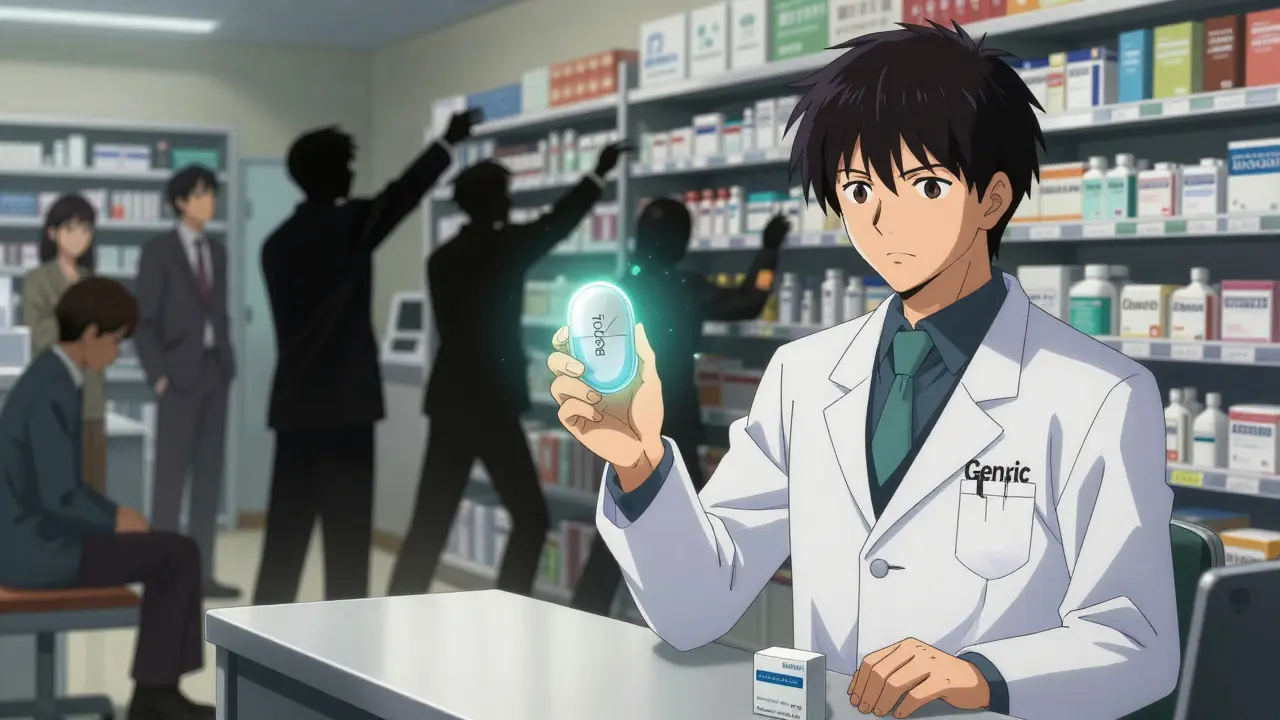
When you fill a prescription for a brand-name drug, you expect to have the option to get a cheaper generic version. In most states, pharmacists are legally allowed to swap the brand for a generic-unless the drugmaker makes it impossible. That’s where antitrust issues come in. Drug companies aren’t just waiting for patents to expire. They’re actively sabotaging the system designed to save consumers money. And it’s costing billions.
How Generic Substitution Is Supposed to Work
Since 1984, U.S. law has encouraged generic drug entry through the Hatch-Waxman Act. The idea was simple: once a brand-name drug’s patent expires, generic manufacturers can apply to the FDA for approval by proving their version is bioequivalent. Once approved, pharmacists can automatically substitute the cheaper generic-unless the doctor says no. This system works because generics are typically 80-90% cheaper. In states with strong substitution laws, generics capture nearly all of the market within months.
But drugmakers found a loophole. Instead of letting the market work, they began manipulating the system to delay competition. The most common tactic? Product hopping.
Product Hopping: The Hidden Game
Product hopping isn’t innovation. It’s a legal trick. A company takes a drug that’s about to lose patent protection and releases a slightly modified version-maybe a pill that dissolves faster, a capsule instead of a tablet, or an extended-release formula. Then, they pull the original version off the market.
Why does this matter? Because state substitution laws only apply to drugs that are identical in active ingredient and dosage. If the original version disappears, pharmacists can’t substitute the generic version of the old drug. The patient gets stuck with the new version-still under patent-and still expensive.
The classic example is Namenda. Actavis introduced Namenda XR (extended-release) and pulled the original Namenda IR (immediate-release) just 30 days before generics were ready to launch. Patients couldn’t switch back. Doctors couldn’t prescribe the old version. Generics had no chance. The Second Circuit Court of Appeals ruled in 2016 that this was illegal. Why? Because it wasn’t about better medicine. It was about blocking competition.
How Companies Kill Generic Entry Without Breaking Laws
Product hopping isn’t the only tactic. Drugmakers use other legal gray areas to delay generics:
- REMS abuse: The FDA allows drugmakers to create Risk Evaluation and Mitigation Strategies to control dangerous medications. But some companies use these programs to refuse to supply samples to generic manufacturers. Without samples, generics can’t run the tests needed for FDA approval. Over 100 generic firms have reported being blocked this way. One study found this practice alone costs more than $5 billion a year in lost competition.
- Shifting delivery methods: Teva switched Copaxone from an injectable to a pen device. The new version wasn’t clinically better-but it came with a new patent. Consumers paid $4.3 billion to $6.5 billion more over two years before the patent was thrown out.
- Disparaging older versions: Reckitt Benckiser claimed Suboxone tablets were unsafe, even though they’d been used safely for years. They then pushed patients toward their new film version. Courts found this was a coercive tactic designed to eliminate competition.
These aren’t accidents. They’re calculated moves. And they’re all legal-until a court steps in.
Court Rulings: Why Some Cases Win and Others Don’t
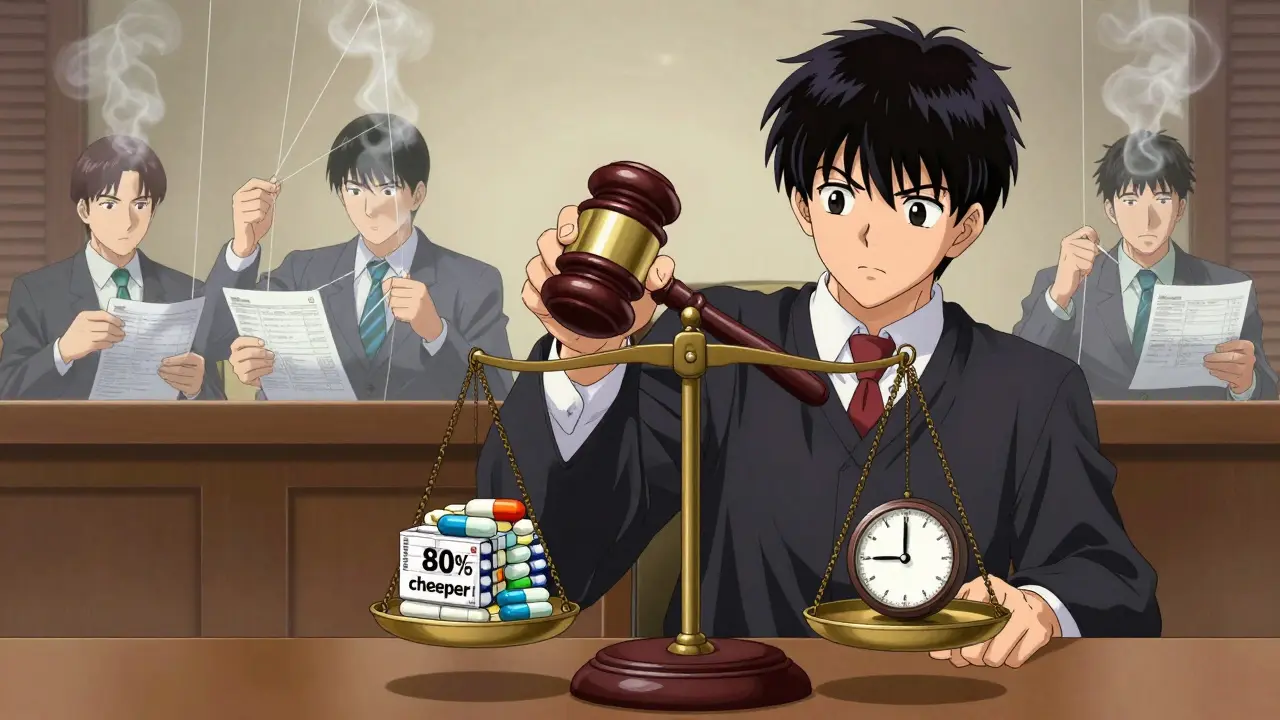
Not all product hopping gets blocked. Courts are split. In 2009, AstraZeneca switched patients from Prilosec to Nexium. But they kept selling Prilosec. The court dismissed the antitrust claim, saying adding a new product was procompetitive. But in the Namenda case, the court ruled differently because the original drug was removed.
The key difference? Availability. If the original drug is still on the shelf, courts assume patients can choose. If it’s gone? That’s coercion. The FTC’s 2022 report found courts that ignore state substitution laws are missing the point. Generic manufacturers don’t compete through ads-they compete through price. When the original drug vanishes, they lose their only tool.
Who’s Fighting Back?
The FTC has been the main enforcer. After the Namenda ruling, they launched investigations into over a dozen drugmakers. In 2019 and 2020, they settled with Reckitt Benckiser and Indivior over Suboxone, forcing them to stop disparaging tablets. The DOJ also stepped in, fining Teva $225 million and Glenmark $30 million for price-fixing among generic makers-showing enforcement goes both ways.
State attorneys general have also acted. New York won an injunction in 2014 forcing Actavis to keep selling Namenda IR. Other states have followed, pushing laws that require manufacturers to keep older versions available for 12-18 months after generic entry.
The Real Cost: Billions and Lives
These tactics aren’t abstract. They have real consequences.
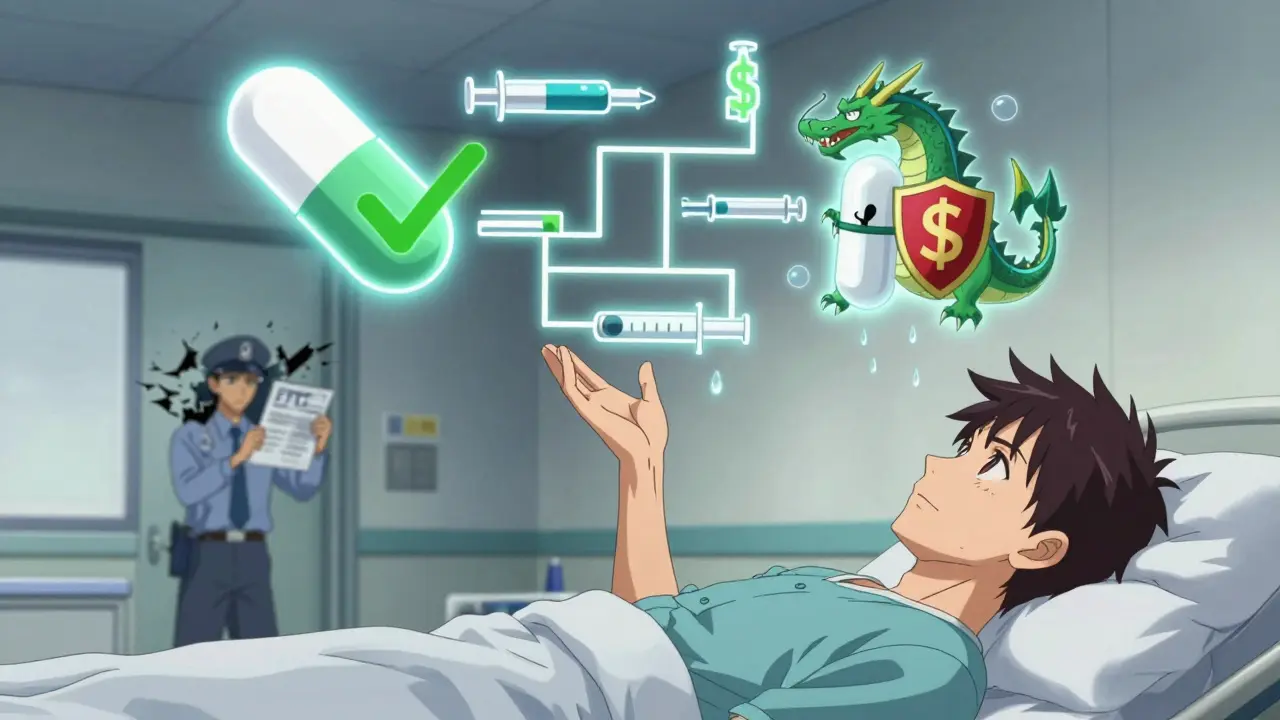
- Revlimid’s price jumped from $6,000 to $24,000 per month over 20 years.
- Humira, Keytruda, and Revlimid alone cost U.S. payers $167 billion more than they would have in Europe, where generics enter faster.
- In the Ovcon case, a manufacturer introduced a chewable version and pulled the original. Generic sales dropped from 85% to under 20%.
Patients don’t just pay more. They delay treatment. They skip doses. They ration pills. And insurance premiums rise for everyone.
What’s Next?
The FTC’s 2022 report was a wake-up call. It didn’t just document the problem-it called for legislative fixes. Some lawmakers are pushing bills that would:
- Require drugmakers to keep original formulations on the market for at least one year after generic entry.
- Block REMS abuse by forcing sample access under FDA oversight.
- Allow state regulators to fine companies that pull drugs to block substitution.
Until then, the system remains broken. Drugmakers know the rules. They exploit them. And patients pay the price.
APRIL HARRINGTON
March 8, 2026 AT 10:03Mantooth Lehto
March 9, 2026 AT 23:19Melba Miller
March 10, 2026 AT 00:41Katy Shamitz
March 10, 2026 AT 09:52Nicholas Gama
March 11, 2026 AT 03:47Mary Beth Brook
March 12, 2026 AT 19:03Neeti Rustagi
March 13, 2026 AT 02:18Dan Mayer
March 14, 2026 AT 20:16Janelle Pearl
March 15, 2026 AT 15:52Ray Foret Jr.
March 16, 2026 AT 00:36