
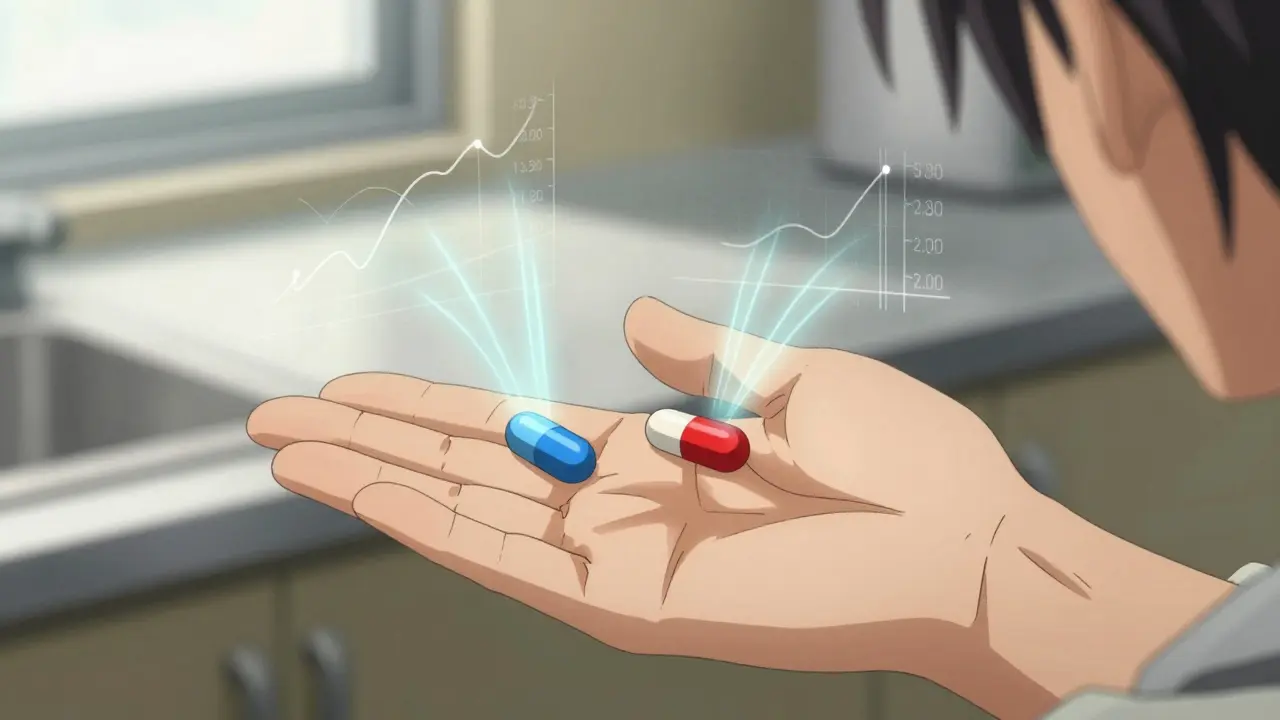
When you fill a prescription for a blood pressure pill or a cholesterol drug, there’s a good chance it’s not the brand name you see on the TV ad. It’s a cardiovascular generic - a cheaper version of the same medicine, approved by regulators to work just like the original. But do they really work the same? Are they safe? And why do some patients and doctors still hesitate to use them?
The short answer: for most people, yes, they’re just as safe and effective. But the full picture is messier than you might think. Behind the numbers are real-world consequences - patients who feel worse after switching, pharmacists spending extra time explaining why a blue pill now replaces a red one, and regulators scrambling to fix contamination issues that slipped through.
What Exactly Is a Cardiovascular Generic?
A cardiovascular generic is a drug that contains the exact same active ingredient as a brand-name medication - whether it’s atorvastatin, lisinopril, or metoprolol. It must match in strength, dosage form, and how it’s taken (pill, capsule, etc.). The U.S. Food and Drug Administration (FDA) requires these generics to prove they’re bioequivalent: meaning your body absorbs and uses them in nearly the same way as the brand version.
The standard? The 90% confidence interval for absorption must fall between 80% and 125% of the brand drug’s levels. That’s not a coincidence. It’s based on decades of pharmacokinetic research. In practice, most generics show differences of less than 4% in how much drug enters your bloodstream. That’s tiny - smaller than the natural day-to-day variation in how your body handles medication.
These drugs are not knockoffs. They’re made in facilities that must follow the same strict manufacturing rules (cGMP) as brand-name companies. And they’re responsible for saving the U.S. healthcare system billions. From 2010 to 2019, generics saved $1.67 trillion. Cardiovascular drugs alone accounted for about 18% of those savings.
Do They Work as Well as Brand Names?
Let’s look at the science. A 2020 Harvard Health meta-analysis reviewed 38 randomized controlled trials - the gold standard in medical research. Of those, 35 (92.1%) found no meaningful difference between generic and brand-name cardiovascular drugs in outcomes like heart attack, stroke, or death. The other three showed small differences, but none tied to how the drug worked in the body.
Another major study in 2023, analyzing data from over a million patients, found no significant difference in major cardiovascular events (like heart attacks) between generics and brand names overall. The risk ratio? 1.02 - basically a coin flip. But here’s where it gets interesting: statin generics showed a slightly higher risk (RR 1.13), while calcium channel blocker generics showed a slightly lower risk (RR 0.90). Why? It’s not clear. It could be formulation, patient adherence, or even random noise in the data.
But here’s the catch: most of those big studies looked at long-term outcomes. What about the first few weeks after switching?
The Switching Problem: When Patients Feel Worse
In 2019, a Canadian study tracked 136,000 older adults after their doctors switched them from brand-name ARBs (like valsartan) to generics. In the first month after the switch, adverse event rates jumped - from 10% to 14% for candesartan, and 11.7% for valsartan. That’s not a small uptick. That’s real. And it wasn’t because the generic was broken. It was because the body had to adjust.
Think of it like switching from one brand of coffee to another. Same caffeine, same roast, but maybe the grind is finer. Your body notices. For some, especially those with sensitive systems or multiple chronic conditions, even tiny differences in inactive ingredients - fillers, dyes, coatings - can cause temporary side effects: dizziness, nausea, fatigue.
A 2020 study in Circulation: Cardiovascular Quality and Outcomes found that 8-14% of patients experienced increased adverse events after switching to generic ARBs. The same pattern showed up in U.S. data: patients who switched to generic statins were more likely to stop taking their medication. Why? Because the pill looked different. A JAMA Internal Medicine study found a 14.2% spike in discontinuation when pill color or shape changed.
It’s not the drug. It’s the psychology. And the physical cue.
Why Do Doctors Still Have Doubts?
Even with all this data, a surprising number of doctors still prefer brand names. A 2020 American College of Physicians analysis found that 25% of physicians said they wouldn’t use generics for their own families. Why? Two reasons: perception and experience.
One, there’s a deep-seated belief that brand-name drugs are “better.” A Consumer Reports survey in January 2023 found that 61.3% of U.S. adults believed brand-name drugs were more effective - even though evidence says otherwise.
Two, some doctors have seen patients get worse after a switch. A cardiologist in Atlanta told me (anonymously) about a patient with heart failure who started feeling weak after switching from brand-name carvedilol to generic. The labs looked fine. The dose was correct. But the patient’s symptoms returned. They switched back. The patient improved within days.
Was it the drug? Or was it the stress of change? Or a tiny difference in absorption? We don’t know for sure. But it happened. And that’s enough to make some clinicians cautious.
The Quality Control Crisis
In 2018, a major scandal hit the generic drug world. Nitrosamine contaminants - cancer-causing impurities - were found in several ARB generics, including valsartan and losartan. Over 1,200 recalls followed. The FDA didn’t catch them early. The manufacturing process had changed. A chemical reaction, unnoticed, created the toxin.
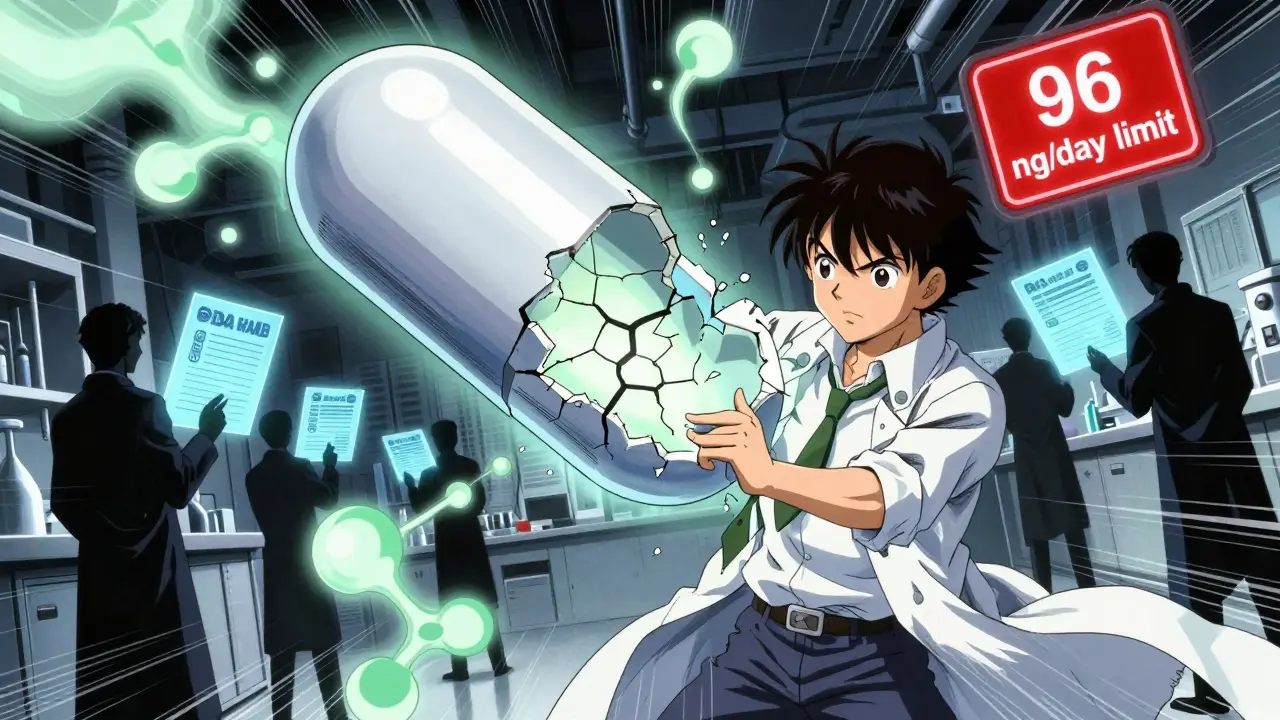
This wasn’t a one-off. In Q1 2024, the FDA tested 187 lots of cardiovascular generics for nitrosamines. Nearly 15% exceeded safety limits. The FDA now requires manufacturers to test for these impurities and cap them at 96 nanograms per day - a level so low it’s almost impossible to measure without advanced labs.
And here’s the kicker: 12.7% of generic drug manufacturing facilities had critical deficiencies during FDA inspections in 2022. That’s not negligible. It means quality control is inconsistent across the board. Some plants are world-class. Others are cutting corners.
Who’s Using Generics - and Who Isn’t?
Market data tells a clear story. Generic statins have a 94.3% market share. Almost everyone takes them. But newer drugs like apixaban (Eliquis) still have only 42.1% generic penetration - because their patents expired recently.
Insurance plans play a big role. Medicare Part D plans get 89.7% of cardiovascular prescriptions filled with generics. Commercial insurers? Only 76.4%. Why? Because they’re less aggressive about pushing generics - or because they’re still negotiating with brand-name makers.
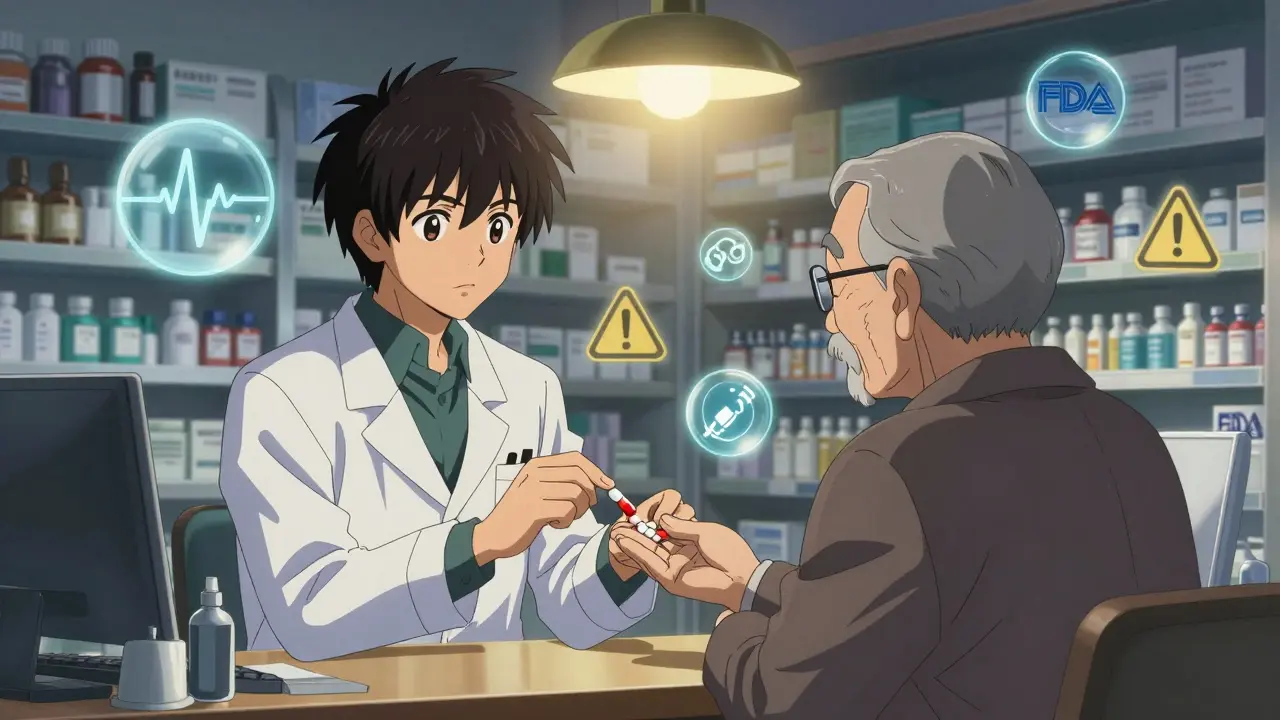
And then there’s the pharmacist. A 2022 survey found 89.4% of pharmacists believe generics are just as safe. But 67.1% say they spend extra time counseling patients who are scared to switch. That’s not just time - it’s trust. And trust is hard to rebuild.
What Should You Do?
If you’re on a cardiovascular generic and feel fine? Don’t switch. There’s no reason to.
If you’re switching from brand to generic? Talk to your doctor. Ask if your drug has a narrow therapeutic index (like warfarin or digoxin). If yes, your doctor may want to monitor you more closely in the first few weeks.
If you feel worse after switching? Don’t ignore it. Go back to your doctor. Ask if you can try the brand again - even if it costs more. Sometimes, the difference matters.
And if you’re worried about quality? Check the manufacturer. Teva, Mylan, and Sandoz make the majority of cardiovascular generics. Look up the pill’s imprint code on the FDA’s database. If it’s made in a facility with recent FDA inspections, you’re likely fine.
What’s Next?
The FDA is tightening rules. In 2023, they released draft guidance for complex generics - especially those with narrow therapeutic windows. The European Medicines Agency now requires food-effect studies for drugs like rivaroxaban. That means manufacturers must prove the drug works the same whether taken with or without food.
More scrutiny is coming. The FDA’s new unannounced inspection pilot program found 47.3% of cardiovascular generic manufacturers had issues - far higher than under routine checks. That’s a wake-up call.
By 2028, we’ll see generics for newer drugs like Entresto (sacubitril/valsartan). But regulatory delays could push those to market 18-24 months later than expected.
The bottom line? Cardiovascular generics are safe for most people. They work. They save money. But they’re not magic. They’re medicine - and like all medicine, they require attention, monitoring, and sometimes, a little patience.