

Taking a pill every day for years isn’t just a habit-it’s a lifestyle. For people managing conditions like high blood pressure, diabetes, rheumatoid arthritis, or heart failure, medication isn’t optional. It’s survival. But here’s the hard truth: chronic medication adherence drops off fast. Studies show that after one year, nearly half of patients stop taking their meds as prescribed. Not because they’re careless. Not because they don’t care. But because it’s exhausting. Overwhelming. Emotionally draining.
Why Sticking to Your Meds Is So Hard
It’s not just about forgetting. It’s about the weight of it all. Waking up to a handful of pills. Worrying about side effects. Fighting insurance denials. Feeling like your body is betraying you. Seeing your friends go on trips without thinking about refills. Watching your medicine cabinet grow while your energy shrinks. A study of 120 people with rheumatoid arthritis found only 52.5% were fully adherent to their meds after a year. That’s more than half falling off track. Why? Because coping with long-term medication isn’t about willpower-it’s about strategy. And most people are left to figure it out alone.The Five Real Coping Strategies (And Which Ones Actually Help)
Research from a 2022 review of 15 studies breaks down five main ways people cope with daily medication routines. Not all of them work. Some even make things worse.- Problem-solving / Active coping: This is the gold standard. People who treat adherence like a puzzle to solve-figuring out how to fit pills into their schedule, setting phone alarms, using pill organizers, calling pharmacists when costs spike-had a 78% success rate in staying on track.
- Emotion-focused coping: Talking to friends, journaling feelings about illness, practicing mindfulness, or using self-encouragement phrases like “I’m doing this for my future self.” This worked for 69% of people in studies. It doesn’t fix the problem, but it makes the burden lighter.
- Seeking understanding: Reading up on your condition, asking doctors questions, watching educational videos. People who do this feel more in control. They’re less likely to skip doses out of fear or confusion.
- Support seeking: Relying on family, support groups, or pharmacists to remind you, help with refills, or just listen. This one’s powerful. People who had someone checking in on them were significantly more likely to stick with their regimen.
- Problem avoidance: Ignoring the pills, pretending you’re fine, hoping the symptoms go away. This backfires. Half the studies showed this approach led to worse adherence. In some cases, people used distraction or denial to cope-and ended up in the hospital.
What Works Best? The Data Doesn’t Lie
Problem-solving and emotion-focused strategies are the clear winners. But here’s what’s interesting: they don’t work in isolation. The people who stayed on track weren’t just using one trick-they were stacking them. One woman in Cape Town, managing diabetes for 12 years, told her pharmacist: “I set three alarms. One for my insulin, one for my metformin, and one for my wife to call me if I haven’t taken them by 8 a.m.” She also kept a small notebook where she wrote down how she felt each day. “If I felt dizzy after my pill, I’d write it down. Then I’d bring it to my doctor. It made me feel like I was part of the team.” That’s active coping + emotion-focused + support seeking. A triple layer of defense. Meanwhile, people who avoided the issue-like the man who stopped his blood pressure meds because “I don’t feel sick”-ended up with strokes. Not because they were lazy. Because they didn’t know how to handle the emotional toll of lifelong treatment.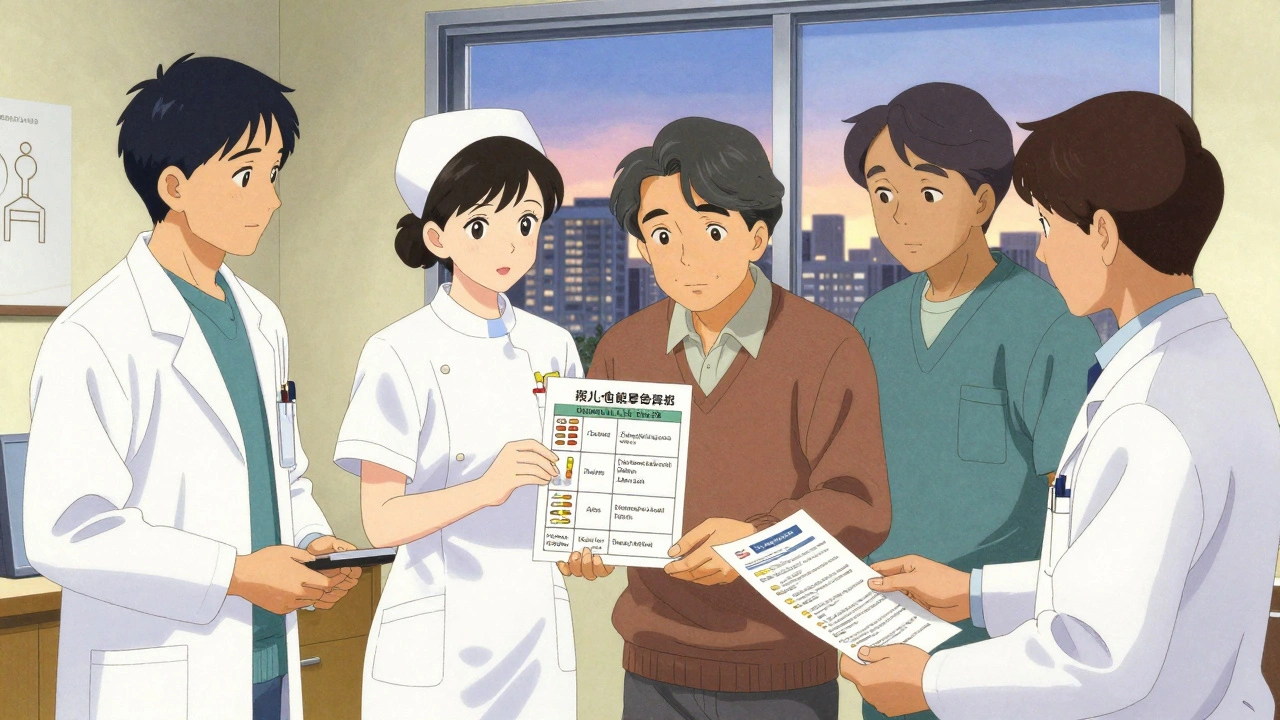
Team-Based Care Makes a Real Difference
No one should have to do this alone. Research from the CDC shows that when patients get team-based care-pharmacists, nurses, doctors, and social workers working together-adherence jumps from 74% to 89% after a year. How? Here’s what it looks like in practice:- A pharmacist reviews your entire list of meds and simplifies it. Combines two pills into one. Switches you to generics that cost 80% less.
- A nurse calls every two weeks to ask: “How are you doing with your pills?” Not in a judgmental way. Just checking in.
- Your doctor uses your EHR to see what your insurance covers before prescribing. No more surprises at the pharmacy.
- A social worker helps you apply for medication assistance programs. You don’t have to choose between rent and your heart medicine.
Barriers No One Talks About
Cost is the biggest. A single pill can cost $150 a month. For someone on a fixed income, that’s groceries gone. But it’s not just money. It’s complexity. Five different pills at five different times? That’s a full-time job. Age and gender matter too. The rheumatoid arthritis study found women were 4.5 times more likely to stick with their meds than men. Why? Not because women are “better patients.” Because women are more likely to seek support, talk about their struggles, and ask for help. Men often bottle it up-until they don’t. And younger people? They’re more likely to skip doses because they feel fine. “I’m 35. I don’t look sick. Why do I need this?” But chronic disease doesn’t care how you look. It only cares if you take the pill.What You Can Do Right Now
You don’t need a perfect system. You need a workable one. Start small.- Use a pill organizer. Buy one with morning, afternoon, evening, and night slots. Fill it every Sunday. No more guessing.
- Set alarms. Use your phone, but don’t just set one. Set three. Label them: “Insulin,” “Blood pressure,” “Pain pill.”
- Call your pharmacist. Ask: “Can I switch to once-a-day versions?” “Are there cheaper generics?” “Can you send me refill reminders?” They’re paid to help you.
- Find your person. One friend. One family member. One support group. Tell them: “I need you to ask me every Thursday: ‘Did you take your pills?’”
- Write it down. Keep a simple log: “Took meds? Yes/No. How did I feel?” You’ll spot patterns. And your doctor will thank you.
The Truth About Willpower
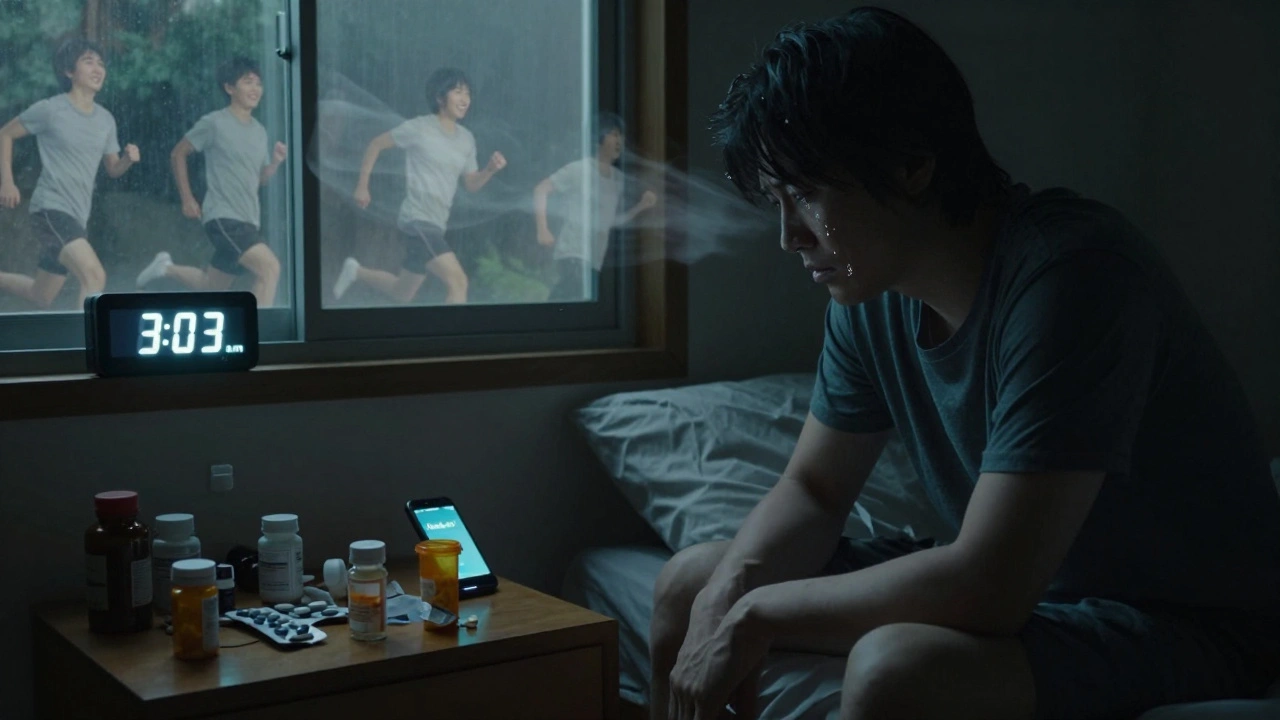
Willpower is not the answer. You can’t outwill a chronic illness. You can’t out-remember a 12-pill routine every day for 10 years. What you need is a system. A team. A way to make it easier. The CDC says medication nonadherence costs the U.S. healthcare system $100-300 billion a year. But behind that number are real people. People who stopped taking their meds because they were tired. Scared. Broke. Alone. The good news? You don’t have to be one of them.When to Ask for Help
If you’re skipping doses because:- You can’t afford them
- You don’t understand why you need them
- You’re scared of side effects
- You feel like no one gets it
Why do people stop taking their chronic meds even when they know it’s important?
People don’t stop because they’re lazy. They stop because it’s emotionally exhausting, financially overwhelming, or too complicated. Side effects, cost, forgetfulness, and feeling fine despite being sick all play a role. Without support or simple systems, the daily burden becomes too heavy to carry.
Is it true that some coping strategies can make adherence worse?
Yes. Avoiding the problem-ignoring pills, pretending you’re not sick, or distracting yourself with busywork-shows up in studies as a predictor of nonadherence. It’s a short-term emotional escape, but long-term it leads to worse health outcomes. Problem-solving and emotional support, on the other hand, help people stay on track.
Can I just use an app to remember my pills?
Apps help, but they’re not enough on their own. A 2022 review found that people who combined apps with human support-like a family member checking in or a pharmacist calling-had much higher adherence than those who relied only on technology. Technology supports. People sustain.
What if I can’t afford my medications?
You’re not alone. Many pharmacies offer generic alternatives, patient assistance programs, or discount cards. Ask your pharmacist about RxAssist.org or local nonprofit programs. Social workers in clinics can also help you apply for aid. Never skip doses because of cost-there are options. Just ask.
Why do women seem to stick to their meds better than men?
Studies show women are more likely to seek support, talk about their health, and ask questions. Men often internalize struggles, avoid discussing symptoms, or feel admitting difficulty is a sign of weakness. It’s not about discipline-it’s about social support patterns. Encouraging open conversations helps everyone.
How long does it take to build a habit of taking chronic meds?
It varies. Some people form routines in 2-3 weeks. Others take months. The key isn’t time-it’s consistency paired with support. If you miss a day, don’t punish yourself. Just reset. Use reminders, involve someone you trust, and keep going. Habit isn’t perfection. It’s persistence.
Jennifer Patrician
December 4, 2025 AT 15:30LOL so now we’re supposed to believe Big Pharma doesn’t want us to forget our pills? 😂 They make BILLIONS off us being dependent. The real ‘strategy’ is getting off these toxic chemicals entirely. Have you heard of herbal alternatives? Or fasting? No? That’s because your doctor’s paid by the pill company. Wake up.
Mark Curry
December 6, 2025 AT 02:35It’s not about willpower. It’s about meaning. If taking a pill feels like surrender, no amount of alarms or organizers will help. Maybe the real problem isn’t adherence-it’s whether the system makes us feel like we still have agency. I’m not saying stop the meds. I’m saying: who gets to decide what ‘health’ means?
Manish Shankar
December 6, 2025 AT 07:23Respectfully, this article presents a profoundly insightful and meticulously researched perspective on chronic medication adherence. The data cited from the 2022 review, coupled with the CDC’s findings on team-based care, underscores the necessity of a multidisciplinary approach. In my professional experience in India, where access to pharmacists is limited, even simple interventions such as weekly family check-ins significantly improve outcomes. I commend the emphasis on human connection over technological fixes.
Lynette Myles
December 8, 2025 AT 06:02Problem avoidance isn’t a coping strategy. It’s denial. And denial kills. The study says so. Stop pretending you’re fine. Take your pill.
Annie Grajewski
December 9, 2025 AT 16:42OMG I literally cried reading this. I’ve been on 7 meds since I was 28 and my mom still calls me every Sunday like ‘did u take ur blood pressure thing??’ 🥲 I set 5 alarms but sometimes I just wanna scream and throw the pill organizer out the window. But then I remember: I’m not lazy. I’m just tired. And that’s okay. Also, my pharmacist gave me a free lanyard with my meds on it. I wear it to the grocery store. It’s my superhero cape. 💪
Katie Allan
December 10, 2025 AT 05:15This is the kind of post that reminds me why I still believe in community. The idea that someone’s survival hinges on whether they have a friend who texts them every Thursday? That’s not healthcare. That’s humanity. And it’s not optional. If you’re reading this and you’re struggling-reach out. Even if it’s just to say ‘I’m tired.’ You’re not a burden. You’re a person. And you matter.
Kylee Gregory
December 11, 2025 AT 23:52I think the most powerful line here is: ‘Willpower is not the answer.’ We’ve been sold this myth that if you just tried harder, you’d be fine. But chronic illness isn’t a test of discipline-it’s a test of systems. And right now, the system is failing. The fact that women are 4.5x more likely to adhere because they’re socialized to ask for help? That’s not a strength. That’s a flaw in how we treat men’s emotional health. We need to fix the culture, not just the pill organizer.
Lucy Kavanagh
December 13, 2025 AT 20:14Interesting how this article never mentions that the real reason people stop taking meds is because the government and pharma are secretly adding mind-control chemicals to the pills. You think your doctor is helping you? They’re just following orders from the WHO’s global compliance program. That’s why they push ‘team-based care’-so they can track you. Don’t fall for it. Use a pill organizer? Sure. But don’t trust the system. And if you’re a man? You’re being groomed to collapse so they can label you ‘noncompliant.’ Wake up.