
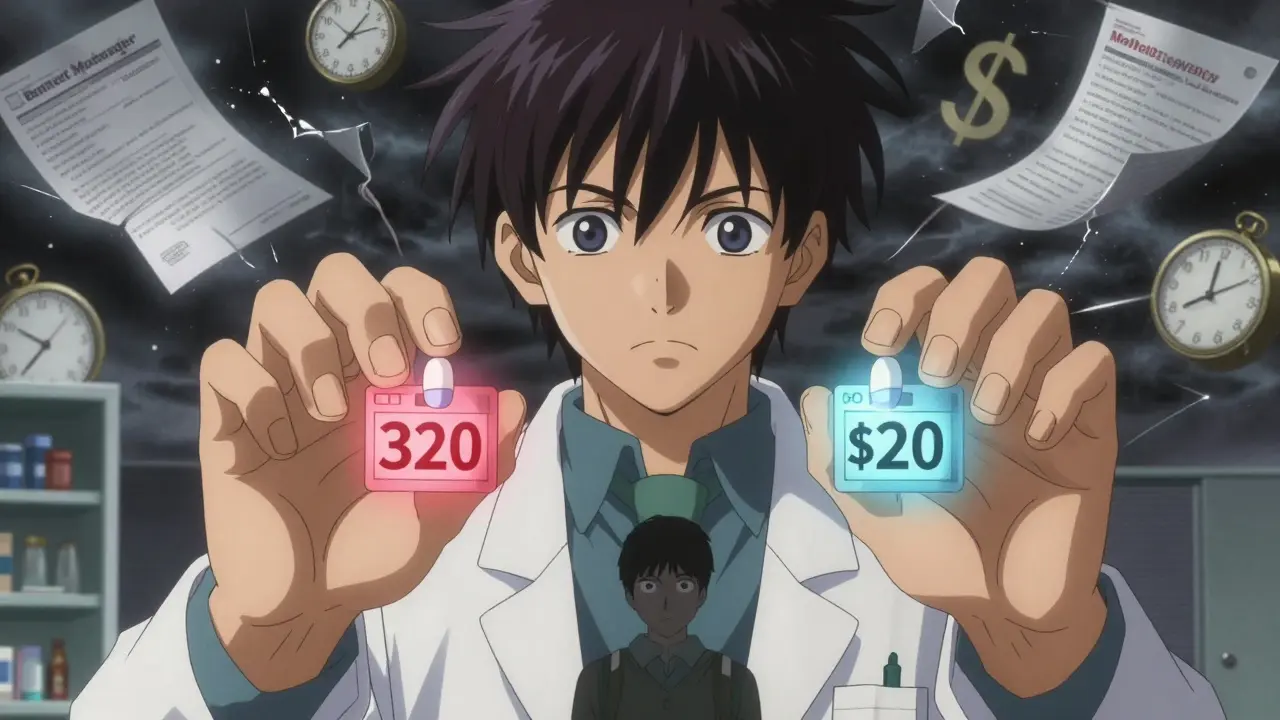
Generic drugs aren’t just cheaper versions of brand-name medicines-they’re often the key to saving billions in healthcare spending. But how do we know which generics actually deliver the best value? That’s where cost-effectiveness analysis comes in. It’s not about picking the lowest price tag. It’s about figuring out which treatment gives you the most health benefit for every dollar spent.
Why generics aren’t all created equal
Not all generic drugs are priced the same-even when they contain the exact same active ingredient. A 2022 study in JAMA Network Open looked at the top 1,000 generic drugs in the U.S. and found something surprising: some generics were over 15 times more expensive than other drugs in the same therapeutic class that worked just as well. One drug, for example, cost $320 per month while a clinically equivalent alternative cost just $20. That’s not a pricing error. That’s a systemic issue. The reason? It’s not always about manufacturing cost. It’s about market timing, patent loopholes, and how pharmacy benefit managers (PBMs) structure contracts. PBMs often profit from the gap between what they pay pharmacies and what insurers pay them-a practice called “spread pricing.” This creates an incentive to keep higher-priced generics on formularies, even when cheaper, equally effective options exist.How cost-effectiveness analysis works
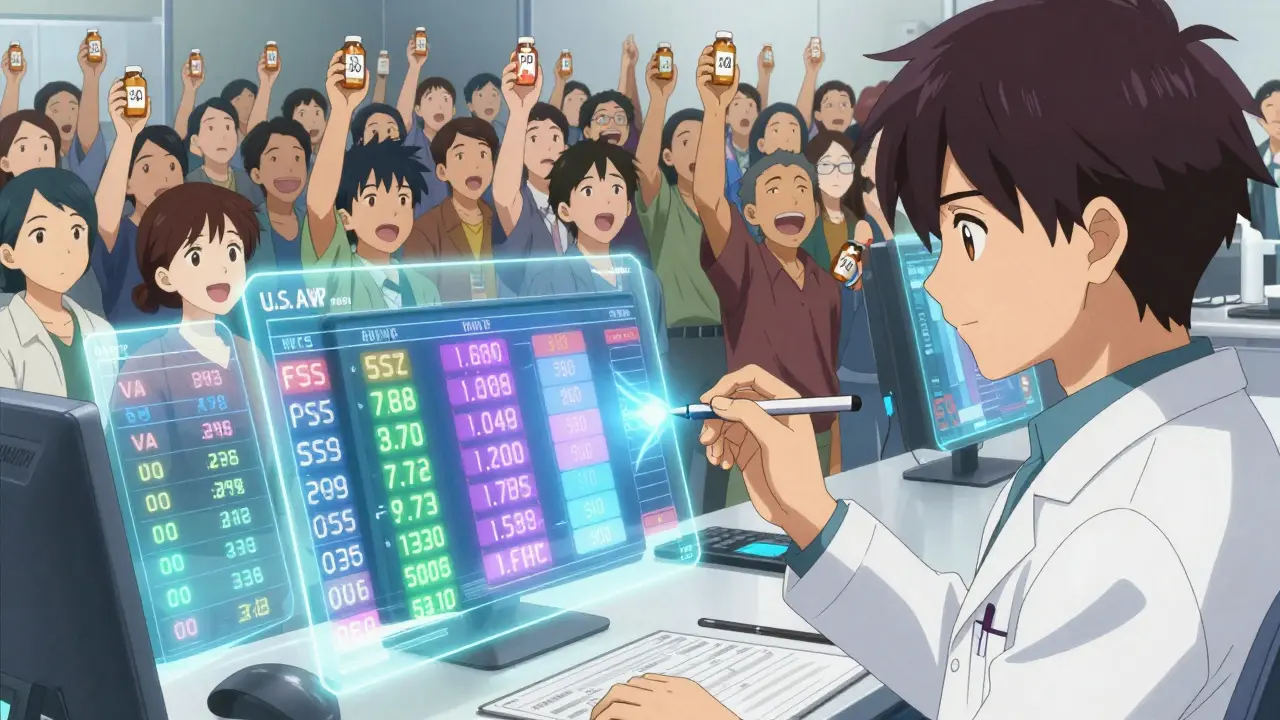
Cost-effectiveness analysis (CEA) measures how much health improvement you get per dollar spent. The most common metric is the incremental cost-effectiveness ratio, or ICER. It tells you how much extra it costs to gain one additional quality-adjusted life year (QALY)-a measure that accounts for both how long someone lives and how well they live. For generics, CEA compares the cost of a brand-name drug to its generic equivalent, or even compares two different generics. The analysis uses real-world pricing data from sources like the Federal Supply Schedule (FSS), Veterans Affairs (VA) pricing, and Average Wholesale Price (AWP). But here’s the catch: VA pricing for generics is typically 27% of AWP, while brand drugs are marked up to 64% of AWP. That’s why using outdated or inaccurate pricing data can completely skew results. The NIH found that when two generic manufacturers enter the market, prices drop by 54% compared to the original brand. With four or more generics, prices fall by 79%. But most published analyses don’t account for this. A 2021 ISPOR conference report showed that 94% of cost-effectiveness studies failed to model future generic price drops. That means they’re making decisions based on today’s prices, not tomorrow’s reality.The hidden savings in therapeutic substitution
One of the biggest opportunities for savings isn’t switching from brand to generic-it’s switching from one generic to another. The JAMA study identified 45 high-cost generics that had cheaper alternatives in the same therapeutic class. If all those high-cost generics were replaced, total spending would have dropped from $7.5 million to just $873,711. That’s an 88% reduction. The biggest price gaps happened when drugs were switched between different formulations-like changing from a tablet to a capsule-or between drugs with different brand names but the same active ingredient. Even between identical drugs made by different companies, prices varied by an average of 1.4 times. That’s not because one is better. It’s because of how the market is structured. This isn’t just theoretical. In the U.S. Veterans Health Administration, where formularies are tightly managed, switching to lower-cost generics saved over $1 billion in a single year. In Europe, where health technology assessment agencies routinely use CEA, generic adoption rates are higher and prices are lower.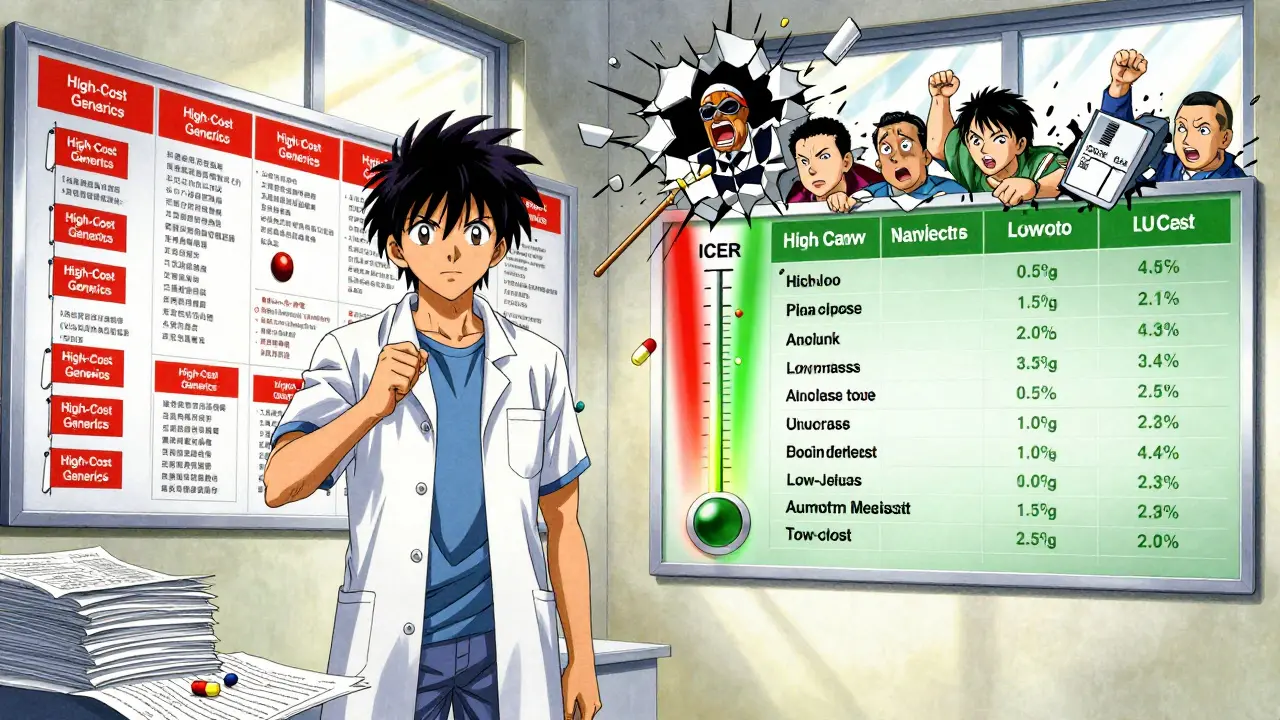
Why the system breaks down
The problem isn’t the science. It’s the incentives. Drug manufacturers know that if they price their generic just below the cost-effectiveness threshold-say, $50,000 per QALY-they’ll get covered. So they set prices just under that line, even if their drug costs pennies to make. And since most CEA models don’t account for upcoming patent expirations, they miss the fact that prices will plummet in six months. Another issue: industry-funded studies are far more likely to show favorable results for branded drugs. A 2000 review in Health Affairs found that studies paid for by pharmaceutical companies were significantly more likely to conclude that brand drugs were cost-effective-even when the data didn’t support it. Then there’s the lack of transparency. Many insurers and PBMs use proprietary models. They don’t publish how they calculate value. So even if a cheaper generic exists, it might not be added to the formulary because the decision-makers don’t have the data-or the incentive-to look.What needs to change
To make cost-effectiveness analysis work for generics, three things must happen:- Model future price drops. Analysts need to build in projections for generic entry based on patent expiration dates. If a drug loses exclusivity in 18 months, the analysis shouldn’t use today’s inflated price.
- Use real-world pricing data. Rely on FSS, VA, or Medicaid pricing-not inflated AWP benchmarks. These reflect what’s actually paid, not what’s listed on paper.
- Force transparency. Payers should publish their formulary decision criteria. If a generic is excluded because it’s “not cost-effective,” they should show the math.
What this means for patients and systems
The U.S. healthcare system spent over $250 billion on prescription drugs in 2022. Generics made up 90% of prescriptions but only 17% of the total cost. That’s a huge win. But if we’re not using CEA to pick the *right* generics, we’re leaving money on the table-and patients paying more than they should. In South Africa, where public health budgets are stretched thin, getting this right could mean the difference between covering HIV antiretrovirals for everyone or rationing them. In the U.S., it could mean lowering premiums for millions of insured people. In Europe, it’s already helping governments extend coverage to more patients without raising taxes. The goal isn’t to cut costs. It’s to get more health for the same-or less-money. And with over 300 small-molecule drugs losing patent protection between 2020 and 2025, the window to get this right is closing fast.What you can do
If you’re a patient, ask your pharmacist: “Is there a cheaper generic that works the same?” Don’t assume your prescription is the only option. If you’re a clinician, push for formulary reviews that include therapeutic substitution. If you’re a policymaker, demand that cost-effectiveness models include future generic pricing. The tools are there. The data is there. What’s missing is the will to use them.What is cost-effectiveness analysis in the context of generic drugs?
Cost-effectiveness analysis (CEA) measures how much health benefit-like extra years of life or improved quality of life-you get for each dollar spent on a drug. For generics, it compares the price of a brand-name drug to its generic version, or even compares two different generics to find the one that delivers the best value. It uses metrics like the incremental cost-effectiveness ratio (ICER), which calculates cost per quality-adjusted life year (QALY).
Why are some generic drugs so much more expensive than others?
Even when two generics have the same active ingredient, prices can vary wildly due to market timing, patent strategies, and how pharmacy benefit managers (PBMs) negotiate contracts. Some PBMs profit from the gap between what they pay pharmacies and what insurers pay them-a practice called spread pricing. This creates an incentive to keep higher-priced generics on formularies, even when cheaper, equally effective options exist. The JAMA Network Open study found some generics were 15 times more expensive than clinically equivalent alternatives.
Can switching between generics save money?
Yes, often more than switching from brand to generic. A 2022 study found that among the top 1,000 generics, 45 high-cost drugs had cheaper alternatives in the same therapeutic class. Replacing those high-cost generics would have cut total spending from $7.5 million to under $900,000-a drop of 88%. The biggest savings come from swapping between different formulations or brands of the same drug class, not just choosing any generic over a brand.
Why do most cost-effectiveness studies ignore future generic prices?
Most published analyses rely on current prices and don’t model what happens when patents expire. A 2021 ISPOR report found that 94% of cost-effectiveness studies failed to account for future generic entry. This makes them outdated before they’re even published. When a drug’s patent is set to expire in six months, using today’s high price makes the brand look cost-effective-when in reality, a cheaper generic will soon dominate the market.
How do pharmacy benefit managers affect generic pricing?
Pharmacy benefit managers (PBMs) often profit from “spread pricing”-the difference between what they pay pharmacies and what they charge insurers. If a high-cost generic pays them more, they have a financial incentive to keep it on the formulary, even if a cheaper, equally effective alternative exists. This distorts the market and undermines cost-effectiveness analysis, because decisions are based on profit margins, not patient outcomes.
Is cost-effectiveness analysis used everywhere?
In Europe, over 90% of health technology assessment agencies use formal CEA to decide which drugs to cover. In the U.S., only about 35% of commercial payers routinely use it, according to a 2022 AMCP survey. Public programs like Medicare and the VA use it more consistently, but many private insurers rely on proprietary models that aren’t transparent. This inconsistency leads to unequal access and higher costs for patients.
What’s the biggest barrier to better generic pricing?
The biggest barrier is misaligned incentives. Manufacturers set prices just below the cost-effectiveness threshold to ensure coverage. PBMs profit from price spreads. Insurers don’t demand transparency. And analysts don’t model future price drops. Until these systems are redesigned to reward value-not just low cost or high profit-patients will keep paying more than they should.
jeremy carroll
December 16, 2025 AT 08:57bro i had no idea generics could be 15x more expensive for the same stuff. my pharmacy just gives me whatever’s on the shelf and i never thought to ask if there was a cheaper version. now i’m gonna start demanding answers. this is wild.
also why does my insurance even let this happen? someone’s making bank off my prescriptions and i’m just sitting here wondering why my copay jumped again.
Natalie Koeber
December 17, 2025 AT 10:27obviously this is all a Big Pharma-PBM cartel. they’ve been manipulating the system since the 90s. you think they’re letting cheap generics in because they care about patients? lol. they’re keeping prices high so they can funnel cash into lobbying and those fancy ‘patient assistance programs’ that look good on TV but never actually help anyone.
they’ll let you pay $320 for a pill that costs 20 cents to make because they know you’ll take it. you’re not a customer-you’re a revenue stream. wake up.
Rulich Pretorius
December 19, 2025 AT 07:25As someone from South Africa, I’ve seen this play out in real time. When we switched to generic antiretrovirals, we went from rationing treatment to covering everyone in the public system. But it wasn’t just about switching brands-it was about forcing transparency, demanding real pricing data, and refusing to accept ‘cost-effective’ when the math was clearly rigged.
What’s happening in the U.S. isn’t a market failure-it’s a moral failure. If you can save 88% on drugs and still save lives, why aren’t you doing it? Money isn’t the barrier. Will is.
And yes, the system is broken. But it’s broken because we let it be. Not because we couldn’t fix it.
Dwayne hiers
December 20, 2025 AT 16:17Let’s clarify a few key metrics here. The ICER threshold of $50,000–$150,000/QALY is widely cited in U.S. analyses, but it’s not an evidence-based ceiling-it’s a political artifact. Meanwhile, VA and FSS pricing reflects actual net prices, not AWPs inflated by PBM spreads. Studies using AWP are methodologically invalid for generic evaluation.
Additionally, the 94% failure rate in modeling future generic entry is not just negligence-it’s systemic bias. When industry-funded models exclude patent cliffs, they’re not ‘optimistic,’ they’re misleading. Dynamic modeling with real-world price elasticity curves is not optional-it’s essential for ethical decision-making.
Jonny Moran
December 21, 2025 AT 21:19Hey, I work in a community clinic and we started pushing therapeutic substitution last year. We took one high-cost generic off formulary-just swapped it for a cheaper one with the same active ingredient-and saved over $12k in three months.
Patients didn’t notice a difference. No side effects. No complaints. Just lower copays. It’s not magic. It’s just common sense.
Why isn’t every clinic doing this? We’re not asking for revolution. Just a little accountability.
Alexis Wright
December 23, 2025 AT 20:00Oh wow, another feel-good post about ‘saving money’ while ignoring the fact that generics are just as dangerous as brand names-just cheaper. You think lowering prices means better outcomes? That’s not cost-effectiveness, that’s cost-cutting. People die when you prioritize price over safety. And you’re acting like this is some noble reform.
Who approved these generics? Who monitored their bioequivalence? Who checked for fillers? You don’t know what’s in those pills. And neither do I. But I know this: if it’s 15x cheaper, something’s missing.
Don’t mistake cheap for safe. And don’t mistake ignorance for innovation.
Rich Robertson
December 24, 2025 AT 03:53Just spent an hour reading this. Honestly? This is the most important thing I’ve read all year.
My mom’s on a $400/month generic for blood pressure. Turns out there’s a $22 version that’s identical. She didn’t know. Her doctor didn’t know. The pharmacist just handed her the one on the shelf.
We switched. She’s saving $4,500 a year. No side effects. No issues. Just… cheaper.
Why is this even a thing? Why do we let corporations decide what we pay for medicine? It’s not rocket science. It’s basic arithmetic.
Wade Mercer
December 24, 2025 AT 05:53People like you think you’re helping by pushing generics. But you’re just enabling the system to keep exploiting patients under the guise of ‘affordability.’
If the government forced transparency, if PBMs were banned from spread pricing, if manufacturers couldn’t game the ICER thresholds-then maybe. But you’re not fixing the system. You’re just making it easier for them to keep taking from us.
And you call this progress? Pathetic.
Daniel Thompson
December 25, 2025 AT 19:50Interesting analysis, but you’re missing the human element. I’ve had patients cry because they couldn’t afford their meds-even the ‘cheap’ ones. The problem isn’t the model. It’s that we treat healthcare like a spreadsheet. People aren’t QALYs. They’re mothers, fathers, veterans, kids.
Yes, we need better data. But we also need compassion. And right now, the system has none.
Daniel Wevik
December 27, 2025 AT 10:05Let me just say this: the VA model works because they have zero tolerance for nonsense. No spread pricing. No PBM middlemen. No inflated AWP. Just straight-up procurement based on real cost + quality.
And guess what? They get better outcomes at lower cost. Not because they’re saints. Because they’re smart.
Why can’t every payer in the U.S. just copy the VA? Because they’re too busy getting kickbacks from pharma. This isn’t about science. It’s about corruption. And we’re the ones paying for it.
Tim Bartik
December 28, 2025 AT 18:30Y’all are losing it. This is just another liberal scheme to make drugs free. You think the government’s gonna fix this? LOL. They’ll just make it worse. Next thing you know, we’ll be rationing insulin because some bureaucrat decided a $10 generic is ‘cost-effective’ and now people are dying because it doesn’t work as well.
Also, who the hell are you to tell me what medicine I can take? I don’t want some spreadsheet deciding my life. I want my doctor to pick what’s best. Not some suit in DC.