
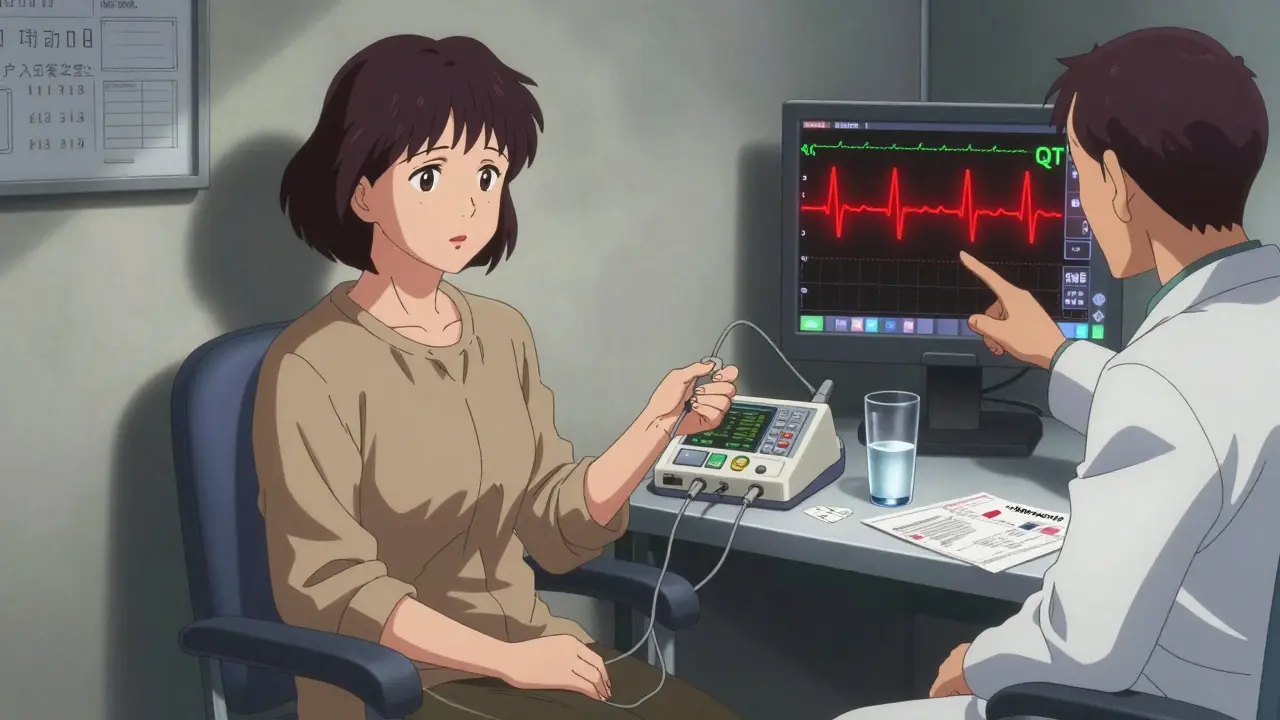
Macrolide Therapy Risk Calculator
Risk Assessment Tool
This tool helps determine your risk of QT prolongation when taking macrolide antibiotics like azithromycin or clarithromycin. Based on the latest clinical guidelines, it calculates your risk score using key factors identified by the American Heart Association.
Important: This tool is for informational purposes only. Always consult with your healthcare provider before starting any medication.
Risk Assessment Results
When you're prescribed an antibiotic like azithromycin or clarithromycin, most people assume it's just another pill to clear up a cough or sinus infection. But behind that simple prescription lies a hidden risk-one that can turn a routine treatment into a life-threatening event. The problem? These commonly used antibiotics can mess with your heart’s electrical rhythm, stretching out a key part of the heartbeat called the QT interval. If that interval gets too long, it can trigger a dangerous arrhythmia called Torsades de Pointes, which can lead to sudden cardiac arrest. The question isn’t whether this risk exists-it’s who needs to be checked before taking these drugs.
Why Macrolides Are More Dangerous Than You Think
Macrolide antibiotics-azithromycin, clarithromycin, and erythromycin-are among the most prescribed antibiotics worldwide. In 2024, azithromycin alone made up 62% of all macrolide prescriptions. They’re used for everything from pneumonia to bronchitis, even acne and some STIs. But here’s what most patients and even some doctors don’t realize: these drugs directly block a potassium channel in the heart called hERG. That’s the same channel that keeps your heartbeat regular. When it’s blocked, the heart takes longer to recharge between beats, and that delay shows up on an ECG as a prolonged QT interval.
The data is clear. A 2012 study in the New England Journal of Medicine found that people taking azithromycin had a 2.7 times higher risk of cardiovascular death compared to those taking amoxicillin. Erythromycin carries an even higher risk-over four times more likely to cause QT prolongation than azithromycin. The British Thoracic Society (BTS) confirmed this in 2020, stating that any patient starting long-term macrolide therapy for conditions like bronchiectasis or COPD must have an ECG first. Why? Because even if you feel fine, your heart might not be.
Who Is at Real Risk?
Not everyone who takes a macrolide will have a problem. But some people are sitting on a ticking clock. The NIH and American Heart Association have identified 14 key risk factors that stack up like dominos. The biggest ones:
- Female sex - Women are nearly three times more likely to develop drug-induced long QT syndrome.
- Age over 65 - As we age, our hearts handle drug metabolism less efficiently.
- Existing heart conditions - Prior arrhythmias, heart failure, or a history of fainting spells raise the risk.
- Low potassium or magnesium - These minerals help keep your heart’s electrical system stable. Diuretics or poor nutrition can drop them dangerously low.
- Other QT-prolonging drugs - Taking an antipsychotic, antidepressant, or even some antifungals with a macrolide? That’s a red flag.
- Chronic kidney disease - Your kidneys help clear these drugs. If they’re not working well, the drug builds up in your system.
Here’s the scary part: many of these people never know they’re at risk. A 2024 survey of primary care doctors found that 47% believed the risk was "low in healthy patients"-but "healthy" doesn’t mean "no hidden heart rhythm issues." In fact, one study found that 1.2% of patients undergoing routine ECG screening before macrolide therapy were discovered to have previously undiagnosed Long QT Syndrome. That’s one in every 80 people. Imagine if that person had been sent home with a prescription and no ECG.
When ECG Monitoring Is Non-Negotiable
The British Thoracic Society’s 2020 guidelines are the clearest roadmap we have. They say: if you’re starting long-term macrolide therapy (more than 14 days), get an ECG before you take the first pill. No exceptions. The cutoffs are strict: QTc over 450 ms for men, over 470 ms for women. If you’re above those numbers, the drug should be avoided.
But what about short courses? Like a 5-day azithromycin for a sinus infection? Here’s where things get messy. Most guidelines don’t require ECGs for short-term use-unless you have risk factors. The problem? Many doctors don’t ask about them. A 2024 study showed only 22% of primary care providers routinely check for risk factors before prescribing macrolides. That’s a dangerous gap.
And it’s not just about the first dose. The NIH warns that QT prolongation can develop after days or even weeks of treatment. That’s why BTS recommends a second ECG one month after starting therapy-especially for patients on long-term regimens for chronic lung disease. A 2024 UK hospital study found that 18% of patients on long-term azithromycin developed new QT prolongation by the fourth week. Without that second check, you wouldn’t know.

What Happens If You Skip the ECG?
Most people will never have a problem. But when it goes wrong, it goes very wrong. One Reddit post from a physician in Scotland described a 68-year-old woman with a baseline QTc of 480 ms-just above the safety limit. She was prescribed clarithromycin for pneumonia. Five days later, she went into Torsades de Pointes. She survived, but only because her husband found her unresponsive and called 999. She needed emergency cardioversion. Her ECG had been done months ago for a different reason-but no one connected the dots.
Another case: a 72-year-old man with mild kidney disease took azithromycin for a chest infection. He was on a diuretic and a statin. His QTc was never checked. He collapsed at home three days later. He didn’t survive. Autopsy showed no structural heart disease-just a prolonged QT interval from drug interaction.
These aren’t rare. The absolute risk of Torsades is low-about 1 to 8 cases per 10,000 patient-years. But once your QTc hits 500 ms, the risk jumps to 3-5%. That’s not a small number. It’s a real, preventable death.
The Reality of Screening in Practice
Here’s the catch: universal ECG screening for everyone on macrolides isn’t practical. In the UK, 12 million macrolide prescriptions are written every year. At £28.50 per ECG, that’s £342 million a year. No healthcare system can afford that. And in the U.S., only 18% of primary care settings even have ECG machines on-site.
So what’s the answer? Targeted screening. The American Heart Association’s 2025 update introduced a simple 9-point scoring system:
- Female sex - +1 point
- Age >65 - +1 point
- History of heart disease - +2 points
- Use of diuretics - +1 point
- Low potassium (<3.3 mmol/L) - +1 point
- Use of another QT-prolonging drug - +2 points
- Chronic kidney disease (eGFR <60) - +1 point
- Family history of sudden cardiac death - +1 point
- History of unexplained fainting - +1 point
If your score is 4 or higher? Get an ECG. If it’s 3 or lower? You’re likely low risk. This isn’t perfect-but it’s smarter than checking everyone or checking no one.
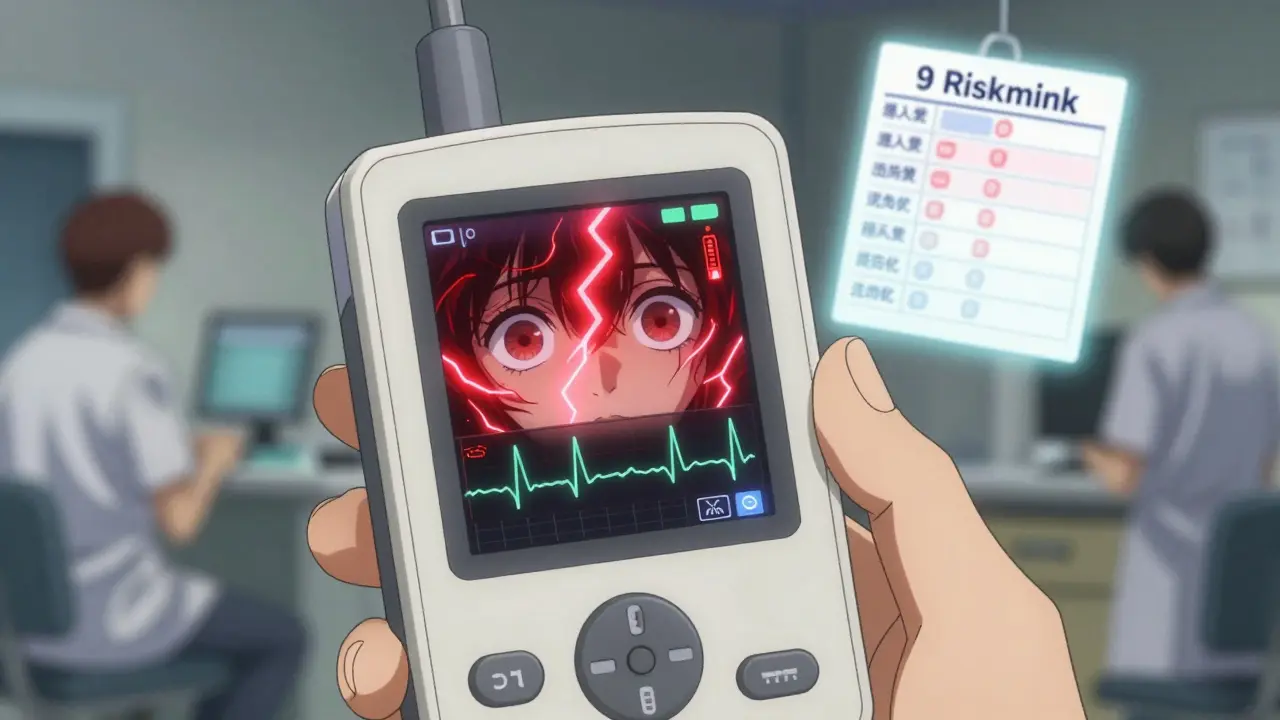
Even better? Some hospitals are now using point-of-care ECG devices that give results in under 90 seconds. A pilot in 15 UK clinics cut the wait time for therapy from 5.2 days to just 0.8 days. That’s a game-changer for patients who need treatment fast.
What You Should Do
If you’re prescribed a macrolide antibiotic, here’s what to ask your doctor:
- "Am I on any other medications that can affect my heart rhythm?"
- "Do I have any risk factors for long QT syndrome?"
- "Should I get an ECG before starting this?"
- "What should I watch for? Dizziness? Palpitations? Fainting?"
If you’re over 65, female, on diuretics, have kidney disease, or take other heart-affecting drugs-don’t wait. Push for the ECG. It’s not overkill. It’s common sense.
And if you’re a clinician? Stop assuming your patient is "low risk" because they’re "young and healthy." Many people with hidden heart risks never show symptoms until it’s too late. Use the 9-point score. Use the ECG when it counts. You might save a life.
What’s Next?
The future is getting smarter. Electronic health records like Epic are now automatically flagging macrolide prescriptions for patients with risk factors. In 43% of U.S. hospitals, the system will pop up a warning: "QT prolongation risk-consider ECG." That’s progress.
But until every primary care clinic has access to fast, affordable ECG screening, the burden falls on you-the patient. Ask the question. Demand the test. Your heart might not be able to tell you it’s in danger. But you can.
Do all macrolide antibiotics carry the same risk of QT prolongation?
No. Erythromycin carries the highest risk, with an odds ratio of 4.82 for QT prolongation compared to azithromycin’s 1.77. Clarithromycin is in between. Azithromycin is generally considered lower risk, but it’s not risk-free-especially in people with other risk factors like kidney disease or female sex. Even low-risk drugs can trigger dangerous arrhythmias when combined with other medications or underlying conditions.
Can I get an ECG at my local pharmacy or urgent care?
Some urgent care centers and walk-in clinics now offer basic ECG services, especially in areas with higher rates of cardiac monitoring. However, most pharmacies do not. The best option is to ask your primary care provider to order the test. In the UK, some respiratory clinics now use handheld ECG devices that give results in under two minutes. In the U.S., availability is still limited, but hospitals and specialty clinics are increasingly adopting this practice.
What symptoms should I watch for after starting a macrolide?
Stop the medication and seek emergency care if you experience dizziness, lightheadedness, sudden palpitations (fluttering or racing heartbeat), fainting, or seizures. These can be signs of Torsades de Pointes, a life-threatening arrhythmia. Even if symptoms seem mild, don’t ignore them. QT prolongation can progress quickly, especially in the first 5-7 days of treatment.
Is it safe to take azithromycin if I have a normal ECG?
A normal baseline ECG reduces risk but doesn’t eliminate it. QT prolongation can develop during treatment, especially if you’re on long-term therapy or have hidden risk factors like low potassium or kidney disease. For short courses (3-5 days) in low-risk patients, the benefit usually outweighs the risk. But if you’re on the drug for more than 10 days, or have multiple risk factors, a follow-up ECG at one month is strongly recommended.
Can I switch to a different antibiotic to avoid this risk?
Yes, in many cases. For respiratory infections, amoxicillin, doxycycline, or levofloxacin (with caution) are common alternatives. But not all alternatives are safer-levofloxacin, for example, also carries a QT prolongation risk. The key is to discuss your personal risk profile with your doctor. If you have multiple risk factors, avoiding macrolides entirely may be the safest choice. Always weigh the infection’s severity against the cardiac risk.
Brooke Exley
February 23, 2026 AT 09:50As a nurse who's seen this go sideways too many times, I can't believe we're still not doing baseline ECGs for anyone over 60 on macrolides. It's not rocket science. One quick 10-second test could save a life. I've had patients on azithromycin for COPD who didn't even know they had QT prolongation until they nearly coded. Don't wait for the collapse. Get the ECG. Seriously.
And yes, I know it's inconvenient. But so is explaining to a widow why her husband didn't make it home from the grocery store because no one checked his heart rhythm before prescribing a "harmless" antibiotic.
Alfred Noble
February 25, 2026 AT 03:58bro honestly i had no idea about this. took azithromycin last year for bronchitis and felt fine. now im kinda paranoid lol. should i get an ekg? my doc just shrugged when i asked. also i take lisinopril and a multivitamin. is that bad?? 🤔
Matthew Brooker
February 26, 2026 AT 12:06This is one of those topics that should be shouted from rooftops. I work in primary care and we don't even have an ECG machine in the office. We refer people out and half the time they don't show up. The system is broken. We need to make this part of the prescribing workflow-not an afterthought. If you're over 65, on diuretics, or female? ECG before the script. Period. And if your provider says "it's low risk," ask them if they'd take it themselves. I bet they'd say no.
Also-seriously, if you're on a statin + diuretic + macrolide, you're playing Russian roulette with your heart. Stop being casual about this.
Emily Wolff
February 27, 2026 AT 11:22How is this even a debate? The data is unequivocal. Anyone who skips an ECG before prescribing macrolides in high-risk populations is practicing malpractice disguised as convenience. The British Thoracic Society’s guidelines aren’t suggestions-they’re standard of care. If your provider doesn’t follow them, find a new one. This isn’t about fearmongering. It’s about competence.
Lou Suito
February 27, 2026 AT 13:51Wait wait wait-so you're saying a 5-day course of azithromycin for a sinus infection is dangerous? That's absurd. I've taken it 3 times in the last year. I'm 42, healthy, no meds. My heart is fine. This is just another overmedicalized fear tactic. Next they'll say drinking water can cause hyponatremia. Where's the evidence for population-wide screening? It's not cost-effective. It's not necessary. It's panic dressed up as science.
Joseph Cantu
February 28, 2026 AT 15:33They don't want you to know this. The pharmaceutical companies know. The FDA knows. The AMA knows. But they're letting millions of people die quietly because ECGs cost money and they don't want to admit their drugs are killing people. Look at Vioxx. Look at OxyContin. This is the same playbook. They'll profit from your death while your family pays for the funeral. The system is designed to let you die before they fix it. And they'll call it "low risk"-like it's a weather report. It's not. It's murder by prescription. Wake up.
Jacob Carthy
March 2, 2026 AT 04:47Why are we even doing this? In America we don't need ECGs for antibiotics. That's Europe. We got doctors who know what they're doing. If you're healthy, you're fine. Stop overcomplicating everything. I took clarithromycin last year and I'm still here. My grandpa took it in '98 and lived to 92. This is just woke medicine nonsense. Let people live. Don't scare folks into tests they don't need.
Cory L
March 2, 2026 AT 11:33Y’all are missing the real story. The real problem isn’t just the ECG-it’s that we’re prescribing these drugs like they’re candy. I’ve seen patients get azithromycin for viral bronchitis. That’s not even a valid indication. The antibiotics aren’t the problem. The prescribing culture is. Stop giving macrolides for colds. Stop using them as first-line for everything. Use amoxicillin. Use doxycycline. There are safer options. Fix the prescribing habit before you fix the ECG protocol. The heart doesn’t care how much you know-it only cares how much you do.