
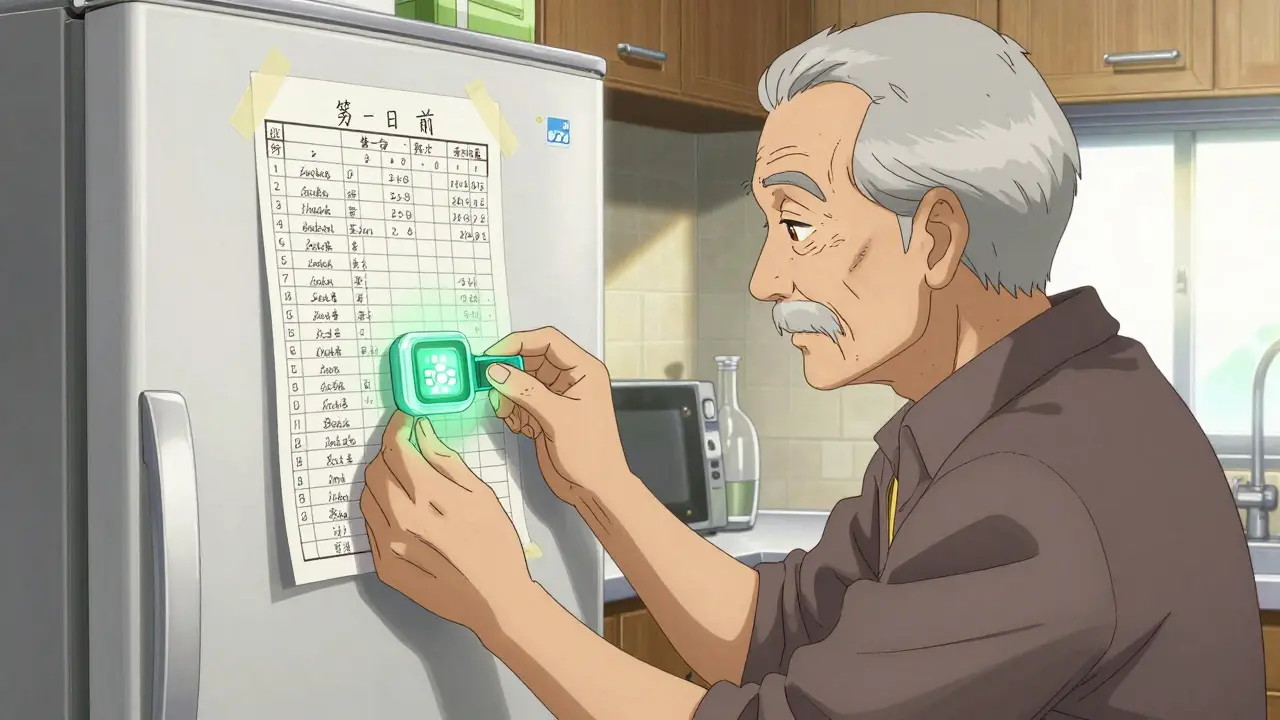
Getting your meds on time isn’t just about remembering to take them-it’s about staying alive. For people managing chronic conditions like high blood pressure, diabetes, or heart failure, missing even one dose can lead to hospital visits, worsening symptoms, or worse. Yet studies show that medication adherence is poor in nearly half of all patients. The good news? Tracking your doses with simple tools-like medication lists and logs-can change that. And today’s digital options make it easier than ever.
Why Medication Adherence Matters More Than You Think
Every year in the U.S. alone, non-adherence to prescriptions causes an estimated $300 billion in avoidable healthcare costs. That’s not just money-it’s lives. Patients who skip doses are 50% more likely to be hospitalized. For someone on blood thinners or insulin, a missed dose isn’t a small slip-it’s a medical emergency waiting to happen.
But here’s the catch: most people don’t realize they’re non-adherent. They think, “I took it yesterday, so I’m fine.” Or they forget because their routine changed. Or they’re afraid of side effects and stop cold turkey. Without a system to track what’s been taken, it’s impossible to know if you’re truly on track.
Traditional Methods: Paper Medication Lists and Logs
For decades, the go-to tool was a simple paper list. Write down each medication, the dose, and the time it’s due. Then, check off each dose as you take it. It sounds basic-and it is. But surprisingly, it still works for many.
Here’s how to make it effective:
- Use a printed template or create your own in a notebook. Include: medication name, dosage, frequency (e.g., “10 mg once daily”), and time of day.
- Keep it visible-on the fridge, next to your toothbrush, or taped to your bathroom mirror.
- Use a pen, not a pencil. It’s harder to erase mistakes, which reduces temptation to fake entries.
- Review it weekly with a family member or caregiver. They can spot patterns you miss.
But paper has big flaws. A 2020 University of Michigan study found that 42% of patients intentionally falsified their logs-either to please their doctor or because they felt guilty. And even honest entries are often inaccurate. One study in the Annals of Internal Medicine showed that self-reported logs are only 27% accurate compared to electronic tracking. That means if you think you took your pills every day, you probably didn’t.
Digital Tools: The Real Game-Changer
Today, you don’t have to rely on memory or pen and paper. Digital tools use sensors, apps, and smart devices to track exactly when a pill is taken. These aren’t sci-fi gadgets-they’re FDA-cleared, clinically tested, and used in hospitals right now.
Here are the top three types:
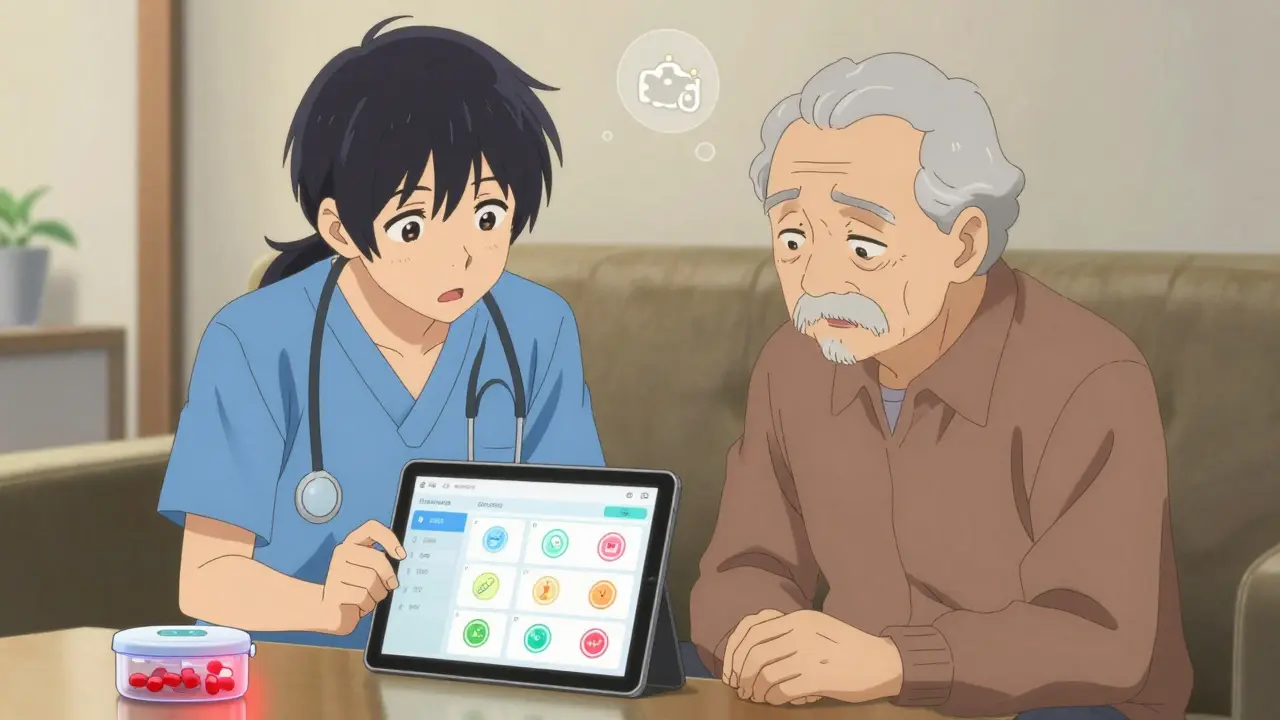
1. Smart Pillboxes (IoT-Enabled)
Devices like the Tenovi Pillbox open only when it’s time to take your meds. A red light flashes if you’re late. A green light turns on after you open the compartment. Best part? It sends a real-time alert to your doctor or caregiver if you miss a dose.
Unlike paper logs, these can’t be faked. They record the exact time and date of each opening. In a 2023 study of 4,278 heart failure patients, those using smart pillboxes had 23% fewer hospital readmissions.
2. RFID and Scale-Based Systems
Some advanced systems, like ReX by DosentRx, don’t just track when you open a bottle-they actually dispense the pill into your hand. A built-in scale confirms the pill was removed. This cuts false readings (like someone opening the bottle but not taking the pill) from 12% down to less than 1%.
3. Video Directly Observed Therapy (VDOT)
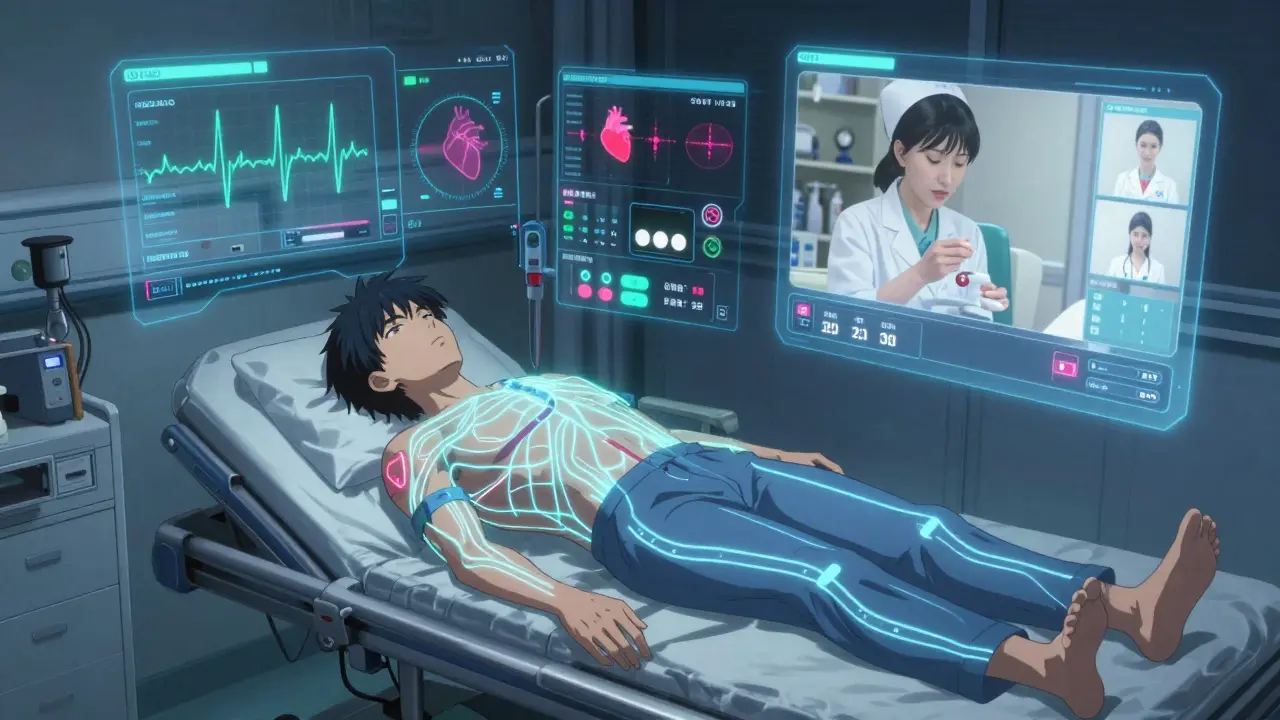
If you’re on psychiatric meds or complex regimens, some clinics use video calls. You take your pill in front of a camera, and a nurse confirms you swallowed it. It’s 98.5% accurate. But it takes 17 minutes per dose. Not practical for daily use unless you’re at high risk.
What Works Best? Accuracy Compared
Not all tracking methods are created equal. Here’s how they stack up:
| Method | Accuracy | Pros | Cons |
|---|---|---|---|
| Paper Logs | 27% | Free, simple, no tech needed | Easy to fake, unreliable, no alerts |
| Pill Counts (Clinic) | 60% | Used by doctors, low cost | Only checks leftovers, doesn’t show timing |
| Smart Pillboxes (e.g., Tenovi) | 97% | Real-time alerts, works without phone, visual cues | Requires cellular signal, upfront cost |
| RFID Dispensers (e.g., ReX) | 99.2% | Guarantees pill was removed | Expensive, bulky, needs power |
| VDOT (Video) | 98.5% | Confirms swallowing, great for high-risk cases | Time-consuming, privacy concerns |
The takeaway? If you want real data-not guesses-go digital. Paper logs give you a false sense of control. Smart devices give you real insight.
Who Benefits Most from Digital Tracking?
It’s not just for the elderly. Anyone taking multiple medications daily can benefit:
- Seniors on 5+ meds for heart, diabetes, and arthritis
- Patients recovering from surgery or transplant
- People with depression or schizophrenia (where forgetting meds can be dangerous)
- Parents managing kids’ chronic conditions like epilepsy or asthma
But adoption isn’t equal. A 2023 Kaiser Permanente study found that 92% of patients under 55 with private insurance used digital tools. Only 47% of Medicare patients over 75 did. Why? Many don’t own smartphones. Others find apps confusing. Some worry about privacy.
If you’re in this group, don’t give up. Ask your pharmacist for a simple pillbox with a built-in alarm. Many clinics give them out for free.
How to Get Started (Step by Step)
Here’s how to pick the right system and make it stick:
- Make a full list of your meds. Include name, dose, reason, and time. Ask your pharmacist to help you verify it.
- Choose your method. If you’re tech-savvy, try a free app like Medisafe or MyTherapy. If you prefer no screens, get a basic smart pillbox with alarms.
- Set up alerts. Don’t rely on one reminder. Use phone alarms, pillbox lights, and text alerts from your doctor’s portal.
- Share access. Give a family member or caregiver permission to see your log. They can step in if you miss a dose.
- Review weekly. Every Sunday, check your log. Are you missing doses at the same time? Maybe you need to take meds with breakfast instead of lunch.
The Hidden Problem: Just Opening the Bottle Isn’t Enough
Here’s something most people don’t know: 92% of tracking devices only know when the bottle was opened-not whether you swallowed the pill. You could open it, put the pill in your mouth, and spit it out. The device still thinks you took it.
This is a big issue for psychiatric meds, painkillers, or drugs with side effects. If you’re not actually ingesting, no tracker will catch it. That’s why video systems and scale-based dispensers are more reliable-they confirm ingestion, not just access.
What’s Next? The Future of Adherence
By 2026, the next generation of trackers will link with your smartwatch. Imagine this: your device notices your heart rate spikes after you take your blood pressure med. It cross-checks that with your pill log. If you took it but your heart didn’t respond, it alerts your doctor: “Possible non-adherence or drug interaction.”
The FDA already approved the first AI tool in 2023 that predicts when you’re likely to miss a dose-72 hours in advance. It looks at your sleep, phone usage, and past behavior. If it sees you’ve been skipping alarms for three days, it nudges you: “You’ve missed two doses this week. Want to talk to your pharmacist?”
But here’s the catch: none of this matters if the system doesn’t connect to your doctor’s records. Right now, 73% of U.S. clinics use different systems that don’t talk to each other. That’s why the push for HL7 FHIR standards is so important-it’s the key to making all this data useful.
Final Thought: It’s Not About Being Perfect
You don’t need to take every pill on time 100% of the time. That’s unrealistic. But you do need to know when you’re falling behind. A good tracking system doesn’t shame you-it helps you fix it. It turns guesswork into action.
Start small. Write down your meds. Set one alarm. Use a pillbox with a light. Talk to your pharmacist about free programs. You’re not failing because you forget. You’re just missing the right tools. And now you know what they are.
Betty Bomber
January 26, 2026 AT 08:25I used to rely on paper logs until I missed my blood pressure med for three days straight and ended up in the ER. Now I use a Tenovi box-no more guessing. It’s not perfect, but it’s the first thing that actually made me feel like I wasn’t just pretending to be responsible.
Mohammed Rizvi
January 27, 2026 AT 22:12Let’s be real-paper logs are for people who still think fax machines are cutting edge. I’ve seen my uncle ‘check off’ his meds while drinking whiskey at 2 a.m. and then claim he was ‘on schedule.’ Digital trackers don’t lie. They just expose the truth we’re too polite to admit.
eric fert
January 28, 2026 AT 00:29Okay, so we’re all supposed to be thrilled about smart pillboxes now? Let me ask you this: what happens when your device dies? Or your phone loses signal? Or your caregiver gets tired of being notified every time you sleep through your 8 a.m. dose? We’re turning healthcare into a surveillance economy and calling it ‘innovation.’ Meanwhile, the real problem is that most people can’t afford their meds in the first place. But hey, at least your app can tell you you’re failing in real time. Progress!
Shweta Deshpande
January 29, 2026 AT 08:49As someone who helps my mom manage her 7 daily meds, I can tell you this: the little things matter. We started with a simple pillbox that chimes, and now she actually looks forward to taking her pills because it feels like a routine, not a chore. I didn’t need fancy tech-just consistency and a little love. If you’re struggling, start small. One alarm. One box. One day at a time. You’ve got this.
Aishah Bango
January 30, 2026 AT 04:22People think digital tracking solves adherence, but it doesn’t fix the root issue: patients aren’t educated, they’re just guilt-tripped into compliance. Why don’t we spend less time building apps that shame people and more time making meds affordable and doctors actually listen? This whole system is built on blaming the patient, not fixing the system.
Simran Kaur
January 30, 2026 AT 13:50In India, my auntie uses a red string tied around her wrist every time she takes her insulin-she doesn’t have a phone, but she has memory, ritual, and family. Sometimes the oldest methods are the most human. Tech helps, but it shouldn’t replace connection. My cousin reminds her every morning with a chai and a hug. That’s adherence with heart.
Neil Thorogood
January 31, 2026 AT 06:21Smart pillboxes are great… until you realize your 80-year-old neighbor doesn’t know what ‘IoT’ means and just thinks the box is a weird toaster. 🤦♂️ I gave my dad one-he opened it three times in a row trying to ‘reset’ it. Now he just uses a sticky note on the microwave. Sometimes the dumbest solution is the one that lasts.
Jessica Knuteson
February 1, 2026 AT 03:18Accuracy rates mean nothing if the system isn’t integrated. A 99% accurate tracker is useless if the data doesn’t reach the doctor who needs it. We’re building fancy dashboards while the backend is still running on Windows XP. The tech isn’t the problem. The bureaucracy is.
Robin Van Emous
February 2, 2026 AT 16:42I think everyone’s got a point here. Some folks need tech, some need paper, some need a family member to call. The goal isn’t to pick one ‘best’ method-it’s to meet people where they are. My brother uses a whiteboard on the fridge. My sister uses an app. My mom uses a calendar with stickers. All of them are working. Maybe the real win is flexibility, not perfection.
Angie Thompson
February 4, 2026 AT 03:13OMG I just started using MyTherapy and it’s a GAME CHANGER 🙌 I get little confetti when I take my meds and it sends me memes if I’m late 😂 My grandma even joined and now we do a weekly ‘meds check’ Zoom call. It’s not just about health-it’s about connection. And yeah, I cried when it said ‘You’re on a 14-day streak!’ like I won a trophy. Worth it.
Josh josh
February 4, 2026 AT 22:43paper logs r trash fr
SWAPNIL SIDAM
February 6, 2026 AT 16:51My village in Punjab has no smartphones, but every morning, the local nurse walks door to door with a clipboard. She doesn’t just check pills-she asks how you slept, if your wife is okay, if the rain made your joints ache. That’s adherence with dignity. Tech can’t replace that.