
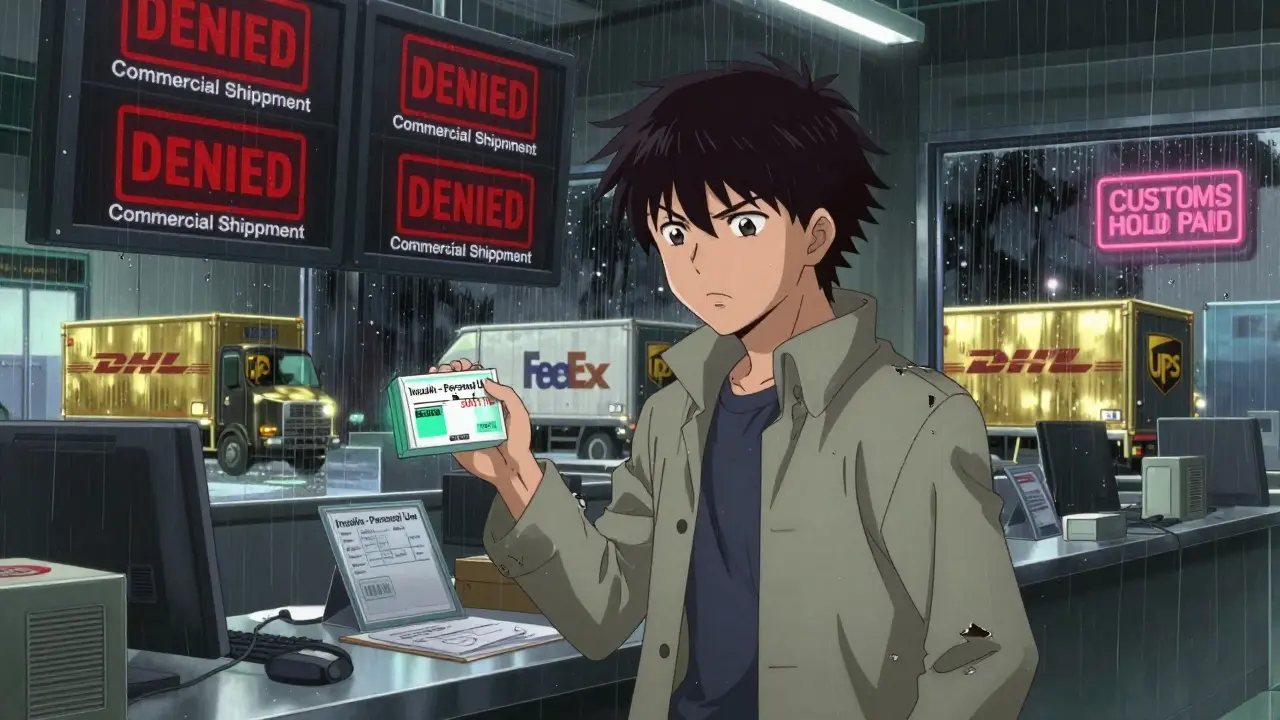
Buying medication through international mail-order used to be simple. For years, people in the U.S. could order prescription drugs, supplements, or over-the-counter medicines from Canada, India, or Europe without paying duties-thanks to a $800 threshold that let small packages slip through customs tax-free. But that changed on August 29, 2025. Now, if you’re trying to get medication shipped from abroad, you’re facing a completely new system-one that’s stricter, more expensive, and far more complicated. If you still want to use this option legally and safely, you need to know exactly how the rules work today.
What Changed in 2025? The Death of the $800 Rule
The biggest shift happened when the U.S. government eliminated the de minimis threshold for all international mail. Before August 2025, any package worth less than $800 could enter the U.S. without duties or taxes. That meant a $150 bottle of insulin from Canada or a $75 supply of blood pressure pills from India arrived with no extra cost. Today, that rule is gone. Now, every commercial shipment-even one worth $10-is subject to duties. The only exception? Private gifts under $100. If you’re ordering medication for personal use, and the sender marks it as a gift, it might still get through. But if it’s labeled as a commercial sale, you’re on the hook.
This isn’t just a tweak. It’s a full overhaul. In 2024, over 97% of international mail-order packages to the U.S. used the $800 exemption. By late 2025, that number dropped to 2.1%. Most of those remaining were personal gifts, not commercial drug shipments. The change was intentional: the government wanted to stop what it called "unfair competition" from foreign sellers and increase revenue. But for regular people trying to save money on medications, it’s made a lot of options disappear.
Two Ways You Could Get Charged-And Which One Matters More
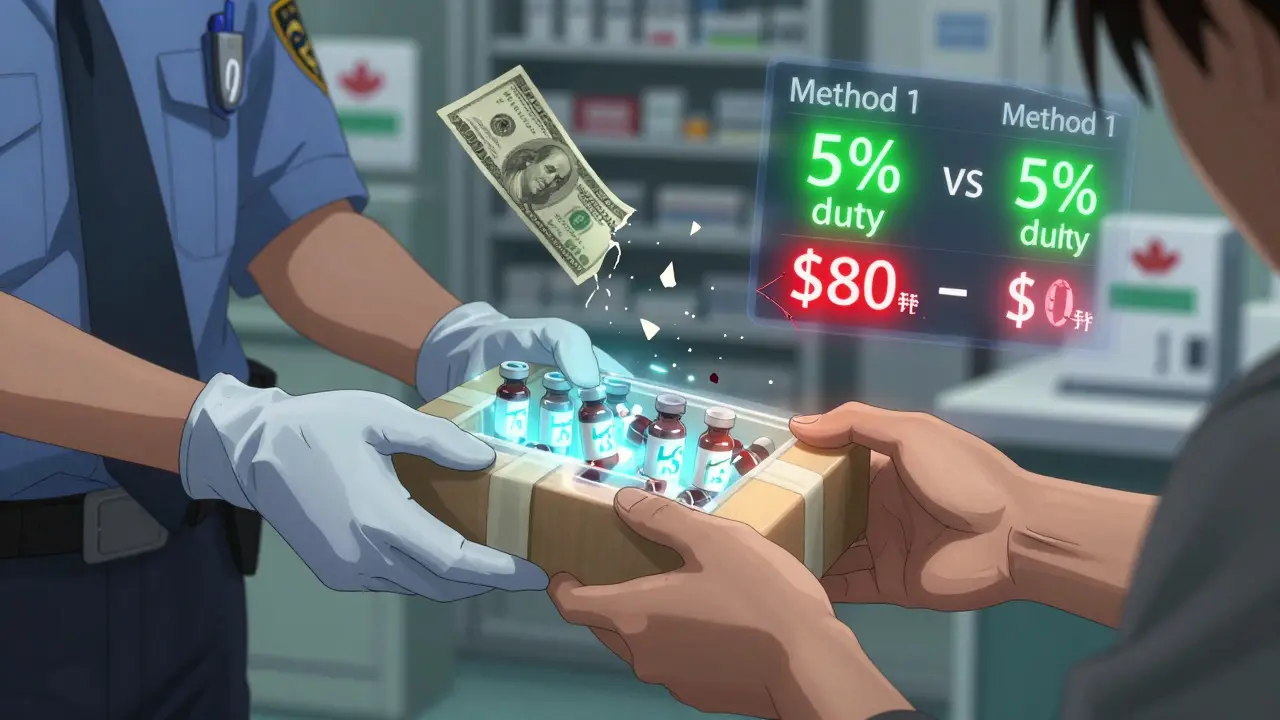
Since August 2025, there have been two ways your medication shipment could be taxed. The first is called Method 1: Ad Valorem. This means duties are calculated as a percentage of the item’s declared value. For example, if your insulin costs $120 and the tariff rate is 5%, you’d pay $6 in duties. The second is Method 2: Flat-Rate Fees. Under this system, you pay a fixed fee based on the country’s tariff level: $80 for low-rate countries, $160 for mid-range, and $200 for high-rate ones. These flat rates were meant to simplify things-but they’ve turned out to be a trap for small orders.
Here’s the problem: if you order a $40 box of generic metformin from India, Method 2 would charge you $80 in duties. That’s more than the medicine itself. Method 1, in contrast, might only charge $4-because the tariff rate for pharmaceuticals is often under 5%. That’s why Method 1 is almost always better for medication buyers. But here’s the catch: Method 2 was only available until February 28, 2026. After that, only Method 1 is legal. So if you’re still using a carrier that offers flat fees, you’re already on borrowed time.
HS Codes Are No Longer Optional-They’re Mandatory
Before 2025, many international mail-order packages used vague descriptions like "medication," "supplement," or "gift." Now, every commercial shipment must include a six-digit Harmonized System (HS) code. This isn’t just paperwork-it’s a classification system that determines your duty rate. For example, insulin has HS code 3001.10. The wrong code? You could end up paying 300% more in duties.
Here’s how to get it right: Use the U.S. International Trade Commission (USITC) online tariff database. Search for your medication by name. If you’re buying from a foreign pharmacy, ask them for the correct HS code. Most reputable international pharmacies already know it. If they don’t, walk away. A seller who doesn’t know the HS code for your pills is not a reliable partner.
Documents You Can’t Skip
Customs doesn’t just want to know what’s in the package-they want proof. For any medication shipment, you need:
- Commercial Invoice: Not a receipt. Not a gift note. A real invoice with the seller’s name, address, item description, quantity, value, and HS code.
- Packing List: Matches what’s inside the box. If you ordered 3 bottles, the list must say 3 bottles.
- Proof of Prescription: Even if the drug is available over-the-counter in the U.S., if it’s prescription-only in the source country, you need a copy of the prescription. Customs may hold your package without it.
Don’t assume the pharmacy will handle this. Many foreign sellers still send packages with just a handwritten note. Those get held up-or seized. If your medication doesn’t arrive within 10 days, check your email. Customs will send a notice asking for missing documents. Ignore it, and your package gets returned or destroyed.
Who Pays the Duty? And Why It Matters
This is where most people get confused. Is it the sender? The receiver? The carrier? The answer: It depends. Under the new rules, the recipient is usually liable for duties. But if the carrier (like DHL or FedEx) collects them upfront, they’ll bill you. If the sender pays, they’ll add it to your total. Either way, you’re paying.
Some sellers now include duty in their price. Others don’t. Always ask: "Will I owe extra fees when this arrives?" If they say "probably," walk away. A trustworthy seller will tell you upfront: "Your total cost is $145, including all duties and taxes." That’s the gold standard.
Also, be aware: If duties aren’t paid, the package doesn’t just sit in customs. It can be seized permanently. And if you’ve ordered controlled substances-even legally prescribed ones-you could face legal consequences. The FDA and CBP work together on this. They’re not just collecting money. They’re enforcing U.S. drug laws.
Which Carriers Still Work? And Which Ones Don’t
Not all shipping services are equal anymore. Deutsche Post, Canada Post, and many national postal services stopped accepting commercial parcels to the U.S. after August 22, 2025. That means if you’re ordering from a small pharmacy that uses regular mail, your package won’t arrive.
Your only reliable options now are:
- DHL Express: Handles customs clearance automatically. You pay duties at delivery.
- FedEx International: Same as DHL. Prepaid duties are common.
- UPS Worldwide: Also handles customs. Often faster than DHL for U.S. delivery.
These carriers charge more upfront, but they know the rules. They file the right forms, use correct HS codes, and pay duties on your behalf. You’ll see the full cost before you pay. No surprises. That’s why they’re the only ones left standing for medication shipments.
What About Medications That Are Illegal in the U.S.?
Even if you have a prescription, not all drugs are allowed. The FDA bans certain medications that are legal elsewhere. Examples include:
- Some weight-loss drugs (like semaglutide without FDA approval)
- Strong painkillers from certain countries
- Unapproved versions of FDA-approved drugs (e.g., "generic" versions not cleared by the FDA)
Just because a drug is sold online doesn’t mean it’s legal to import. The FDA allows personal importation only under very specific conditions: the drug must be for a serious condition, not available in the U.S., and not pose an unreasonable risk. If you’re unsure, check the FDA’s Personal Importation Policy page. If it’s not listed, assume it’s banned.
Is It Still Worth It? The Real Cost of Saving Money
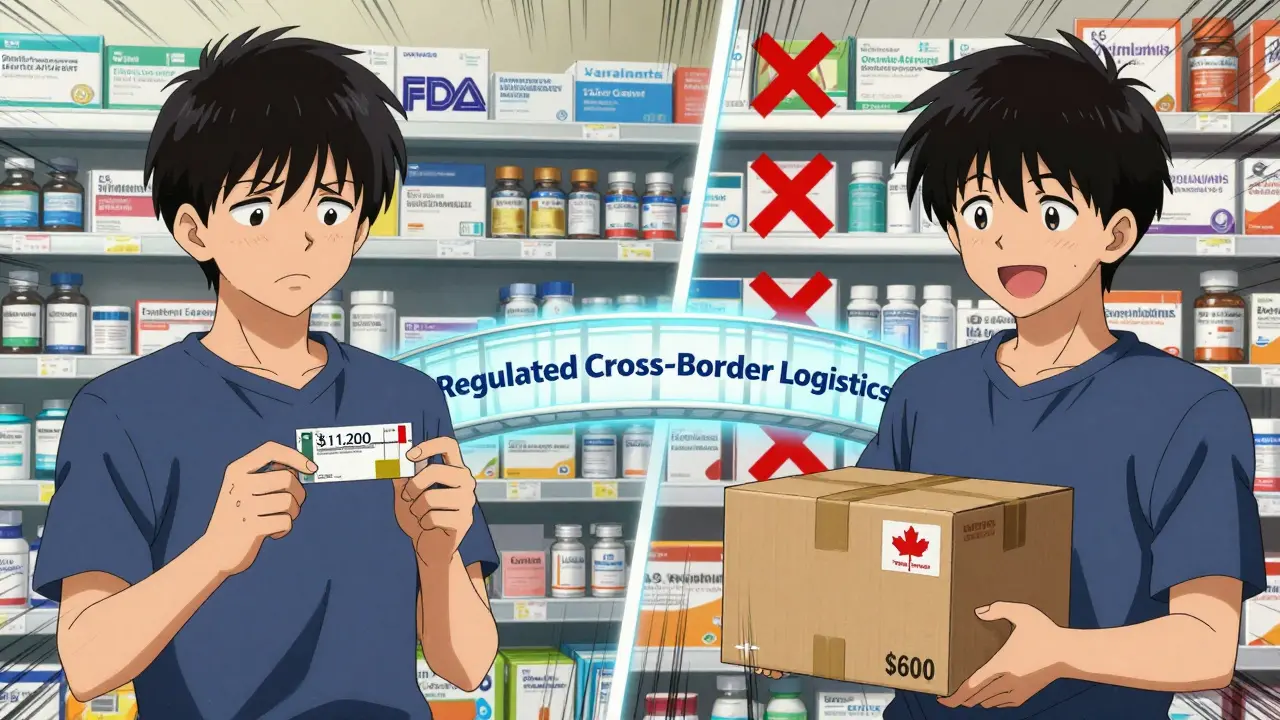
Before 2025, people saved 50-80% on medications by ordering abroad. Now? The math has flipped. A $100 insulin bottle might now cost $120 with duties and shipping. A $50 blood pressure pill might cost $130. For many, the savings are gone. But not for everyone.
If you’re buying high-cost specialty drugs-like biologics, cancer treatments, or rare disease medications-the savings can still be 30-50%. That’s because these drugs cost $10,000+ in the U.S., and even with $200 in duties, you’re still ahead. For those, international mail-order is still viable. For routine meds? Probably not.
Also consider: What happens if your shipment is delayed? If you’re on a 30-day supply, a 2-week customs hold could be dangerous. Express carriers reduce that risk-but they cost more. You’re trading convenience for cost. Decide what matters more: saving $50, or having peace of mind.
What Comes Next? The Future of International Medication Orders
The U.S. government isn’t done. The Postal Regulatory Commission predicts a 70% drop in small international mail-order by 2027. That’s because the system is now too expensive for small sellers. Many foreign pharmacies are shutting down U.S. shipments entirely. Others are moving to regional hubs in Mexico and Canada, where they can ship under different rules.
Long-term, expect more local fulfillment centers. A pharmacy in Canada might now stock U.S.-bound inventory in a warehouse just across the border. That way, they ship domestically, avoiding the new customs rules. It’s a workaround-and it’s already happening.
If you’re serious about saving on meds, shift your focus: Look for Canadian or Mexican pharmacies with U.S. warehouses. They’ll have lower shipping costs, no customs delays, and still offer savings. Avoid random online sellers. Stick to licensed, verified providers with physical addresses and real customer service.
Can I still order medication from India or Canada after August 2025?
Yes-but only if you use an express carrier like DHL, FedEx, or UPS, and the shipment includes a commercial invoice with the correct HS code. Regular mail is no longer an option. Also, the medication must be legal in the U.S. and for personal use only.
Why did the $800 duty-free rule disappear?
The rule was eliminated to stop what the U.S. government called unfair competition from foreign sellers who didn’t pay taxes or follow U.S. drug safety rules. It also aimed to increase customs revenue. The change took effect on August 29, 2025, under Executive Order 14324.
What if I don’t pay the duty on my medication shipment?
If you don’t pay, the package will be held indefinitely. After 30 days, it will be returned to the sender or destroyed. In some cases, especially with controlled substances, customs may seize it permanently and report you to the FDA or DEA.
Are there any medications that are completely banned from import?
Yes. The FDA bans imports of unapproved drugs, including certain weight-loss pills, unlicensed versions of FDA-approved medications, and strong painkillers not authorized in the U.S. Even with a prescription, importing these is illegal. Check the FDA’s personal importation guidelines before ordering.
Is it safer to buy from a U.S. pharmacy instead?
Generally, yes. U.S. pharmacies are regulated by the FDA and state boards. International orders carry risks: counterfeit drugs, expired stock, or incorrect dosing. If you can find a U.S. pharmacy offering discounts or patient assistance programs, it’s usually the safer and more reliable choice.
Melissa Stansbury
March 19, 2026 AT 20:17Suchi G.
March 21, 2026 AT 13:12becca roberts
March 23, 2026 AT 03:01SNEHA GUPTA
March 23, 2026 AT 11:58Gaurav Kumar
March 23, 2026 AT 12:09David Robinson
March 24, 2026 AT 17:59gemeika hernandez
March 25, 2026 AT 00:54Nicole Blain
March 26, 2026 AT 16:56Kathy Underhill
March 27, 2026 AT 18:53Srividhya Srinivasan
March 28, 2026 AT 09:07Prathamesh Ghodke
March 28, 2026 AT 23:51Stephen Habegger
March 29, 2026 AT 07:59Justin Archuletta
March 29, 2026 AT 16:04Sanjana Rajan
March 31, 2026 AT 11:20Ryan Voeltner
March 31, 2026 AT 12:38