
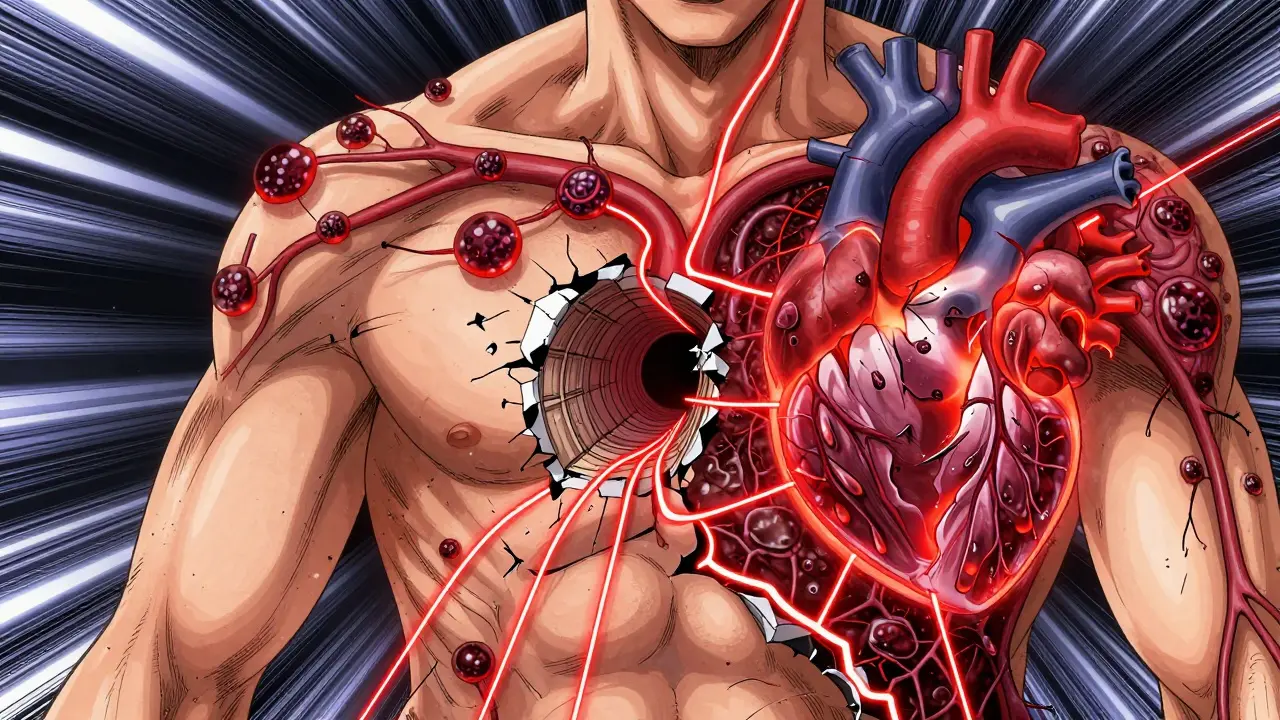
When you hear the word obesity, most people think of weight alone. But for millions, it’s not just about the number on the scale-it’s about what that weight is doing to your body behind the scenes. Obesity doesn’t sit quietly. It triggers a chain reaction, quietly setting off three major health crises: type 2 diabetes, heart disease, and obstructive sleep apnea. Together, they form a dangerous triad that doesn’t just add up-it multiplies risk. And the worst part? Many people don’t realize they’re caught in it until something serious happens.
The Hidden Web: How Obesity Fuels Three Deadly Conditions
Obesity isn’t just excess fat. It’s active tissue that releases inflammatory chemicals, disrupts hormone balance, and physically changes how your organs work. When your body carries too much fat-especially around the belly-it starts sending out signals that mess with your metabolism, breathing, and heart function. These aren’t separate problems. They’re connected by biology, not coincidence.
Take type 2 diabetes. Fat cells, especially visceral fat, release substances that make your muscles and liver resistant to insulin. That means your body can’t use sugar properly. Over time, blood sugar climbs. Studies show obese individuals have 30-50% higher levels of inflammatory markers like C-reactive protein and interleukin-6, which directly interfere with insulin signaling. By the time someone is diagnosed with diabetes, they’ve likely been in this state for years.
Now add sleep apnea. When you’re overweight, fat builds up around your neck and tongue. This narrows your airway-by 20-30% in many cases. During sleep, your muscles relax, and that narrowed passage collapses. You stop breathing, sometimes dozens of times an hour. Your body wakes up just enough to gasp for air, but never deeply enough to rest. This isn’t just about snoring. It’s about oxygen dropping, blood pressure spiking, and stress hormones flooding your system every night. The Sleep Heart Health Study found that severe sleep apnea increases diabetes risk by 60%, even after accounting for weight.
Then there’s heart disease. The combination is brutal. Obesity thickens the heart muscle. Sleep apnea causes nightly blood pressure spikes of 15-25 mmHg. Diabetes damages blood vessels. Together, they raise the risk of a heart attack by 3.2 times compared to someone with none of these conditions. A 2020 JACC Heart Failure study showed that obese people with sleep apnea have a 2.3-fold higher risk of heart failure than obese people without it. Add diabetes, and that risk jumps to 3.7 times.
The Vicious Cycle: How Each Condition Makes the Others Worse
This isn’t a one-way street. Each condition feeds the others, creating a loop that’s hard to break.
Diabetes can make sleep apnea worse. High blood sugar damages nerves that control the muscles in your throat. Weak muscles mean your airway collapses more easily. At the same time, sleep apnea makes diabetes harder to control. Every time you stop breathing at night, your body releases stress hormones like cortisol. These hormones raise blood sugar-even if you haven’t eaten. One study found that people with untreated sleep apnea had 25-30% more insulin resistance than those without it.
And sleep apnea doesn’t just hurt your blood sugar. It wrecks your heart. The repeated drops in oxygen trigger irregular heart rhythms. Research shows sleep apnea increases the risk of atrial fibrillation by 2-5 times in severe cases. And here’s the kicker: sleep apnea mediates about 6.4% of the link between obesity and atrial fibrillation. That means, for every case of heart rhythm disorder caused by obesity, sleep apnea is directly responsible for nearly 1 in 15 of those cases.
Even waist size matters more than you think. The SLEEP-AHEAD study found that every extra centimeter around your waist increased sleep apnea risk by 12%. That’s more predictive than BMI alone. Abdominal fat isn’t just cosmetic-it’s a direct threat to your breathing and cardiovascular health.
Who’s Getting Missed? The Silent Epidemic of Undiagnosed Sleep Apnea
Here’s the shocking truth: 60-80% of people with type 2 diabetes and obesity also have sleep apnea-and most don’t know it. Doctors often focus on blood sugar or weight loss, but rarely ask about sleep. Patients report waiting 5-7 years for a diagnosis, even when they’re exhausted all day, snore loudly, or wake up gasping.
A 2022 survey by the Obesity Action Coalition found that 74% of obese people with diabetes and sleep apnea said daytime sleepiness hurt their job performance. Nearly half admitted to near-miss car accidents because they couldn’t stay awake. Yet, only 17.8% of obese diabetic patients in the U.S. get screened for sleep apnea, according to 2022 data from the National Committee for Quality Assurance.
It’s not that doctors don’t know. The American Diabetes Association has recommended since 2023 that all obese diabetic patients be screened for sleep apnea. The tool? The STOP-Bang questionnaire-a simple five-question test that takes less than a minute. A score of 3 or higher means you need a sleep study.
What Actually Works: Breaking the Cycle
The good news? This triad isn’t a death sentence. It’s a treatable chain. And the most powerful tool is weight loss.
The SLEEP-AHEAD trial showed that losing just 8.6% of body weight through diet and 175 minutes of weekly exercise reduced sleep apnea severity by over 25 events per hour. That’s not minor-it’s the difference between severe and mild sleep apnea. Losing 10-15% of your weight cuts sleep apnea episodes by about half on average.
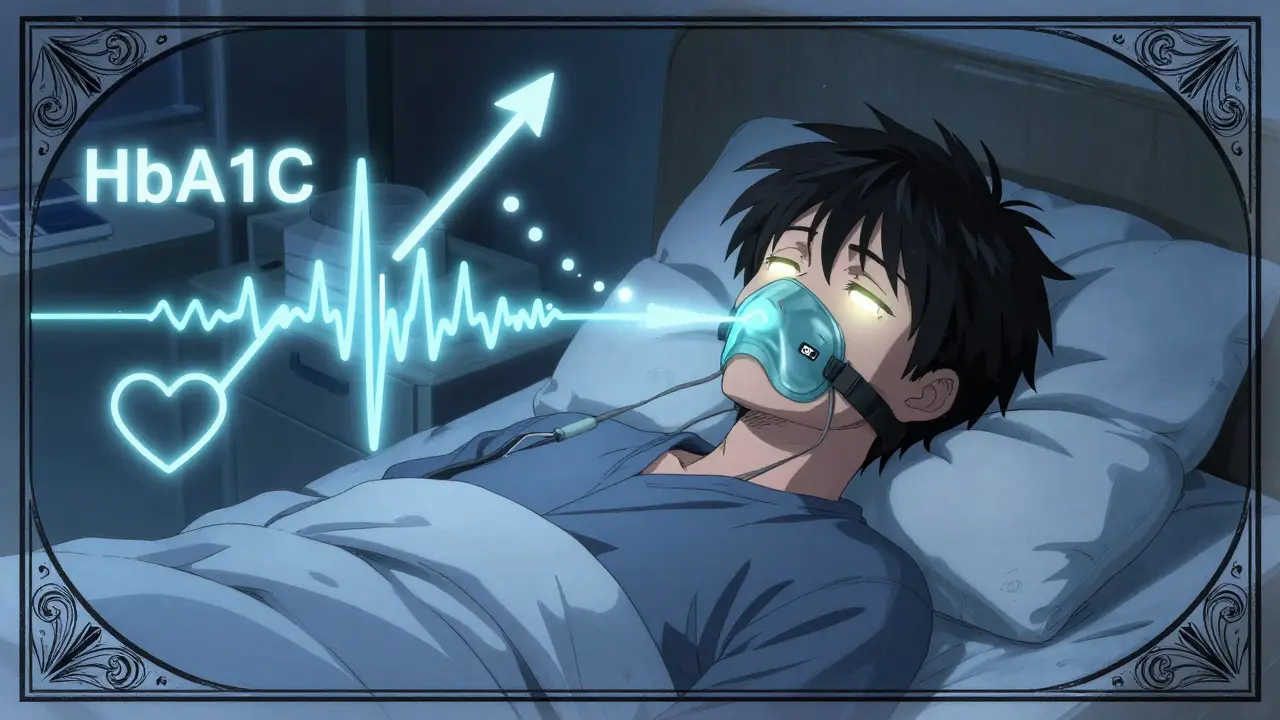
But weight loss isn’t easy. And that’s where treatment for the comorbidities can help each other. Continuous Positive Airway Pressure (CPAP) therapy, which keeps your airway open during sleep, doesn’t just improve sleep-it improves blood sugar. One Diabetes Care study found that obese diabetic patients using CPAP for six months lowered their HbA1c by 0.8% and lost an average of 3.2 kg. That’s not because CPAP burns calories. It’s because better sleep helps your body regulate insulin and reduces stress hormones.
For those who can’t tolerate CPAP, new options are emerging. The FDA-approved Inspire hypoglossal nerve stimulator, implanted like a pacemaker, gently moves your tongue forward during sleep to keep your airway open. Clinical trials show 79% of users cut their apnea events by more than half.
And then there’s medication. GLP-1 receptor agonists like semaglutide, originally designed for diabetes and weight loss, have shown surprising benefits for sleep apnea. The 2024 LEADER-OSA trial found these drugs reduced upper airway fat deposits-even independent of weight loss. That means they’re fixing the problem at its source, not just treating symptoms.
Bariatric surgery remains the most effective option for severe cases. A 2022 meta-analysis found that 78% of patients with obesity and sleep apnea saw complete remission after gastric bypass. But surgery isn’t for everyone. The risks, while low (0.1-0.3% mortality), must be weighed against long-term benefits.
The Real Barrier: Adherence and Access
Even with effective tools, success depends on sticking with them. Only 45% of people with sleep apnea keep using CPAP after one year. Why? Mask discomfort (68%), claustrophobia (32%), and pressure intolerance (54%) are the top reasons. But many don’t realize that CPAP settings can be adjusted, masks can be swapped, and support groups exist.
Healthcare systems are starting to respond. Kaiser Permanente’s integrated program for obesity, diabetes, and sleep apnea cut hospitalizations by 22% and ER visits by 18% in its first year. But these models are rare. Most patients still bounce between endocrinologists, cardiologists, and sleep clinics-with no one connecting the dots.
What’s needed is a team approach: a doctor who coordinates care, a dietitian who understands metabolic health, a sleep specialist who doesn’t dismiss symptoms, and a patient who feels heard. Training for this kind of care takes 40 hours of specialized education-something most providers haven’t had.

What You Can Do Today
If you have obesity and diabetes:
- Ask your doctor if you should be screened for sleep apnea. Use the STOP-Bang questionnaire-it’s free and fast.
- Track your waist size. If it’s over 102 cm for men or 88 cm for women, your risk of sleep apnea is significantly higher.
- If you’re tired during the day, wake up with a dry mouth, or your partner says you stop breathing at night, don’t ignore it. These aren’t normal.
- Ask about GLP-1 medications if you’re eligible. They help with weight, blood sugar, and possibly sleep apnea.
- Don’t wait for a crisis. The earlier you address this triad, the more you can prevent heart attacks, strokes, and kidney damage.
If you’re already diagnosed with sleep apnea and have diabetes:
- Use your CPAP every night-even if you only get 4 hours. Consistency matters more than perfection.
- Ask your doctor to check your HbA1c every 3 months. CPAP can lower it, but you need to see the change to stay motivated.
- Join a support group. People who connect with others who have the same conditions are far more likely to stick with treatment.
The Bigger Picture: Why This Matters Beyond the Individual
This isn’t just about personal health. It’s about cost, capacity, and future generations. Obese patients with both diabetes and sleep apnea spend $12,300 more per year on healthcare than those with obesity alone. Most of that goes to heart complications. The CDC estimates that fixing this triad could save $197 billion in U.S. healthcare costs by 2035.
But without tackling the root cause-the obesity epidemic-we’re just treating symptoms. As one expert put it, we’re pouring water out of a sinking boat while ignoring the hole.
What’s changing now? New tools. Better science. And growing awareness. But real progress needs patients to speak up, doctors to connect the dots, and systems to support integrated care. The science is clear. The tools exist. The question is: will we use them before it’s too late?
Herman Rousseau
December 21, 2025 AT 19:33Man, this hit different. I was diagnosed with prediabetes last year and didn’t even know I had sleep apnea until my wife started recording me snoring like a chainsaw. Started CPAP after reading this - first week was hell, but now I’m sleeping 7 hours straight and my HbA1c dropped from 6.1 to 5.4. Don’t wait like I did. Your future self will high-five you. 😊
Johnnie R. Bailey
December 23, 2025 AT 11:04It’s funny how we treat symptoms like isolated events - diabetes here, apnea there, heart strain over there - when the real villain is systemic inflammation fueled by visceral fat. The body doesn’t compartmentalize disease. It’s a symphony of dysfunction, and obesity? That’s the conductor. We need to stop treating organs like separate departments and start seeing the organism as a whole. It’s not just medicine - it’s systems biology. And honestly? We’re still using 19th-century thinking to solve 21st-century problems.
Vikrant Sura
December 24, 2025 AT 18:54So let me get this straight - you’re blaming fat people for the healthcare system’s failure to screen properly? Classic victim-blaming. Why not ask why insurance won’t cover sleep studies unless you’re morbidly obese? Or why doctors get paid to prescribe pills but not to spend 10 minutes asking about snoring? This post reads like a pharma ad wrapped in pseudoscience.
Art Van Gelder
December 25, 2025 AT 19:35Okay, so picture this: your body’s like a rusty old car with too much junk in the trunk. The engine’s overheating (diabetes), the exhaust is clogged (sleep apnea), and the transmission’s slipping (heart disease). You could replace one part - say, the spark plugs (metformin) - but until you empty the trunk (lose weight), it’s just bandaging the problem. And now they’re selling you a new engine (GLP-1s) that magically makes the trunk lighter? That’s not magic - that’s science. But here’s the kicker: no one told you the trunk was the problem. They just kept fixing the engine. We’re all just trying to drive in circles while the mechanic charges us for every little bolt.
Jeremy Hendriks
December 26, 2025 AT 14:08They say weight loss works - but only if you’re rich, white, and have 4 hours a day to meal prep. What about the single mom working two jobs who survives on gas station burritos? Or the veteran with PTSD who eats to cope? This post ignores the social rot behind the biological rot. You can’t ‘just lose weight’ when your neighborhood has no grocery store and your doctor won’t listen. This isn’t a medical issue - it’s a moral failure disguised as a lifestyle guide.
Kiranjit Kaur
December 27, 2025 AT 23:41OMG I’m literally crying rn 😭 I had sleep apnea for 7 years and thought it was just ‘being tired’… then I got my CPAP and my energy came back like I’d been reborn 🙌 My husband says I stopped yelling in my sleep. My diabetes meds were cut in half. This post is everything. If you’re reading this and you’re tired all the time - PLEASE get checked. You deserve to wake up feeling human again 💪❤️
Sai Keerthan Reddy Proddatoori
December 28, 2025 AT 15:39This is all part of the globalist agenda to make us weak. Fat people are not broken. They’re strong. The real problem? Big Pharma wants you dependent on CPAP machines and GLP-1 drugs so they can charge $1000 a month. Wake up. Eat real food. Stop listening to doctors who get paid by corporations. Sleep apnea? Just sleep on your side. Diabetes? Cut the sugar. That’s it. No machines. No magic pills. Just ancient wisdom.
Cara Hritz
December 30, 2025 AT 12:39wait so if u lose 10-15% weight u cut sleep apnea by half?? i thought it was 50% of the time?? or is that for the other thing?? also i think u meant HbA1c not HBA1c??
Jamison Kissh
January 1, 2026 AT 09:26There’s something deeply human here - we fear what we can’t see. Fat is visible. Diabetes? Blood test. Sleep apnea? Invisible until you’re gasping at 3 a.m. We’ve built a culture that rewards productivity over rest, thinness over health, and quick fixes over slow healing. Maybe the real disease isn’t obesity - it’s the belief that we can outsource our well-being to pills, machines, and specialists. What if the cure was never in the clinic, but in the quiet decision to sleep, to move, to breathe - not as treatment, but as ritual?
Julie Chavassieux
January 2, 2026 AT 17:31Just one thing - if you’re on CPAP and still exhausted? It’s not you. It’s the machine. Or the mask. Or the settings. Or the fact that your doctor didn’t adjust it after you lost 30 lbs. I went through 7 masks. 3 different machines. 2 sleep specialists. One of them cried when I told her I’d given up. Don’t give up. Find your person. Your machine. Your rhythm. This isn’t a checklist. It’s a relationship. With your body. With your breath. With your life.
jenny guachamboza
January 4, 2026 AT 11:30So… you’re saying the government is secretly using sleep apnea to control the obese population? And GLP-1 drugs are just a way to make us dependent? I heard the CDC is funding this so they can track our biometrics through CPAP machines. Also, I think the whole obesity-diabetes link is fake. I ate 3 pizzas yesterday and my sugar was normal. Coincidence? I think not. 🤔