

Swimmer’s ear isn’t just an annoying itch after a day at the pool. It’s a real infection - and if you ignore it, it can turn painful, serious, or even lead to complications. Otitis externa, the medical name for swimmer’s ear, happens when the skin lining your ear canal gets infected. It’s not the same as a middle ear infection. This one lives in the outer canal, the tube that runs from your eardrum to the outside of your ear. It’s common, especially in warm, humid places like Cape Town, where swimming is part of daily life. About 1 in 10 Americans get it each year, and the numbers are similar here. The good news? It’s treatable. The bad news? Many people try to fix it themselves and make it worse.
Why Your Ear Gets Infected After Swimming
Your ear canal has a natural defense system. It’s slightly acidic - around pH 5.0 to 5.7 - and it’s lined with earwax, which acts like a protective barrier. When water gets trapped, especially after swimming or showering, that balance breaks. The skin softens, cracks, or gets irritated. Then bacteria or fungi move in. The usual suspects? Pseudomonas aeruginosa, a water-loving bug that thrives in pools and hot tubs, causes 35% to 54% of cases. Staphylococcus aureus is next, often from scratching or using cotton swabs. Fungi like Aspergillus show up in about 10% of cases, especially if you’ve been using steroid drops too long or have diabetes.
It’s not just swimmers. People who clean their ears too often, use hearing aids, or wear earbuds all day are also at risk. Anything that scrapes the skin or traps moisture invites trouble. The first sign? Itching. Then comes pain when you tug on your earlobe or press on the little bump in front of the ear. You might feel fullness, muffled hearing, or see a little discharge. If you have a fever or the pain is severe, it’s not just a mild case. You’re looking at moderate to severe otitis externa.
What Works: The Best Ear Drops for Swimmer’s Ear
Treatment isn’t one-size-fits-all. The right drop depends on what’s causing the infection and how bad it is. Here’s what actually works, based on clinical data and real-world use.
For mild cases (itching, slight redness, no swelling): A 2% acetic acid solution with hydrocortisone - like Vosol HC Otic - is the go-to. It’s cheap (around $15), available over the counter, and works well. Studies show it clears up about 85% of mild cases in a week. The acetic acid restores the ear’s natural acidity, killing bacteria. The hydrocortisone reduces swelling and itching. It’s also great for prevention. Use a few drops after swimming to keep your ears dry and acidic. Many swimmers swear by it.
For moderate to severe cases (pain, swelling, blocked canal): You need something stronger. The gold standard is a combination drop with an antibiotic and a steroid. Ciprodex (ciprofloxacin and dexamethasone) is the most common. It’s effective in 92% of cases within seven days. The ciprofloxacin kills bacteria like Pseudomonas and Staph. The dexamethasone reduces inflammation fast. This combo is why most doctors skip oral antibiotics - they don’t add much benefit and can cause more side effects like stomach upset or rashes.
Generic versions like ofloxacin otic are cheaper (around $45) and still effective, though they don’t have the steroid. That means they take longer to reduce swelling. Some people use them when cost is a barrier. But if you’re in pain and your ear is swollen shut, you’re better off with the combo.
For fungal infections (otomycosis): If your ear looks white or grayish with flaky debris, and it’s not improving with bacterial drops, you’ve got fungus. Clotrimazole 1% solution works in 93% of cases. You won’t find this over the counter. You need a prescription. Acetic acid won’t touch fungal infections - it’s useless here. Using the wrong drop delays healing by days or even weeks.
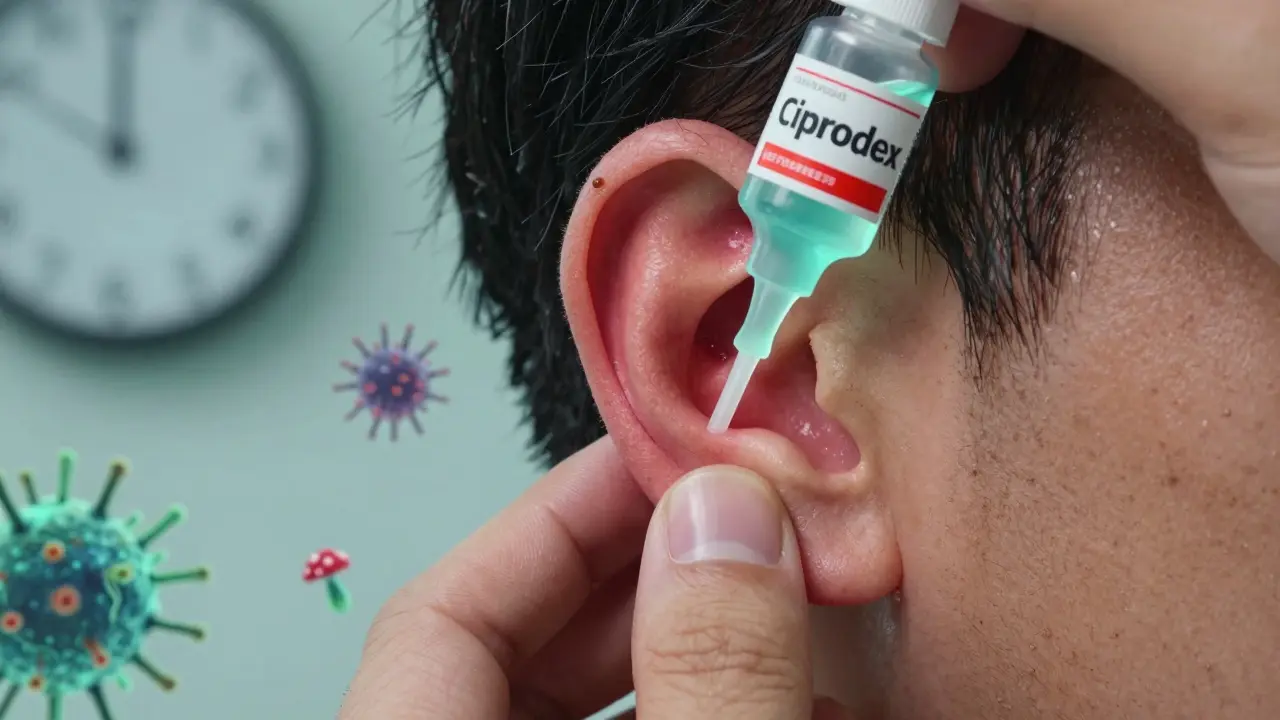
Why Some Drops Fail - And What You’re Doing Wrong
It’s not just about which drop you use. How you use it matters just as much. A 2021 study found that 40% of treatment failures happened because people didn’t follow the steps correctly.
Here’s what you must do:
- Wipe the outer ear with a dry cloth - don’t stick anything inside.
- Warm the bottle in your hands for a minute. Cold drops can make you dizzy.
- Lie on your side with the infected ear facing up.
- Put in the exact number of drops your doctor prescribed (usually 5).
- Stay still for at least 5 minutes. Let the drops soak in. Gently tug your earlobe to help the liquid flow deeper.
- Do not use cotton swabs, ear picks, or Q-tips. You’re wiping out the medicine.
People skip the 5-minute wait. They think, “I’ll just sit up.” That’s a mistake. The drops need time to reach the infected skin. If your ear canal is swollen shut, drops won’t get through. That’s when a doctor may insert an ear wick - a tiny sponge that absorbs the drops and slowly delivers them deep inside. It’s uncomfortable, but it works.
Cost, Resistance, and What’s New
Ciprodex costs about $147.50 without insurance. That’s why many people try OTC options first. But if you’re past the itching stage, you’re wasting time. The cost difference is real, but so is the risk of prolonged pain or complications.
There’s also a growing concern: antibiotic resistance. Between 2015 and 2020, fluoroquinolone-resistant Pseudomonas strains increased by 12%. Overprescribing drops - especially when the infection isn’t bacterial - is part of the problem. That’s why doctors are more cautious now. If you’ve had swimmer’s ear before and it came back quickly, you might need a culture test to see what’s really growing in your ear.
New developments are on the horizon. In March 2023, the FDA approved a new version of ofloxacin with extended-release tech. It lasts 24 hours, so you only need one dose a day instead of two. Early results show 94% effectiveness. Researchers are also testing microbiome treatments - essentially, repopulating the ear with good bacteria to prevent future infections. They’re still in trials, but the idea is promising.
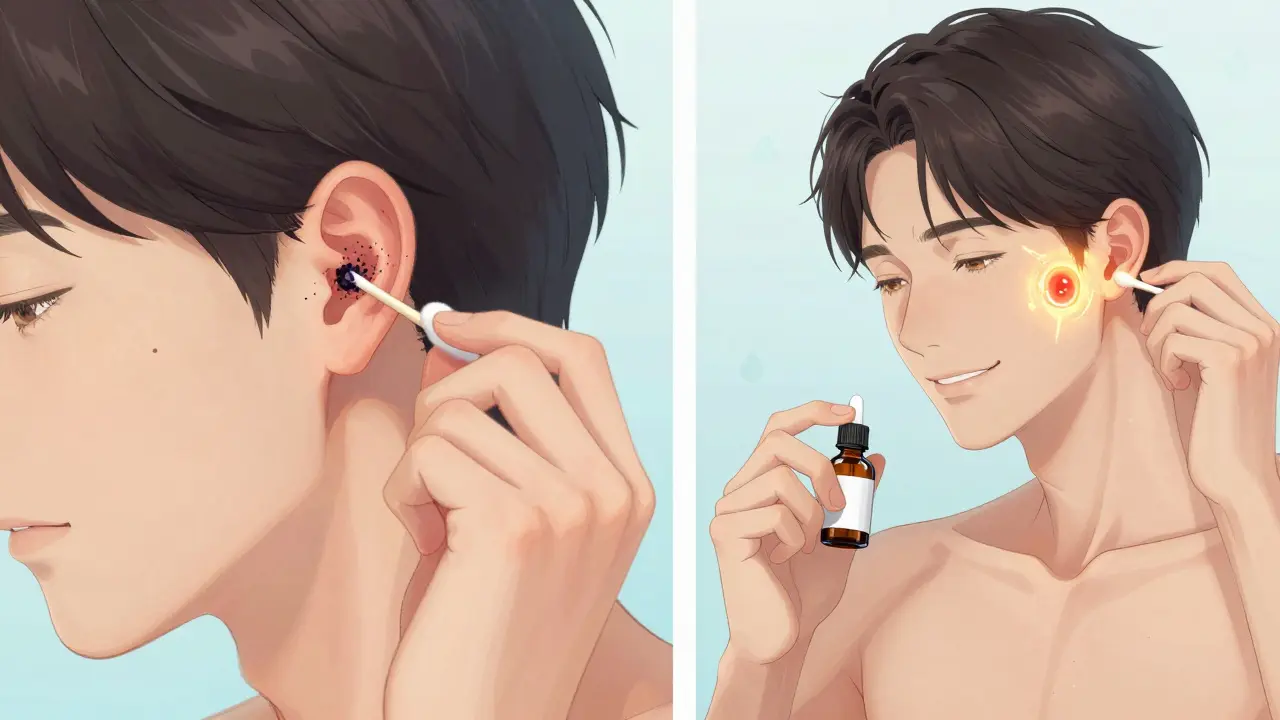
When to See a Doctor - And When Not to
You don’t need to run to the clinic for mild itching. Try the OTC acetic acid drops first. But if:
- The pain is severe or getting worse after 2 days
- Your ear canal is completely blocked
- You have a fever above 101°F (38.3°C)
- You have diabetes or a weakened immune system
- You’ve tried OTC drops for 5 days with no improvement
- then see a doctor. Delaying care increases the risk of malignant otitis externa, a rare but dangerous infection that can spread to the skull bone. It’s seen in fewer than 1 in 3,000 cases, but it’s serious. Diabetics are at higher risk. If you’re one of them, don’t wait.
Prevention Is the Best Medicine
Swimmer’s ear isn’t inevitable. Here’s how to avoid it:
- Dry your ears thoroughly after swimming or showering. Tilt your head and gently pull your earlobe to let water drain.
- Use a hair dryer on low heat, held at arm’s length, to dry the canal.
- Use 2% acetic acid drops after swimming - even if you don’t have symptoms. It cuts recurrence risk by 65%.
- Avoid cotton swabs. Your ear doesn’t need cleaning - it cleans itself.
- Use swimmer’s earplugs or a tight-fitting silicone cap if you swim often.
It’s simple. But most people don’t do it. They think, “I’ll just wait and see.” By then, it’s too late.
Can I use hydrogen peroxide or vinegar to treat swimmer’s ear?
No. While vinegar (acetic acid) is used in medical drops, household vinegar is too strong and can burn your skin. Hydrogen peroxide can damage the delicate skin in your ear canal and worsen inflammation. Only use solutions made for ear use - like 2% acetic acid with hydrocortisone - and follow the instructions exactly.
Is swimmer’s ear contagious?
No. You can’t catch it from someone else. It’s caused by bacteria or fungi that grow in your own ear canal when conditions are right - usually after water exposure. But sharing earphones, towels, or earplugs can spread the germs to your own ears if they’re already damp or irritated.
Can I still swim if I have swimmer’s ear?
Not until the infection clears. Water will delay healing and can make it worse. Wait at least 7 to 10 days after symptoms disappear. When you do swim again, use ear drops afterward to prevent it from coming back.
Why do some ear drops hurt when I put them in?
It’s normal to feel a brief stinging, especially if your ear canal is inflamed. That’s the medication working. But if the pain lasts more than a few minutes or gets worse, stop using it. You might be allergic to a component, or the drop isn’t right for your infection. Call your doctor.
Are oral antibiotics needed for swimmer’s ear?
Rarely. Topical drops work better because they target the infection directly. Oral antibiotics add side effects - like diarrhea or rashes - without much extra benefit. They’re only used if the infection spreads beyond the ear canal, which is uncommon.
Brad Ralph
February 12, 2026 AT 08:44So basically our ears are just tiny, fragile swimming pools that hate life. 🤦♂️
Annie Joyce
February 13, 2026 AT 22:48I’ve been using Vosol HC after every swim for years-no more swimmer’s ear. Seriously, it’s like armor for your ear canal. My coach even started using it after I gave him the bottle. $15 is nothing compared to three weeks of agony. Also, never use Q-tips. Your ear isn’t a vacuum cleaner filter.
And yes, the 5-minute lie-down rule? Non-negotiable. I set a timer. I’m not risking another wick.
Sophia Nelson
February 15, 2026 AT 05:03Why is everyone acting like this is new info? My grandma had a homemade vinegar-and-alcohol rinse in the 70s. We didn’t need FDA-approved drops. Also, who even has $147 for ear drops? I’ve seen people pay more for a latte.
And don’t get me started on the ‘ear wick’-sounds like something a sci-fi horror movie made up.
Vamsi Krishna
February 16, 2026 AT 18:12Bro, you think you’re the first to figure this out? I’ve been swimming in Mumbai’s polluted harbor since I was 6 and never had an ear infection because I use *homemade* neem oil drops. You think Big Pharma wants you to know this? Nah. They want you buying Ciprodex like it’s a luxury watch.
And stop lying down for 5 minutes? Pfft. I just tilt my head and sneeze. Works better. Also, your ‘pH 5.0–5.7’? That’s just a number made up by someone who’s never been in a real ocean.
Real swimmers use saltwater rinse. Natural. Free. Effective. You’re all being marketed into a medical scam.
And that ‘fungal infection’ part? That’s just your body saying ‘I’m tired of your earbuds and your stress.’ Stop blaming bacteria. Blame your life choices.
I’ve got 17 years of ear issues. I know more than your ‘clinical data.’
Carla McKinney
February 18, 2026 AT 12:55It’s fascinating how the article completely ignores the role of microbiome disruption from excessive hygiene. The ear canal isn’t a pipe to be sterilized-it’s an ecosystem. Overuse of drops, even ‘safe’ ones, creates dependency. You’re not treating infection-you’re creating a cycle.
Also, the claim that ‘oral antibiotics add side effects without benefit’ is oversimplified. In immunocompromised patients, systemic coverage matters. The article reads like a pharmaceutical ad disguised as medical advice.
And ‘use a hair dryer’? At what distance? What temperature? No safety data provided. This is dangerous advice masquerading as helpful.
It’s not just about what works-it’s about what’s *responsible*.
Suzette Smith
February 19, 2026 AT 04:40Wait, so you’re telling me the thing I’ve been doing wrong for 10 years is NOT using vinegar? I’ve been using apple cider vinegar straight from the bottle because ‘natural.’
So… I’ve been poisoning my ear canal this whole time?
…I’m going to bed.
andres az
February 21, 2026 AT 04:27Let me guess-Ciprodex was developed by a pharmaceutical company that also owns the pool supply chain. Coincidence? I think not.
Did you know the FDA approved Ciprodex the same year the CDC reported a 40% spike in ear infections among swimmers? That’s not correlation-that’s a business model.
And ‘ear wicks’? Those are just tiny tubes to keep you coming back. You think they’re helping? They’re keeping the cash flow steady.
Next thing you know, they’ll patent earwax as a controlled substance.
Stephon Devereux
February 21, 2026 AT 21:34Y’all are overthinking this. The real solution? Stop swimming in chlorinated water if you’re prone to it. Go to the ocean. Saltwater naturally dries and disinfects. Problem solved.
Also, if you’re using earbuds all day? That’s the real issue. Your ear canal needs air. It’s not a cave. Let it breathe.
And yes-acetic acid drops after swimming? Do it. It’s like brushing your teeth. You don’t wait until your tooth falls out to start.
Stop waiting for miracles. Prevention is 90% of the battle. The rest? Simple, cheap, and boring. But it works.
steve sunio
February 23, 2026 AT 02:15dat article so long but i got one thing to say… u guys all forgot about the REAL cause: 5G radiation from your phone when u put it in ur pocket n it radiates to ur ear… also ear drops are just a scam to make u buy stuff. go outside. breathe air. stop using tech. ur ears will heal.
Joanne Tan
February 24, 2026 AT 13:26I used to think I was just bad at swimming until I tried the acetic acid drops after my last swim. No more itching. No more panic every time I hear a splash. I even convinced my sister to start using it. Now she’s like, ‘Why didn’t you tell me sooner?’
Also, I dry my ears with a hair dryer on low-like, 10 inches away for 30 seconds. Feels nice. Like a spa for your ear. And no, I don’t use Q-tips. I’m not a monster.
Reggie McIntyre
February 25, 2026 AT 05:54Just tried the Ciprodex after a week of suffering. Holy crap. Day 2, and I can actually hear again. Like, I heard my dog bark from the other room. I didn’t think that was possible anymore.
Also, the 5-minute wait? I set a playlist. One song. Let it play. I lay there like a potato. It’s weirdly peaceful.
Who knew medicine could feel like self-care?
Jack Havard
February 26, 2026 AT 23:17There’s no such thing as ‘swimmer’s ear.’ It’s just a label created to sell drops. The real issue? People don’t know how to dry their ears. That’s it. No magic drops. No science. Just basic hygiene.
And that ‘1 in 10 Americans’ stat? Probably inflated by doctors billing for it. You think a healthy person gets ear infections that often? No. You’re being told you’re broken so you’ll buy the fix.