
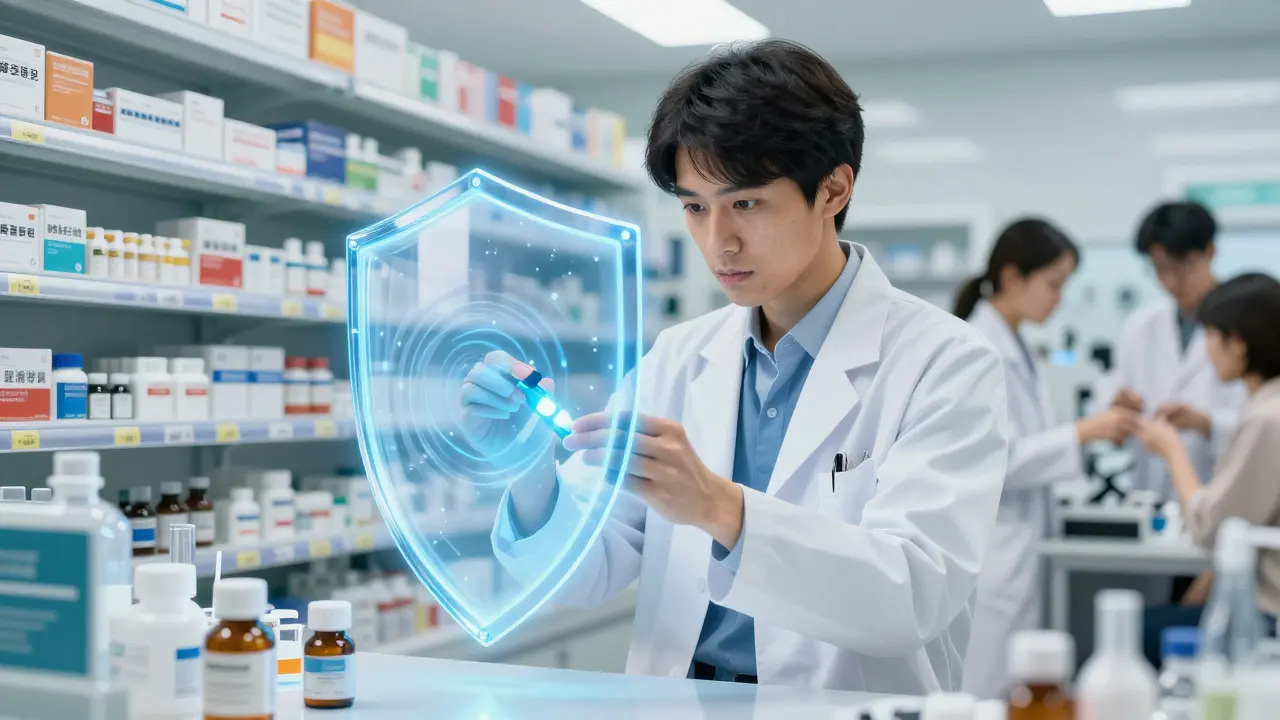
Over 90% of prescriptions in the United States are filled with generic drugs, saving patients and insurers $373 billion every year. Yet without patent protection, those affordable medicines might never exist. patent law creates a delicate balance: it rewards drug developers for taking risks while ensuring generics can enter the market after patents expire. This system isn’t perfect, but it’s the reason we have life-saving drugs like insulin or cancer treatments available at reasonable prices today.
The Core Purpose of Pharmaceutical Patents
When a company develops a new drug, it faces a massive gamble. On average, it costs $2.6 billion to bring a single new medication to market. This includes years of research, clinical trials, and regulatory hurdles. Patents give them a temporary monopoly-typically 20 years from the filing date-to recoup those costs. But here’s the catch: the clock starts ticking before the drug even hits shelves. Because FDA approval takes 10-12 years on average, the real market exclusivity is often just 12-14 years. Without this protection, companies wouldn’t invest in risky new treatments. But how do we ensure generics can eventually step in?
Hatch-Waxman Act is the common name for the Drug Price Competition and Patent Term Restoration Act of 1984. Created by Senators Orrin Hatch and Henry Waxman, this law solved a critical problem. Before 1984, brand-name companies could block generic development even before patents expired. The Hatch-Waxman Act created two key pathways: one for innovators to extend patent terms lost during FDA review, and another for generics to challenge patents early. It’s the backbone of how we get affordable medicines today.How Generics Enter the Market
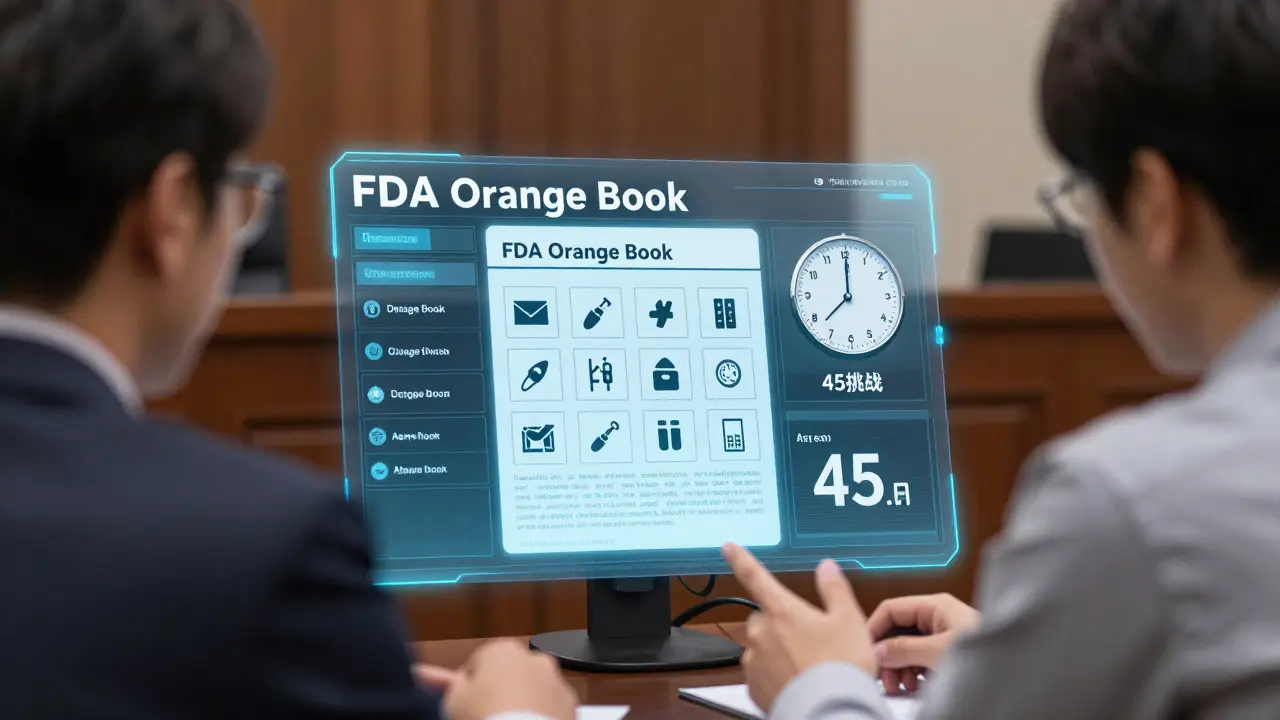
Generic manufacturers don’t wait for patents to expire. They start preparing years in advance. When a brand drug is approved, the company must list all relevant patents in the FDA’s Orange Book. This public database tells generics exactly which patents they need to challenge. If a generic company believes a patent is invalid, they file a Paragraph IV certification-a formal notice that they plan to launch before the patent ends. This triggers a 45-day window for the brand company to sue for infringement. If they do, the FDA can’t approve the generic for up to 30 months, regardless of whether the patent is actually valid. This 30-month stay gives innovators extra time to protect their market.
The first generic company to successfully challenge a patent gets 180 days of exclusive market access. Why does this matter? Because state laws require pharmacists to substitute generics when available. That means the first mover can charge slightly higher prices than later generics, making the risk of patent litigation worthwhile. For example, when Eli Lilly’s Prozac patent expired in 2001, the first generic entered immediately. Within six months, prices dropped 70%, and Eli Lilly lost 80% of its market share.
When Patents Delay Affordable Medicines
Not all patent strategies are fair. Some brands use evergreening-filing secondary patents on minor changes like new dosages or delivery methods-to extend exclusivity. Take Humira, a top-selling arthritis drug. Its original patent expired in 2016, but the company filed 241 patents across 70 families. This delayed U.S. biosimilar competition until 2023, even though Europe had generic versions since 2018. The European Commission calls this abuse of dominance under antitrust law. In the U.S., the CREATES Act of 2022 tried to stop this by forcing brands to share drug samples with generics for testing.
Another tactic is pay-for-delay settlements. Here, brand companies pay generics to delay market entry. The FTC estimates this costs consumers $3.5 billion annually. For example, in 2013, AstraZeneca paid $40 million to a generic maker to delay a generic version of its heart drug Nexium. Courts now scrutinize these deals more closely, but they still happen.
The Real Impact of Generics
When generics finally enter, prices crash. Take ibuprofen. Boots Pure Drug Company launched Brufen in 1961, but when patents expired in the 1980s, generic versions like Advil and Motrin flooded the market. Today, a 500-pill bottle of generic ibuprofen costs under $5. Without generics, it would likely cost $50 or more. For every new generic that enters, prices drop further. After Prozac’s patent expired, prices fell 90% within two years. The FDA reports that generics now account for 91% of U.S. prescriptions but only 24% of drug spending. That’s why the average generic costs 80-85% less than its brand-name counterpart.
But the system isn’t perfect. The average time from patent expiry to generic entry has risen from 2.1 years in 2005 to 3.6 years in 2020. Complex patent lawsuits and regulatory delays slow down access. Still, the core framework of Hatch-Waxman holds strong. Over 97% of new generic applications still use the Paragraph IV certification process, and 30-month stays remain a standard part of patent litigation.
What’s Next for Patent Law and Generics?
With prescription drug spending hitting $621 billion in 2022-22% of total U.S. healthcare costs-pressure is mounting. Congress is considering the Preserve Access to Affordable Generics Act to ban pay-for-delay deals. Meanwhile, biologics (complex drugs like cancer treatments) face unique challenges. The Biologics Price Competition and Innovation Act (BPCIA) created a pathway for biosimilars, but court rulings like Amgen v. Sandoz in 2017 created confusion about patent disputes. New legislation aims to fix these gaps.
The stakes are high. Without strong patent protection, companies wouldn’t develop new drugs. Without efficient generic entry, medicines stay unaffordable. The Hatch-Waxman system isn’t flawless, but it’s the reason we have both cutting-edge treatments and affordable options. As new therapies emerge-like gene therapies or AI-designed drugs-the challenge will be adapting this balance for the next generation of medicine.
How long do pharmaceutical patents last?
Patents last 20 years from the filing date, but effective market exclusivity is usually 12-14 years because drug development takes 10-12 years before FDA approval. The Hatch-Waxman Act allows patent term restoration to compensate for time lost during regulatory review.
What is the FDA Orange Book?
The FDA Orange Book is a public database listing all patents for approved drugs. Brand manufacturers must list relevant patents here, so generics know which ones to challenge before launching. It’s a key tool for transparency in the patent system.
Why do generics cost so much less than brand drugs?
Generics don’t need to repeat expensive clinical trials because they prove therapeutic equivalence to the brand drug. They also avoid the R&D costs of developing a new drug. This lets them sell at 80-85% lower prices while maintaining the same safety and effectiveness.
What is "evergreening" in patent law?
Evergreening happens when drug companies file new patents on minor changes-like a new pill coating or dosing schedule-to extend market exclusivity beyond the original patent. For example, Humira had 241 patents across 70 families, delaying generic competition for years. Critics argue this stifles innovation and keeps prices high.
How do pay-for-delay deals work?
In pay-for-delay settlements, brand companies pay generic manufacturers to delay launching their cheaper versions. For example, AstraZeneca paid $40 million to delay a generic version of Nexium. These deals cost consumers billions annually and are now heavily scrutinized by regulators.
Sam Salameh
February 5, 2026 AT 07:27As an American, I'm proud of our pharma innovation.
Without patents, companies wouldn't risk billions to develop new drugs.
But generics are crucial for affordability.
The Hatch-Waxman Act strikes a good balance.
Sure, some companies abuse it, but overall it works.
Let's not undermine innovation for short-term savings.
Cole Streeper
February 5, 2026 AT 12:27Big Pharma is pulling strings everywhere.
The patent system is rigged-every single time.
They file dozens of patents for minor tweaks just to delay generics.
And the FDA? They're in bed with these companies.
It's a conspiracy to keep prices sky-high.
We need to expose this.
Trust no one in this industry.
Dina Santorelli
February 5, 2026 AT 23:27Patents are a necessary evil. Period.
Katharine Meiler
February 7, 2026 AT 22:40From a regulatory standpoint, the patent system's balance is critical for innovation and access.
The Hatch-Waxman Act's framework provides a structured pathway for generic entry while protecting innovators.
However, the 30-month stay provision often creates unnecessary delays, especially when patent validity is questionable.
The CREATES Act addresses some issues, but more comprehensive reforms are needed.
Specifically, streamlining the ANDA review process during litigation would accelerate generic availability.
Additionally, the BPCIA's ambiguity in biosimilar pathways requires clarification to prevent further delays.
Harmonizing patent and regulatory timelines would ensure both innovation incentives and timely access.
Addressing evergreening through stricter patentability standards is essential.
The FDA should also increase transparency in the Orange Book listings to prevent frivolous patent filings.
Moreover, the 180-day exclusivity for first filers creates perverse incentives, leading to unnecessary litigation.
A cap on secondary patents for single drugs would curb evergreening tactics.
Finally, international coordination on patent standards could prevent disparities between markets like the U.S. and Europe.
These steps would maintain innovation while improving affordability.
It's time for evidence-based policy changes.
Danielle Vila
February 9, 2026 AT 01:00Oh, come on! Katharine's all "harmonizing timelines" and "evidence-based policy"-but let's get real.
The system is BROKEN.
Big Pharma is gaming it at every turn-like Humira with 241 patents!
They're not innovating; they're just milking the system.
And the government? They're asleep at the wheel.
Pay-for-delay deals? Total scams.
We need to tear down the whole thing and rebuild it.
No more "collaboration"-we need to expose these crooks.
It's time to go nuclear on Big Pharma.
Let's not waste time with "reforms"-we need a revolution.
Trust me, I've done the research.
This isn't a "balance" issue-it's a full-on heist.
Even the FDA's Orange Book is full of junk patents.
We need to ban secondary patents outright.
Enough is enough.
Thorben Westerhuys
February 10, 2026 AT 06:24Wow, this is such a complex topic!
Patents, generics, innovation, affordability-so many moving parts!
But let's not forget: without patents, there would be no new drugs!
And without generics, they'd be unaffordable!
The Hatch-Waxman Act is a masterpiece!
However, some companies abuse it-like with Humira!
Evergreening is a real problem!
And pay-for-delay deals? Total terrible!
We need to fix this!
It's so important!
Patients need affordable meds!
Innovation must be protected!
This balance is crucial!
Let's all work together to improve it!
Laissa Peixoto
February 11, 2026 AT 12:51It's fascinating how patent law balances innovation and access.
On one hand, patents incentivize R&D; on the other, they can delay affordability.
But perhaps the real issue isn't the law itself-it's how it's applied.
Companies like AbbVie with Humira show how loopholes are exploited.
Yet, the system isn't inherently flawed-it needs better enforcement.
Maybe we should focus on strengthening antitrust measures instead of overhauling patents.
After all, innovation drives progress; without it, we'd have no new treatments.
But access must be prioritized too.
It's a delicate equilibrium that requires thoughtful adjustment.
Rather than tearing it down, let's refine it.
Small, targeted reforms could make a big difference.
The key is to preserve the core while fixing the abuses.
For example, stricter review of secondary patents could curb evergreening.
And ending pay-for-delay deals would save billions.
It's about finding the right middle ground.
one hamzah
February 12, 2026 AT 05:11Hey everyone! 🌍
Love how this post talks about patents and generics!
It's amazing how the system works to balance innovation and affordability.
Like, without patents, we wouldn't have new drugs!
And generics make them affordable! 🌟
But yeah, some companies stretch it too far.
Like Humira's 241 patents-wtf? 😅
The CREATES Act is a step in the right direction!
We need to stop pay-for-delay deals-they're hurting patients. 💔
But overall, the system is pretty solid!
Let's focus on fixing the bad parts, not throwing the whole thing out!
The future of medicine is bright! 💡
Keep up the good work! 🙌
Stay optimistic! 😊
Joyce cuypers
February 12, 2026 AT 08:58Great point! 🌟
I totally agree that the system needs fixes but not a complet overhaul.
The Hatch-Waxman Act is a solid foundation.
We just need to address the abuses like evergreening.
Pay-for-delay deals are totaly unfair!
And the Orange Book should be more transparent.
But overall, it's amazing how generics save so much money.
For example, ibuprofen is now under $5!
That's a huge win!
Let's keep working to improve this system.
Thanks for the great post! 😊