
When you pick up a generic pill at the pharmacy, you expect it to work just like the brand-name version. But how does the FDA know it’s still safe and effective months or years after it hits the shelves? Unlike brand-new drugs, generics don’t go through years of clinical trials before approval. Instead, they prove they’re bioequivalent - meaning they deliver the same amount of active ingredient into your bloodstream at the same rate as the original. That’s it. No large-scale studies on thousands of patients over years. So what happens after approval? That’s where post-market surveillance comes in.
Why Post-Market Surveillance Matters for Generics
Generics make up about 90% of all prescriptions filled in the U.S. That’s over 4 billion prescriptions a year. With numbers like that, even rare side effects can affect thousands of people. The problem? Clinical trials before approval usually involve only a few hundred to a few thousand people. They’re great at catching common side effects - but not rare ones. A reaction that shows up in 1 in 10,000 patients won’t show up in a trial of 5,000. That’s why the FDA can’t stop watching once a generic is approved.Think of it like this: a car passes safety tests before it leaves the factory. But what if a specific batch of tires starts failing after a million miles? You don’t wait for a crash to find out. You track what’s happening out in the real world. That’s exactly what the FDA does with generics.
How the FDA Tracks Problems After Approval
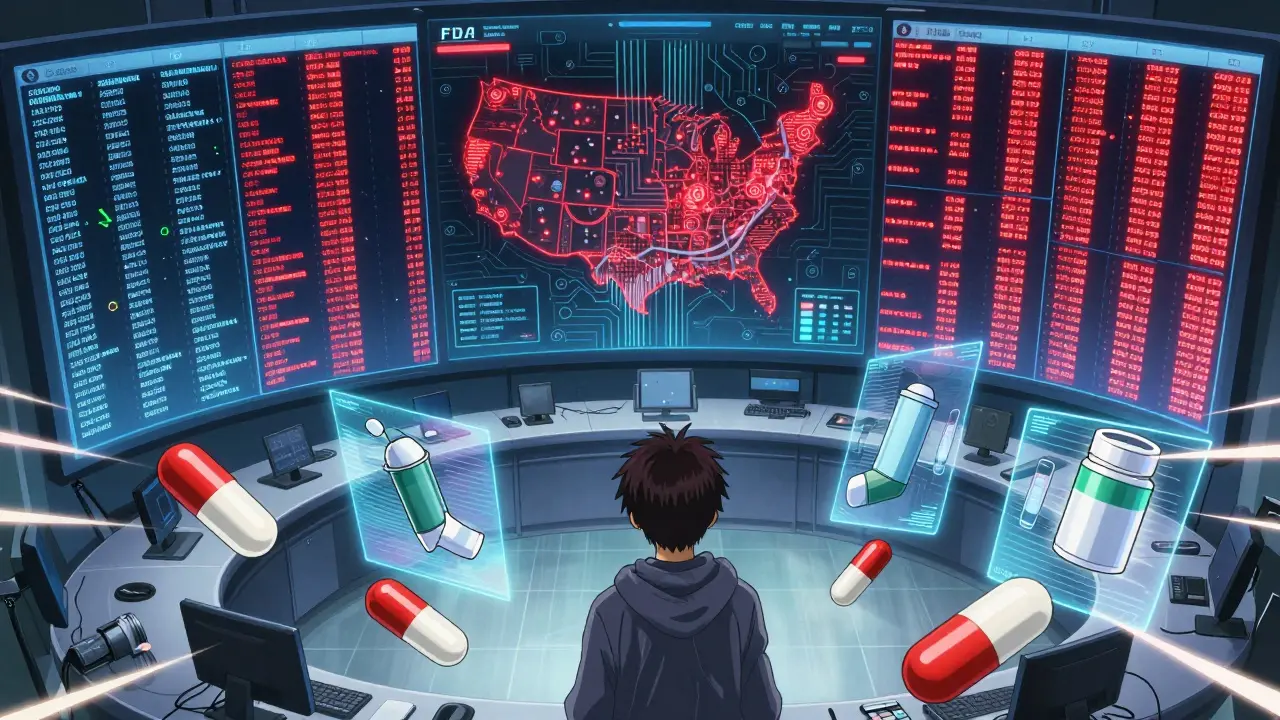
The FDA doesn’t rely on one tool - it uses a network of systems that work together to catch problems early.- FDA Adverse Event Reporting System (FAERS): This is the main database where doctors, pharmacists, patients, and drug companies report unexpected side effects, allergic reactions, or failures. In 2023 alone, over 1.5 million reports came in - about 40% of them involving generic drugs. The system doesn’t prove a drug caused the problem, but it flags patterns. For example, if 50 people report the same rare rash after switching to a new generic version of a blood pressure pill, that’s a signal.
- The Sentinel Initiative: This is the FDA’s real-time monitoring system. It pulls data from electronic health records and insurance claims of over 200 million Americans. Instead of waiting for someone to report a problem, Sentinel looks for trends: Are more people being hospitalized for kidney issues after switching to a new generic version of a cholesterol drug? Are there spikes in emergency room visits linked to a specific manufacturer’s product? It’s like having a live dashboard on how drugs behave in the real world.
- MedWatch: This is the public-facing portal where patients and providers can report issues directly. If you notice your generic seizure medication isn’t controlling your seizures like it used to, you can file a report here. These reports are critical - especially when multiple people report the same issue with the same batch number.
- Unannounced factory inspections: The FDA doesn’t just watch how drugs perform - it checks how they’re made. Inspectors show up at manufacturing sites without warning to make sure the generic drug is being made the same way it was during approval. Even small changes in ingredients, particle size, or coating can affect how a drug is absorbed. A change that seems minor to a manufacturer could mean the difference between a drug working and failing.
Complex Generics Are the Biggest Challenge
Not all generics are created equal. Simple pills - like generic aspirin or metformin - are easy to copy. But what about inhalers, topical creams, or extended-release capsules? These are called complex generics. They don’t just need the same active ingredient - they need the same delivery system. A different coating on a pill might change how slowly it releases the drug. A different propellant in an inhaler might change how deeply the medicine reaches the lungs.Standard bioequivalence tests can’t always catch these differences. That’s why the FDA is investing heavily in new tools. In 2023, the agency allocated $5.2 million specifically to develop artificial intelligence and machine learning models that can predict safety risks in complex generics. These tools analyze real-world data - like patient outcomes, lab results, and even social media reports - to spot anomalies faster than humans can.
One example: a 2021 study from the National Academies found that patients switching from a brand-name asthma inhaler to a generic version sometimes reported worse control - even though lab tests showed the drugs were bioequivalent. The issue? The inhaler’s spray pattern felt different. Patients didn’t inhale the same way. That’s not a drug failure - it’s a delivery problem. And it’s exactly the kind of thing AI systems are being trained to detect.
What Happens When a Problem Is Found?
Finding a signal is just the first step. The FDA doesn’t panic. It investigates.If a pattern emerges - say, 200 reports of severe dizziness linked to a specific generic version of a blood pressure drug - the Office of Generic Drugs pulls together a team. They check:
- Is this happening with other manufacturers’ versions of the same drug?
- Is it only happening with one batch?
- Are there changes in the manufacturing process?
- Could it be patient perception - the so-called “nocebo effect,” where people expect a generic to be worse and feel worse because of it?
If the evidence points to a real safety issue, the FDA can take action:
- Update the drug’s label to warn doctors and patients
- Issue a “Dear Healthcare Provider” letter
- Require the manufacturer to run additional studies
- Order a voluntary recall
There’s no automatic ban. The goal isn’t to punish - it’s to protect. In most cases, the problem is fixed before it affects large numbers of people.
Why Patient Reports Matter
The FDA doesn’t just listen to doctors. It listens to patients. A 2019 study in JAMA Internal Medicine found that about 15% of adverse event reports for generics involved complaints about the drug “not working like it used to.” Often, there was no measurable difference in the drug’s chemistry. But patients felt different. That’s not just in their heads - it’s part of the real-world picture.Some patients report side effects after switching to a generic because they’re anxious about the change. Others notice real differences - maybe the pill is a different shape, or it has a new filler that causes stomach upset. Either way, these reports matter. They help the FDA distinguish between true safety issues and perception-based concerns. And they help manufacturers improve their products.
The Future of Generic Drug Safety
The system isn’t perfect. Critics say it’s underfunded and reactive. But the FDA is changing. The 2016 21st Century Cures Act forced the agency to create formal best practices for post-market surveillance. The Sentinel Initiative is growing. AI tools are being tested. By 2027, experts predict AI could cut the time it takes to detect a safety signal in complex generics by 60-70%.What’s next? The FDA plans to link electronic health records directly to pharmacy dispensing data. That means if a patient gets a new generic prescription, the system can track their health outcomes over time - automatically. Imagine knowing within weeks if a new generic version of a diabetes drug is causing more hospitalizations. That’s the goal.
The bottom line? Generic drugs are safe - and they save billions of dollars every year. But safety doesn’t end at approval. It’s a continuous process. The FDA doesn’t just approve generics. It watches them - day after day, year after year - to make sure they keep working as they should.
Are generic drugs less safe than brand-name drugs?
No. Generic drugs must meet the same strict quality, strength, purity, and stability standards as brand-name drugs. The FDA requires them to be bioequivalent - meaning they work the same way in the body. The main difference is cost. Post-market surveillance ensures that even after approval, generics continue to meet those standards. Most safety issues are rare and caught early through reporting systems.
How long does the FDA monitor a generic drug after approval?
Indefinitely. There’s no expiration date on surveillance. The FDA monitors all approved drugs - brand and generic - for as long as they’re on the market. Even drugs approved decades ago are still tracked. If a new safety concern arises - say, from new research or a surge in patient reports - the FDA will re-evaluate the drug, regardless of how long it’s been available.
Can I report a problem with a generic drug myself?
Yes. The FDA encourages patients and caregivers to report any unexpected side effects, medication errors, or concerns about a generic drug through MedWatch, its online reporting system. You don’t need to be a doctor. If you notice your generic medication isn’t working the same way, causes new side effects, or looks different than before, report it. Your report could help identify a pattern that protects others.
Do all generic versions of the same drug work the same?
They’re required to be bioequivalent, but not identical. Different manufacturers may use different inactive ingredients - like fillers, dyes, or coatings. For simple pills, this rarely matters. But for complex generics - like inhalers, patches, or extended-release tablets - these differences can affect how the drug is absorbed. That’s why the FDA pays extra attention to these types and why some patients notice differences when switching between brands.
What’s being done to improve generic drug surveillance?
The FDA is investing in artificial intelligence and machine learning to analyze real-world data faster. This includes combining electronic health records, insurance claims, and patient reports to detect safety signals weeks or months earlier than before. The agency is also expanding its Sentinel Initiative to include more data partners and is developing specific protocols for complex generics like inhalers and topical products. Funding for this research reached $5.2 million in fiscal year 2023.
What You Can Do
If you take generics, here’s what you can do to help:- Keep track of which manufacturer’s version you’re taking. The label should say.
- Report any changes in how the drug works or new side effects - even if you’re not sure.
- Don’t assume a generic is “worse.” But if you feel different after a switch, speak up.
- Ask your pharmacist if there’s a reason you were switched - sometimes it’s just cost, not safety.
The system works best when patients and providers are involved. You’re not just a user - you’re part of the safety net.
Katie Schoen
January 6, 2026 AT 18:14So let me get this straight - we’re trusting life-or-death meds to companies that can change the dye in the pill and call it ‘bioequivalent’? Cool. Cool cool cool. I’ve had generics that made me feel like a zombie and others that worked like magic. No science can explain why. Just tell me which batch I’m getting and I’ll take my chances.
Beth Templeton
January 7, 2026 AT 09:11My seizure med switched generics and I had three seizures in a week. FDA says it’s the same. I say my brain disagrees.
Rachel Wermager
January 8, 2026 AT 12:02FAERS is statistically noise-ridden due to reporting bias - patients report adverse events disproportionately after generic switches due to nocebo effects. Sentinel’s real-world data is more robust, but even that suffers from confounding by indication and selection bias. Until we have RCTs at scale, all post-market signals are hypothesis-generating at best.
Molly McLane
January 8, 2026 AT 18:50For anyone scared of generics - I’ve been on them for 12 years for thyroid, BP, and depression meds. Only once did I feel off, and it was because the pill looked different. Talked to my pharmacist - switched back. No big deal. The system works if you pay attention. Don’t panic. Just report weird stuff. You’re helping.
Ashley S
January 9, 2026 AT 08:24Why are we even letting these cheap knockoffs exist? If it’s not the brand name, it’s not the same. People get sick because they’re too cheap to pay for the real thing. Pharma is scamming us all.
Venkataramanan Viswanathan
January 10, 2026 AT 07:16In India, we know generics better than anyone. We’ve been using them for decades. The real issue isn’t the drug - it’s the pharmacy. Some shops swap batches without telling you. If you notice a change, ask for the manufacturer name. Write it down. That’s how you protect yourself.
Tiffany Adjei - Opong
January 10, 2026 AT 11:54Oh wow the FDA uses AI now? That’s cute. So instead of fixing the broken system, they’re just slapping a fancy label on it? Let’s be real - they’re underfunded, understaffed, and still approve generics based on 1980s tech. AI won’t fix lazy regulation.
Ryan Barr
January 10, 2026 AT 23:22Complex generics aren’t even regulated properly. Inhalers? Topicals? The FDA’s bioequivalence standards are laughably outdated. You can’t measure spray pattern or skin penetration with blood levels. It’s like saying two cars are identical because they both have four wheels.
Katelyn Slack
January 11, 2026 AT 13:19just wanted to say thank you for this post. i switched to a generic blood pressure med last year and started feeling dizzy. i thought it was me. then i saw the batch number and looked it up. turns out 37 other people reported the same thing. i filed a medwatch report. i didn’t know i could do that. so thanks.
Indra Triawan
January 13, 2026 AT 08:46Everything is a metaphor for capitalism. The FDA is just the priest of a religion called Progress. We worship efficiency. We sacrifice depth for cost. The pill is not the medicine. The pill is a symbol. A symbol of our fear of paying for quality. We are all just patients in a system that commodifies healing. The real side effect? We stopped believing in care.
Saylor Frye
January 14, 2026 AT 02:21Of course the FDA uses AI. Because nothing says ‘scientific rigor’ like training a model on Reddit rants and TikTok panic posts. Next they’ll let TikTok pharmacists approve new formulations.