
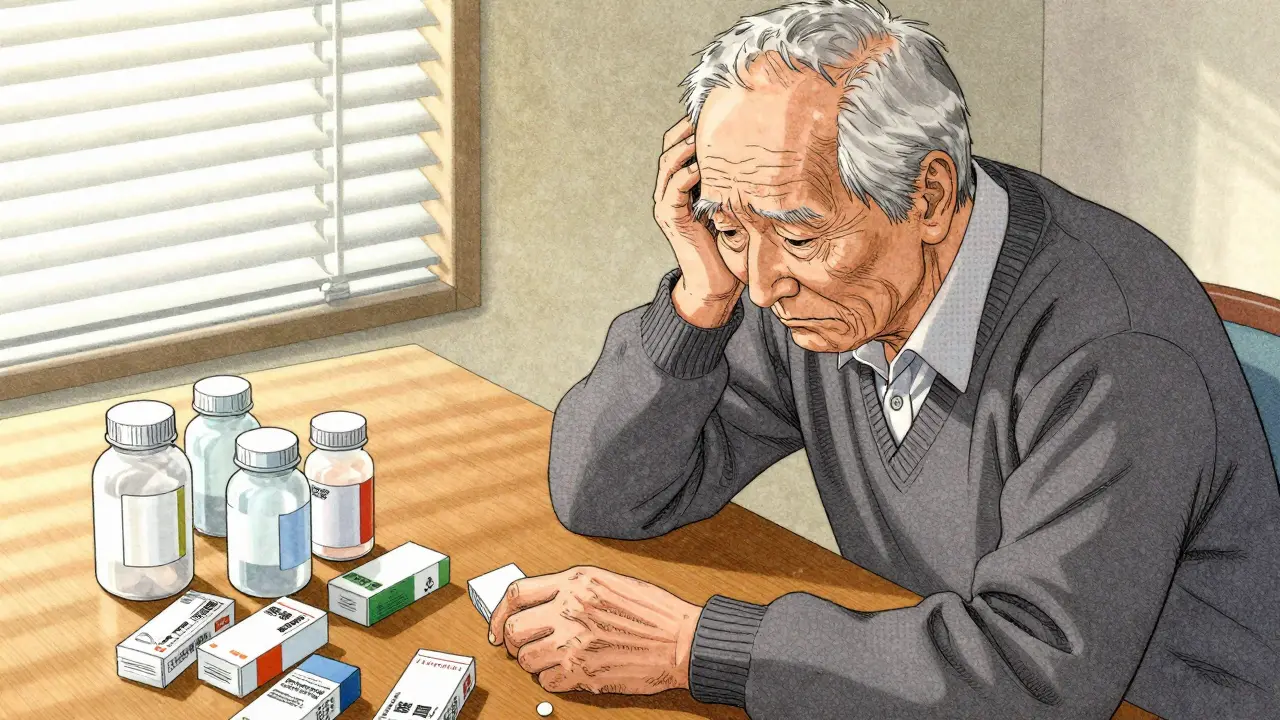
Imagine your parents or grandparents juggling five different prescriptions a day. One helps their heart, another manages blood pressure, a third tackles arthritis pain, and two others deal with sleep and digestion. While each medicine has a purpose, what happens when they meet inside the body? That is where drug-drug interactions happen. In the elderly, this isn't just a theoretical risk-it is a common cause of hospital visits. When two or more medications react poorly together, the result can range from mild dizziness to severe toxicity.
We often focus on diet and exercise for senior health, but the medicine cabinet is a hidden danger zone. Recent data suggests that nearly 40 percent of older adults take five or more medications simultaneously. This practice, known as polypharmacy, skyrockets the chance of something going wrong. Understanding how to spot and stop these conflicts is one of the most powerful ways to protect an older loved one’s health.
The Aging Body and Medication Metabolism
Your body processes drugs differently as you age. Think of your liver and kidneys as the cleanup crew. In your twenties, they work overtime to filter toxins. By your seventies, that cleanup team slows down. This change affects how fast a drug leaves the system. If a senior takes a standard adult dose, the drug might stay in their bloodstream much longer than intended.
A key player in this process is cytochrome P450, a set of enzymes responsible for metabolizing about 75 percent of clinically used drugs. In older adults, the activity of these enzymes declines. When multiple medications compete for the same metabolic pathway, toxicity builds up quickly. For example, taking a blood thinner alongside a common painkiller can lead to dangerous bleeding because both stress the same filtering systems. Physiological changes like reduced renal clearance mean seniors are up to 50 percent more susceptible to adverse drug events compared to younger adults.
The Hidden Risk of Fragmented Care
Many seniors see different specialists for different issues. One doctor manages diabetes, another handles cholesterol, and a third treats orthopedic injuries. Unfortunately, these providers rarely talk to each other. More than two-thirds of older adults visit multiple doctors and use multiple pharmacies. This fragmented care creates gaps where dangerous overlaps hide.
Risk Factor
Impact on Patient
Different Prescribers
No oversight on total medication load
Multiple Pharmacies
Records are not shared automatically
Over-the-Counter Drugs
Patient may forget to list vitamins or herbs
Patient confusion also plays a role. About 68 percent of older adults fail to disclose over-the-counter or herbal supplement use during appointments. A natural herb like St. John’s Wort can interfere with prescription antidepressants just as badly as a chemical drug would. Without a full list, the doctor is guessing, and that guesswork puts lives at risk.

Screening Tools for Safer Prescribing
Hospitals and clinics now use specific tools to catch dangerous combinations before they hurt a patient. You won’t always hear your doctor mention these by name, but they are the standard for safety checks.
The Beers Criteria, updated biennially by the American Geriatrics Society, is the gold standard. It lists medication classes to avoid in older adults entirely and those requiring dose adjustments. For instance, it flags certain sedatives that cause falls. Another vital tool is the Screening Tool of Older Persons' Potentially Inappropriate Prescriptions, commonly called STOPP. This checklist identifies potentially inappropriate medications across various body systems. Using these criteria during discharge planning has been shown to reduce hospital readmissions significantly.
For daily management, clinicians use frameworks like the NO TEARS tool. It stands for Need, Optimization, Trade-offs, Economics, Administration, Reduction, and Self-management. Instead of just accepting a prescription, a provider asks if the medication is truly needed and if the benefits outweigh the risks. This systematic approach ensures every pill serves a real purpose.
Practical Steps for Families and Caregivers
You play a massive role in preventing harmful interactions. Here is how you can take charge of the situation practically.
- Create a Master List: Write down every prescription, vitamin, supplement, and over-the-counter remedy. Update this list after every doctor visit.
- Use One Pharmacy: Consolidate all prescriptions at a single location. Pharmacists can see everything you buy in one place and flag interactions instantly.
- Schedule a Brown Bag Review: Once a year, bring every bottle and box to the primary doctor. Lay them out on the table. Ask the hard question: "Do we still need this?"
- Ask About Side Effects: Before starting a new med, ask specifically about dizziness, falls, or confusion. These are common signs of interaction in seniors.
- Check Expiration Dates: Old meds may lose potency or degrade into harmful compounds.
If a new symptom appears suddenly-like a bruise appearing overnight or unexplained fatigue-do not dismiss it as "just old age." It could be a sign that two drugs are fighting each other. Documenting symptoms alongside medication start dates helps doctors identify patterns later.

Economic and Healthcare Impact
This isn't just about individual safety; it is a massive economic issue. Approximately 35 percent of hospital admissions among adults aged 65 and older are medication-related. A significant portion of these are entirely preventable. In the U.S. alone, preventable adverse drug events cost billions annually. As the population ages, with projections showing 21 percent of Americans over 65 by 2030, the urgency to solve this grows.
Regulatory bodies like the FDA are tightening rules. The Physician Labeling Rule requires specific sections for drug interaction information on labels. Furthermore, there is a push to include more older adults in clinical trials. Historically, seniors made up less than 5 percent of trial participants despite being major users of the drugs. Better data means better warnings.
Looking Ahead to 2026 Standards
We are seeing shifts in medical education to address this gap. Accreditation standards implemented recently are pushing medical schools to add dedicated geriatric pharmacology curriculum. By 2026, it is projected that the majority of U.S. medical schools will have specific training on aging physiology. Artificial intelligence-powered decision support systems are also becoming standard in hospital prescribing software, helping doctors spot red flags faster than manual review ever could.
Ultimately, the goal is to move from reactive treatment to proactive prevention. Every unnecessary drug stopped reduces the risk of falls, fractures, and confusion. By working closely with healthcare providers and using the right screening tools, we can ensure that medication remains a help rather than a hazard for our older generation.
Calvin H
March 31, 2026 AT 12:02Oh wow! Another way for Big Pharma to keep us buying more pills just to fix the problems the first batch created!
William Rhodes
April 1, 2026 AT 05:50You are completely missing the forest for the trees here while people suffer! We need action not your cynical little nap! Stop blocking progress with your negativity!
Dan Stoof
April 1, 2026 AT 14:55We have such incredible tools available now!! The Beers Criteria is truly a lifesaver!! It keeps our loved ones safer than ever before!! I really hope everyone reads this section closely!! Every single pill counts for a reason!! Our grandparents deserve the best protection possible!! The kidney function changes are fascinating stuff!! Slowing down metabolism means we adjust doses!! We must stay vigilant with the pharmacy records!! One stop shopping for meds helps immensely!! Pharmacists are heroes in this fight daily!! They catch errors that doctors miss sometimes!! Communication remains the absolute key factor!! Families holding the master list work wonders!! We can totally beat this challenge together!! Health outcomes will improve significantly soon!!
Debbie Fradin
April 2, 2026 AT 05:24Don't sugarcoat the mess we are in! Your rainbow vibes won't stop a bleed out! Real talk needed now!
Ruth Wambui
April 2, 2026 AT 05:32They want us to believe it is just aging but who controls the enzyme data! Silence falls over real side effects constantly. The government ignores these reports daily. Something big hides behind the safety statistics.
Beccy Smart
April 2, 2026 AT 10:14This thinking is dangerous my friend 😬 You ignore the truth for fear 🧐 Medicine saves lives 💊 Stop the doom scrolling 🛑
Rick Jackson
April 3, 2026 AT 18:33We see valid concerns here! Balance is key indeed. Care teams matter too. Everyone wins with communication.
Christopher Curcio
April 5, 2026 AT 02:26Hepatic metabolism shifts drastically with aging physiology. Cytochrome P450 isoforms show reduced catalytic activity. Renal clearance rates decline linearly after forty years. Glomerular filtration rate impacts elimination kinetics heavily. Accumulation of active metabolites causes toxicity risks. Polypharmacy exacerbates competitive inhibition pathways. Protein binding displacement alters free drug fractions. Therapeutic windows narrow considerably in geriatric patients. Dose adjustments depend on creatinine clearance values. Monitoring intervals require shortened frequency standards. Adverse event detection relies on systematic screening tools. STOPP criteria identify inappropriate prescribing patterns clearly. Pharmacogenomics offers future individualization potential. Drug interaction software improves clinical decision support. Hospital discharge protocols minimize readmission factors. Patient education reinforces medication adherence behaviors.
Angel Ahumada
April 6, 2026 AT 09:20Most people lack the intellectual capacity to grasp these systems fully but we know better and it requires a deeper understanding of biochemistry which they simply ignore while panicking the fragmentation you mention is obvious to anyone paying attention to the structural flaws. I find it amusing how many jump on simplistic solutions without reading the fine print true expertise demands patience beyond these quick tips found online.